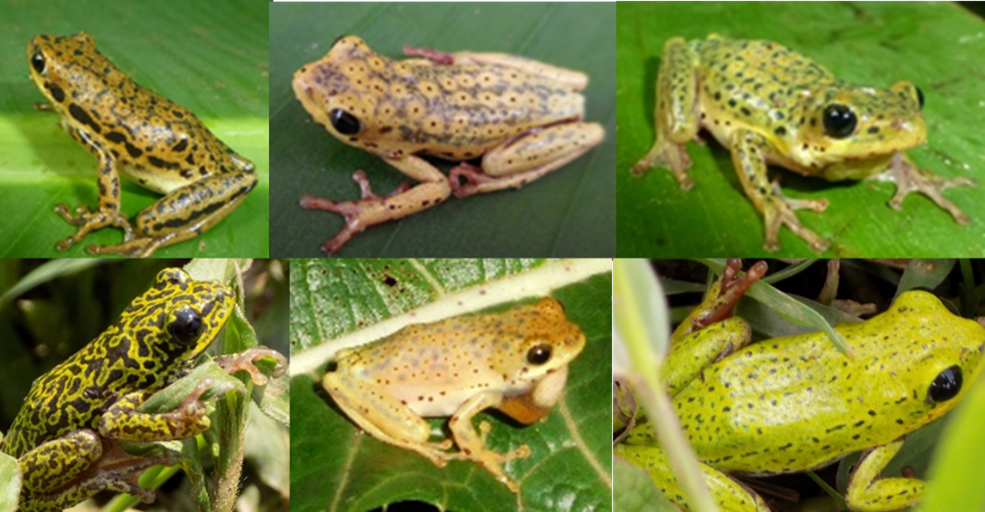
For Black History Month 2023, the British Ecological Society (BES) journals are celebrating the work of Black ecologists from around the world and sharing their stories. In this blog, Akoth Sisiria shares her story and journey in academia.

Name: Akoth Sisiria Affiliation: I am currently working with TotalEnergies Exploration and Production Uganda (TEPU) as a Biodiversity Field Officer, a PhD candidate at Sokoine University of Agriculture (SUA) Tanzania, studying Wildlife Ecology and a Cofounder of Centre for Strategic Ecological Practice (CSEP). Website/social media links: akocece@gmail.com, Facebook: Cissy Akoth, Tiktok: wildlife4life1 Ecology interests in three keywords: Co-existence, Interaction, conservation
Your story – How did you get into ecology?
In high school, I loved biology as a subject because it was relatable. As it is for many students in Uganda who study the subject pre-university, the dream was to go to medical school. However, for my case, it instead took me to Bachelor of Science in Conservation Biology at Makerere University. At the beginning, this bred a feeling of being a “failed medic”. But once I settled in, I realised it was such a multidisciplinary course and soon it became interesting. We were introduced to several field works to acquaint ourselves with ecological survey methods. Soon, I became a member of the Conservation Biology Association, a students’ organisation affiliated to Nature Uganda. Here we were introduced to the monthly nature walks; something that tickled my interest in ecology and to date, am still thrilled.
Due to the growing interest in ecology, I applied to work as an intern at both the Botanical gardens and Uganda Wildlife Education Centre (UWEC), found in Entebbe during my holidays. The experience at both sites was worthwhile and once we were told to develop our final year projects, I decided to conduct my research at UWEC studying lions (Panthera leo) in captivity. After graduation, I went back to UWEC as a volunteer educator. Once I left UWEC, an opportunity came up with researchers from the Field Museum of Natural History Chicago (FMNH) who were having a field excursion in Uganda, working together with staffs from the Department of Zoology, Makerere University. My general interest in ecology helped me to be non-selective when it came to field opportunities and joining this team enabled me to learn so much especially on how to conduct proper ecological surveys. Through additional nurturing from many other ecologists, I have become a fully-fledged specialist in the field of ecology, but above all, it is the one thing that I can confidently say I enjoy. Hence, the British Ecological Society’s invitation to share my ecological journey is a motivating opportunity to myself and anyone out there who thinks the path must be straight. As rugged as it might be, we must pave way not only for ourselves but for those who will follow us.
What are you researching/working on right now?
I am currently working as a Biodiversity Field Officer in the Oil and Gas industry, supporting wildlife monitoring, Invasive Alien Species Management and Restoration works in Murchison falls National Park/Conservation area. At the Centre for Strategic Ecological Practice, we are conducting ecological research for various developments that could potentially impact ecosystems and their integrity. I am also a PhD candidate at Sokoine University of Agriculture, Tanzania conducting my research on “Diversity and population dynamics of rodents and associated ectoparasites in Kapkwai (forest, fallows and gardens), Mountain Elgon National Park” Uganda.
What do you enjoy most about your work or ecology in general?
I refer to myself as “a paid tourist” due to the nature of my work. I always travel to remote places for work i.e., National parks, Forest/Wildlife reserves, high Mountains, hot springs etc. where people pay to access. It is rewarding to be paid to do something you literally enjoy. On the other hand, ecology gives me another pair of lenses to discover things beyond the obvious. It is fascinating to discover how colourful and unique most animals are especially herptiles, lepidopterans, birds etc.

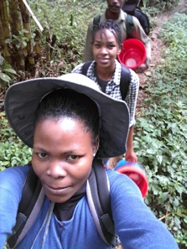


Are there any aspects of your academic career / personal journey as a Black ecologist that you wish to share?
It is fulfilling to persist and grow in this amazing field irrespective of our skin tone. However, the most challenging aspect is when we work with our western counter parts, there is always an imposed superiority complex. This affects progress because it creates a feeling of not being up to speed. Progress is also hindered by some senior ecologists who occasionally demean their juniors basing on their perception of mentee’s IQ. To some extent, striking a balance between academia and family is challenging most especially for black female ecologists. To anyone struggling to stay in ecological field amidst dark clouds, be smart enough to persist and come out wearing victor’s crown.
On the bright side, I encountered individuals who selflessly supported and are still supporting my journey and they include; Drs, Perpetra Akite, Eric Sande, Robert Kityo, Mr. Sadic Waswa Babysiza of Makerere University, Dr. David Blackburn of Florida Museum of Natural History. Additionally, some entities have been part of the journey for instance, FMNH Chicago especially professor Julian Kerbis Peterhans, Biodiversity Informatics Training Curriculum (BITC) especially professor Townsend Peterson, Tropical Biology Association etc. and now the British Ecological Society has given me an opportunity and a platform to look back and smile.
Are there any ongoing issues in the ecological / academic landscape that you would like to highlight or have experienced?
Most traditional ecologists still think that ecological studies are only viable/valid if conducted in protected areas yet the shift in land-use approach that include increased agriculture mechanization, growing population and climate change has led to invasion of natural environment hence decimating wildlife habitats. On the other hand, animals do not know the boundaries therefore there is need for a paradigm shift to embrace the emerging discipline of Reconciliation Ecology (Urban/agro-ecology). I conducted my post graduate research in an agricultural landscape studying amphibians but it was not easy to convince the academic committee that biodiversity exists in impacted landscapes. To make the case stronger, this work has now been published [Akoth et al. (2023) DOI:10.1163/15707563-bja10111]. Hence, it is very possible and rewarding to walk the path that no one has used and leave a trail.
If you could see one change in academia to positively impact Black ecologists, what would that be?
There is need for senior ecologists (mentors) to equitably provide a platform for mentees to rise, i.e., co-authoring and resource allocation to enable mentees stay on track. One retired professor used to say that black scientists (ecologists) are just “hookers”. Due to limited resources, we go where there is money for research opportunities regardless of our passion/initial interest.
Shout out your peers! Any black ecologists or groups who are doing work you admire?
I commend my colleagues at the Centre for Strategic Ecological Practice for developing a strategy towards environmental conservation through research and awareness sessions, Mr. Sadic waswa Babyesiza for persistently practicing ecology, Mr. James Robert Ochieng for unmatched passion, Dr. Eric Sande and Dr. Perpetra Akite for mentoring and supporting upcoming ecologists to the extent of reaching out to them even when they make attempts to quit and lastly but not least Mr. Emmanuel Amoah working to conserve Vulnerable West African Dwarf Crocodile (Osteolaemus tetraspis) in Ghana.
 Methods Blog
This is great experience in ecology, keep in up please 🙏