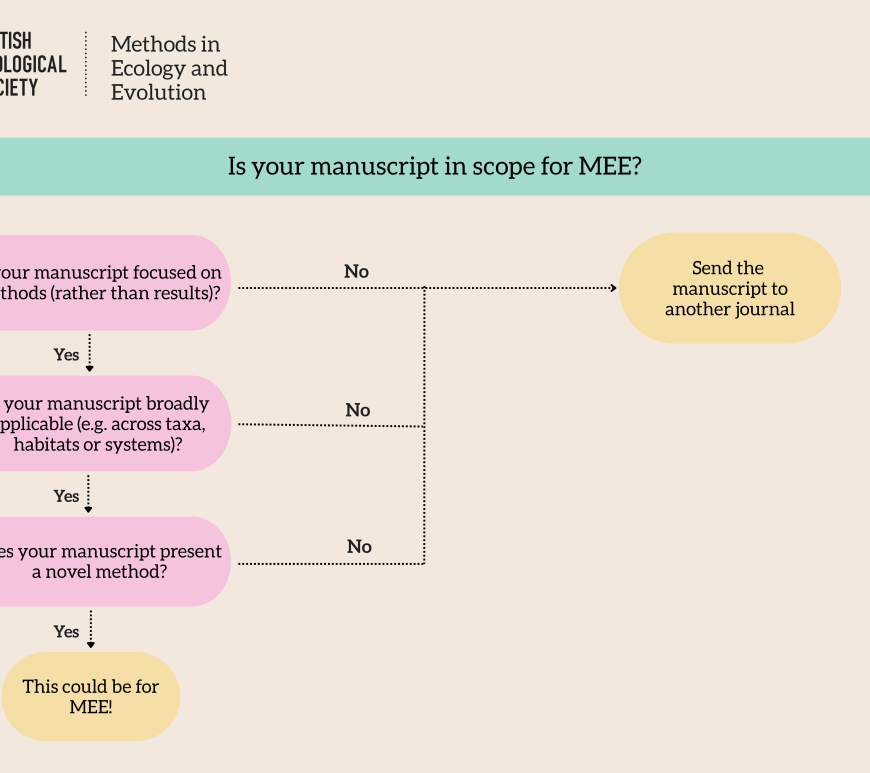
How to avoid a desk-rejection because your manuscript is the wrong type

Post provided by Dr. Aaron M. Ellison, Executive Editor at Methods in Ecology and Evolution You’ve worked for months, sometimes years, on developing and testing a new method, and spent a similar amount of time writing the manuscript. It’s finally finished and after navigating the online submission system and uploading and proofing your files, you press the “submit my manuscript” button. Back in the Dark … Continue reading How to avoid a desk-rejection because your manuscript is the wrong type

The Evolution and Diversity of Peer Review

Post provided by Lydia Morley Today, peer review is a foundation of academic publishing. It serves as a checks and balances system to ensure that researchers present work of high quality, novelty, and relevance to the greater academic community. When our work is accepted for publication, it has quite literally been judged by a jury of our peers. And like a real jury, the review … Continue reading The Evolution and Diversity of Peer Review

On the Benefits of Collaborative Peer Review

At the British Ecological Society journals we strongly encourage senior academics to review our manuscripts in collaboration with more junior members of their labs.

We believe that this is fantastic training for Early Career Researchers, whether it involves sitting down and combing through a manuscript together, or, if they already have some experience, the junior researcher writing the report and the senior researcher editing and adding comments later. We also recommend that the Early Career Researchers read our handy Guide to Peer Review before conducting their report.

This Peer Review Week, some of our past co-reviewers have kindly shared their thoughts on the process.

Continue reading “On the Benefits of Collaborative Peer Review”