From the Field to Museums: Uncovering the Hidden Insect World of the Galápagos Islands.

In this series, we explore the unique experiences of field ecologists conducting research in remote field stations during the holiday season. Through personal stories and reflections, our contributors share what it’s like to conduct scientific work in remote, biodiverse environments, where the challenges of research intersect with the spirit of the holidays. From the solitude of secluded field stations to unexpected festive moments in the … Continue reading From the Field to Museums: Uncovering the Hidden Insect World of the Galápagos Islands.

A Remote Holiday Season: Research and Reflections at the Succulent Karoo Station.

In this series, we explore the unique experiences of field ecologists conducting research in remote field stations during the holiday season. Through personal stories and reflections, our contributors share what it’s like to conduct scientific work in remote, biodiverse environments, where the challenges of research intersect with the spirit of the holidays. From the solitude of secluded field stations to unexpected festive moments in the … Continue reading A Remote Holiday Season: Research and Reflections at the Succulent Karoo Station.

Look inside: a handy tool for casting the enclosed nest structure of birds

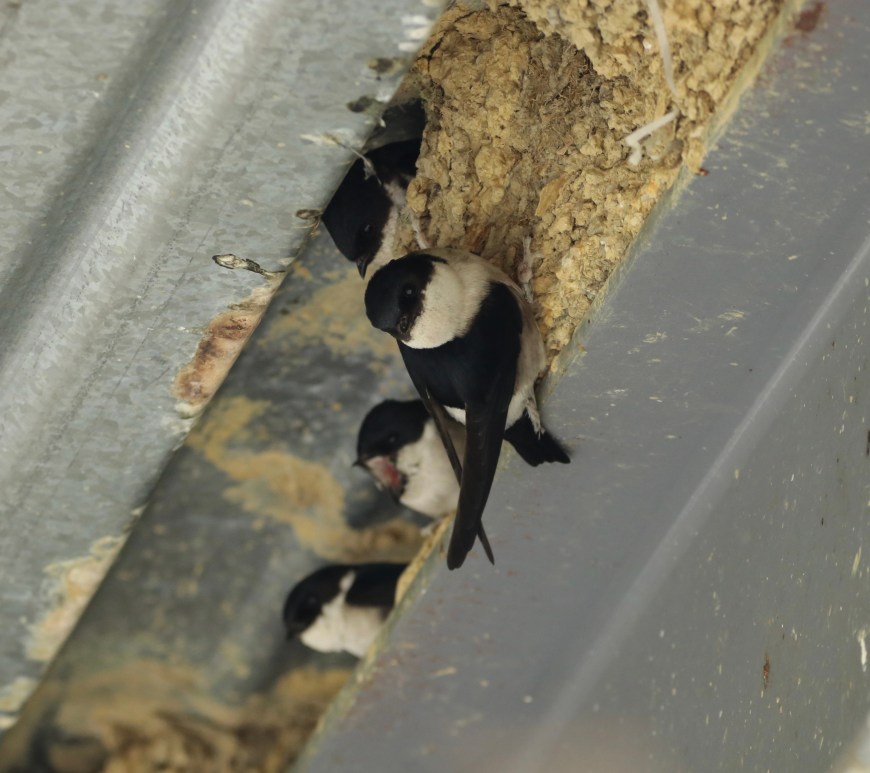
Post provided by Jing-Chia Guo. To understand something, we often describe its appearance and shape: The ball is round, the can is cylinder, and the pillow is kind of rectangle. However, most natural creatures are irregular in shape, so it’s difficult for people to quantify or define them. Sometimes, scientists are even unable to get their hands on the objects they need, and that is … Continue reading Look inside: a handy tool for casting the enclosed nest structure of birds

Discovering population dynamics and community interactions of migratory birds by individual-based model

It has been a few weeks since the 15th Chinese Symposium on Biodiversity Science and Conservation, where the first “Seminar on Methods in Ecology and Evolution in China” was held. In these blog posts, we hear from some of the winners of the “Outstanding Young Scholar Award in Ecological and Evolutionary Methodology in China”. Here, winner Jin Liu discusses the background behind their research. Post … Continue reading Discovering population dynamics and community interactions of migratory birds by individual-based model

For worse and for better: the complicated marriage between biologging and wild animal welfare

Post provided by Michaël Beaulieu A cold Encounter in the Wild When talking about animal welfare to scientists who commonly use biologging tools to monitor the behaviour or physiology of wild animals in an ecological or conservation context, I have noticed that the first thing that usually comes to mind for them is the unwanted impact that biologging may have on animal welfare. Much has … Continue reading For worse and for better: the complicated marriage between biologging and wild animal welfare

From fieldwork to theoretical modelling – my journey in measuring biodiversity

It has been a few weeks since the 15th Chinese Symposium on Biodiversity Science and Conservation, where the first “Seminar on Methods in Ecology and Evolution in China” was held. In these blog posts, we hear from some of the winners of the “Outstanding Young Scholar Award in Ecological and Evolutionary Methodology in China”. Here, winner Yi Zou discusses their research. Post provided by Yi Zou. … Continue reading From fieldwork to theoretical modelling – my journey in measuring biodiversity

From lost Wood Thrushes to scientific breakthroughs: How a fieldwork challenge sparked a new way to think about occupancy models

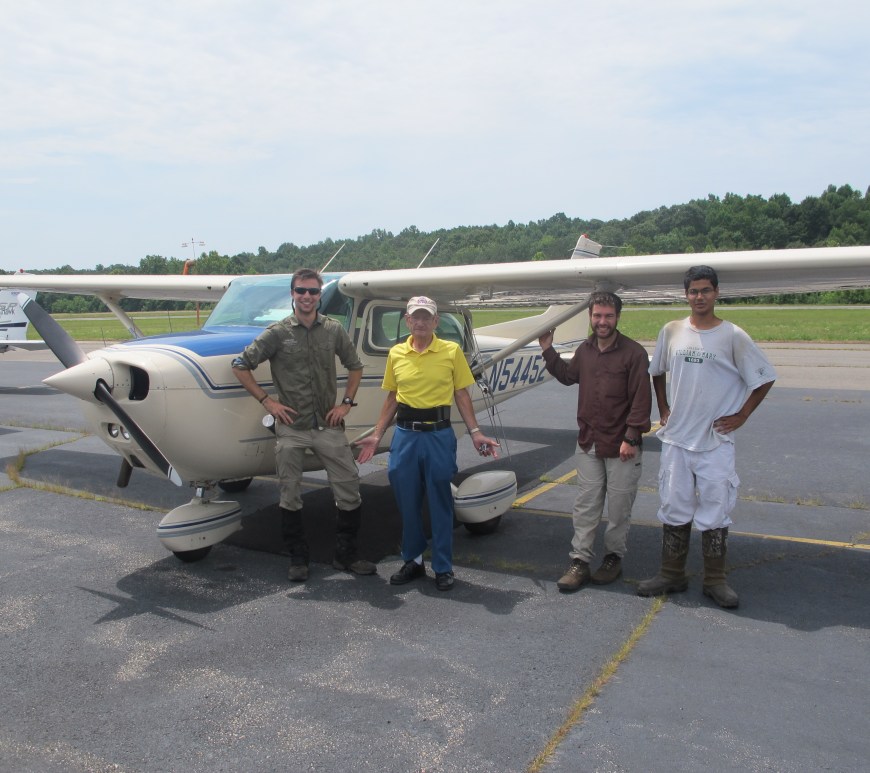
Post provided by Vitek Jirinec In 2013, I found myself knee-deep in the marshes and forests of southeastern Virginia, USA, embarking on what would become an unpredictable journey in my career. Fresh into my graduate thesis at the College of William & Mary under the guidance of Matthias Leu, the plan was studying the habitat use of Wood Thrushes—a species that is often researched, but … Continue reading From lost Wood Thrushes to scientific breakthroughs: How a fieldwork challenge sparked a new way to think about occupancy models

Bringing UV into the Light: A New Tool for Monitoring Ultraviolet Light Exposure Over Time

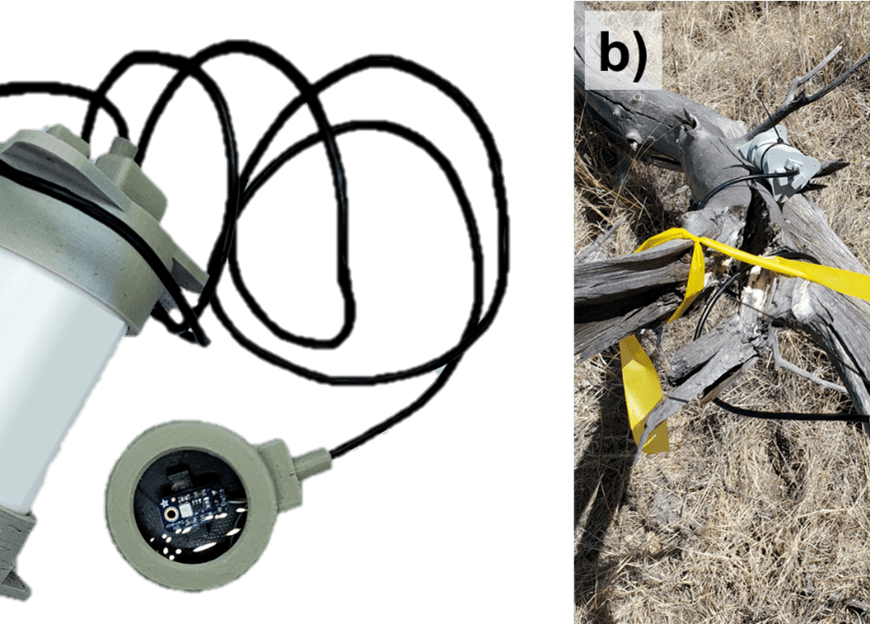
Post provided by Matthew Lattanzio. Hello there! My name is Matthew Lattanzio, and I am an Associate Professor at Christopher Newport University where I study how reptiles and amphibians interact with and respond to environmental variability. I grew up as a nature enthusiast, and so it is exciting to still carry that curiosity through to my career, constantly challenging myself and my students to think … Continue reading Bringing UV into the Light: A New Tool for Monitoring Ultraviolet Light Exposure Over Time

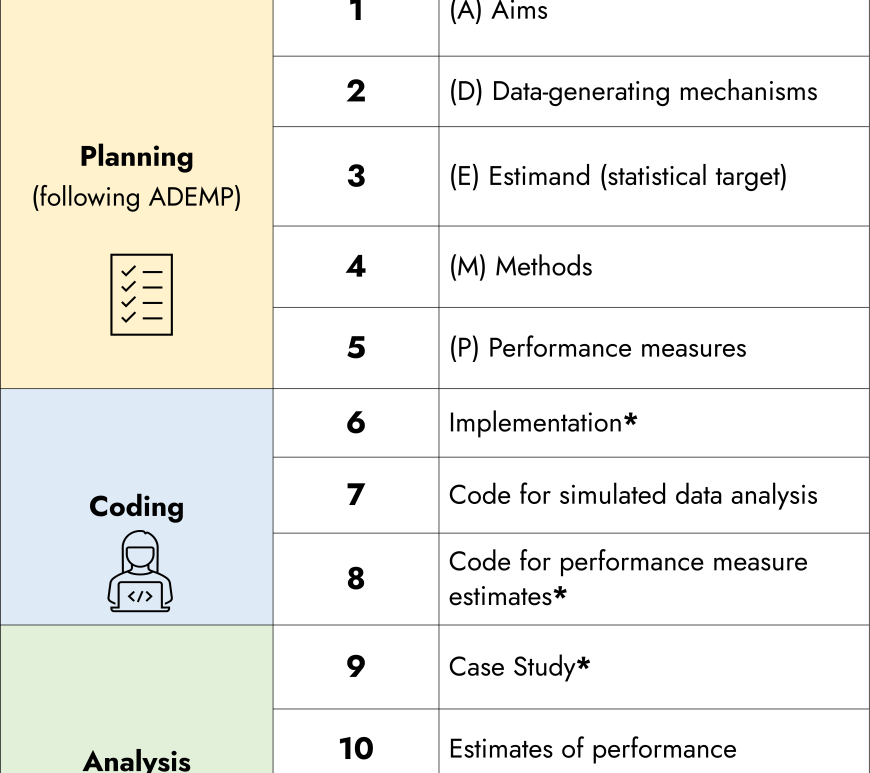
Improving Reporting Standards For Simulation Studies

Post provided by Coralie Williams Have you ever wondered if your simulation study could be replicated? The replication crisis has been a hot topic in empirical research for years, but it’s only recently that we’ve started discussing it in statistical method research (Boulesteix et al., 2020; Luijken et al., 2024). Methodological research often relies on simulations – computer experiments that assess how well statistical methods … Continue reading Improving Reporting Standards For Simulation Studies

Introducing ‘Life on the edge’, a new toolbox for predicting population responses to global change

Post provided by Chris Barratt Chris is a Researcher in the Animal Breeding and Genomics group (Centre for Genetic Resources Netherlands) at Wageningen University and Research, and a guest researcher at Naturalis Biodiversity Center in Leiden. Caught somewhere between being a quantitative geneticist, a spatial modeller and a conservationist, he is committed to finding new and interesting ways to integrate genomic data and predictive modelling … Continue reading Introducing ‘Life on the edge’, a new toolbox for predicting population responses to global change