Smart cameras in the wild: A centralised solar-powered Raspberry Pi system for automated animal observation and environmental monitoring

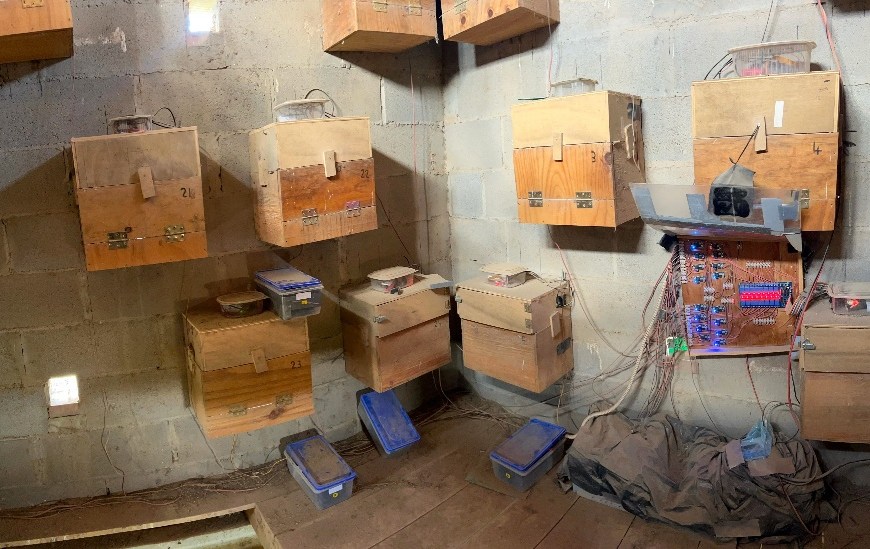
Post provided by Marçal Pou-Rossell Many studies of animal behaviour – especially parental care – rely on short, fragmented observations. Whether due to battery limitations, human resources, or remote field conditions, collecting continuous data throughout an entire reproductive cycle is often just not feasible. As a result, key behaviours can go undocumented, and our understanding of how animals make decisions across time remains incomplete. We … Continue reading Smart cameras in the wild: A centralised solar-powered Raspberry Pi system for automated animal observation and environmental monitoring

False Causes, Meet Attractor Dimension

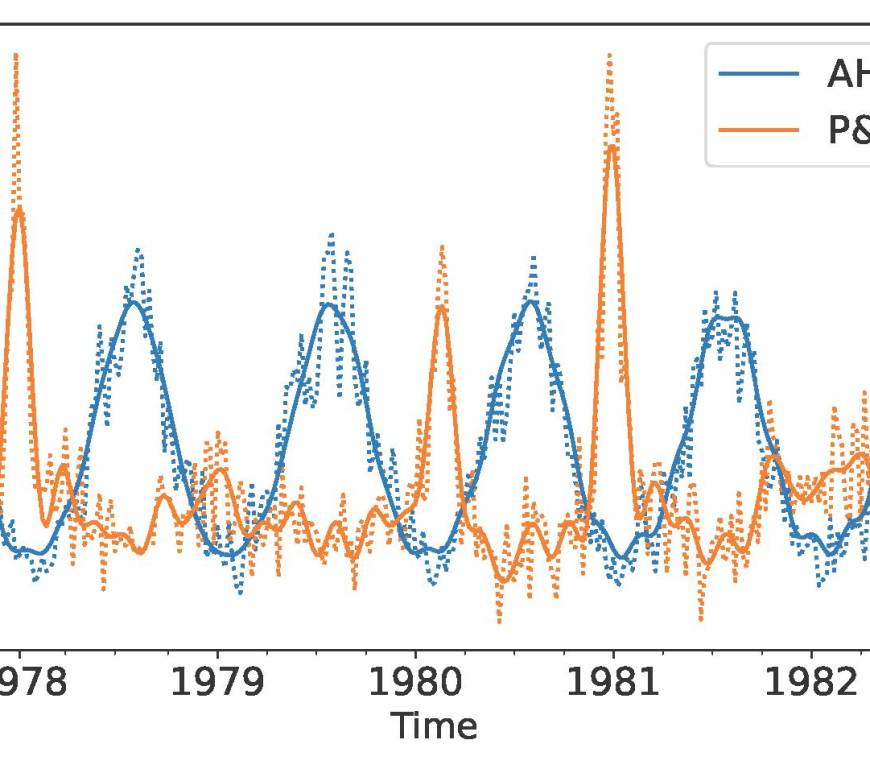
Post provided by Yair Daon Who am I? I’m Yair Daon, a mathematician-turned-epidemiologist at Bar-Ilan University’s Faculty of Medicine. Most days I stare at time-series curves that claim one thing “drives” another. When those claims are wrong, public-health decisions can drift off course. Our new Methods in Ecology & Evolution paper introduces a fast way to shout “no!” before that happens. A two-minute primer for … Continue reading False Causes, Meet Attractor Dimension

Practical tools to advance Image-Based bio-logging in marine ecosystems

Post provided by Marianna Chimienti My name is Dr Marianna Chimienti, and I am a lecturer in Marine Top Predator Ecology at the School of Ocean Sciences at Bangor University (UK). I’m fascinated by animal movements. My main research focuses on understanding how, where, when, and why animals move, using bio-logging technology (devices attached to animals that can record location, depth, acceleration, orientation, environmental conditions, … Continue reading Practical tools to advance Image-Based bio-logging in marine ecosystems

Simple, intuitive tool for population management decision-making

Post provided by Izzy McCabe Predictions of insect populations from phenology models and sampling can help growers manage pests and beneficial insects on their farms. Phenology models relate accumulated heat units after winter to pest development and thereby inform timing of control actions, while sampling relies on regular on-site data collection (daily, weekly, etc.) to measure pest population densities and estimate potential damage. A drawback … Continue reading Simple, intuitive tool for population management decision-making

The Ground Beneath Their Feet: Listening in on Africa’s wildlife using seismic sensors

Post provided by René Steinmann Hi, I’m a geophysicist by training, but I’ve recently shifted my focus from studying the solid Earth to some of its living inhabitants. I now work at the intersection of geophysics, wildlife biology, and machine learning. My recent research brings together these seemingly distant worlds in a project that’s all about listening—not to singing birds, but to the subtle vibrations … Continue reading The Ground Beneath Their Feet: Listening in on Africa’s wildlife using seismic sensors

From Kenya to Ohio – the inspiration for WildWing: an open-source, autonomous and affordable unmanned aerial system for animal behavioural video monitoring

Post provided by Jenna Kline, PhD Candidate, Department of Computer Science and Engineering, The Ohio State University, Columbus, OH, USA The story of the WildWing project began in 2022 when I enrolled in the Experiential Introduction to Imageomics course. For the fieldwork component of the course, I travelled to the Mpala Research Centre in Laikipia, Kenya. My course project advisors, Dr Tanya Berger-Wolf and Dr … Continue reading From Kenya to Ohio – the inspiration for WildWing: an open-source, autonomous and affordable unmanned aerial system for animal behavioural video monitoring

From a frustrated undergraduate to a motivated PhD: The story of YOLO-Behaviour for automated behavioural coding from videos

Post provided by Alex Chan Hoi Hang, PhD student, Centre for the Advanced Study of Collective Behaviour, University of Konstanz The story of this project can be traced back to 2019, as a second-year undergraduate in biological sciences at Imperial College London, UK, where I took an animal behaviour course. For one of the hands-on sessions, Dr. Julia Schroeder (who later became my undergraduate and … Continue reading From a frustrated undergraduate to a motivated PhD: The story of YOLO-Behaviour for automated behavioural coding from videos

Addressing observational biases in data-driven approaches of zoonotic hazard prediction

Post provided by Andrea Tonelli Over the past five decades, more than half of emerging infectious diseases in humans originated from animals, with zoonotic pathogens posing a growing threat to global health. Shifts in land use, climate change, direct use of wildlife and biodiversity loss all influence human exposure to pathogens of wild animals, shaping the likelihood of zoonotic spillover events. In the wake of … Continue reading Addressing observational biases in data-driven approaches of zoonotic hazard prediction

Unde Venis Species? RRphylogeography, a new accurate method finds the area of origin of species

Post provided by Pasquale Raia (he/him), Alessandro Mondanaro (he/him) and Silvia Castiglione (she/her) Quo Vadis? Latin for Where Are You Going? was a huge 1951 box office hit produced by Metro Goldwyn Mayer. The film (which is based on an 1896 book wrote by the Polish novelist Henryk Sienkiewicz) was set in ancient Rome during Nero’s reign and is credited for saving MGM from bankruptcy … Continue reading Unde Venis Species? RRphylogeography, a new accurate method finds the area of origin of species

Into the Swarm-Verse: quantifying collective motion across species and contexts

Post provided by Marina Papadopoulou Authors We are three researchers interested in collective animal behaviour. Marina Papadopoulou is a postdoctoral researcher at Tuscia University in Italy, Simon Garnier is a Professor at the New Jersey Institute of Technology (USA), and Andrew King is an Associate Professor at Swansea University (UK). As a Greek-French-Welsh team with empirical, mathematical, and computational backgrounds in different study systems, we … Continue reading Into the Swarm-Verse: quantifying collective motion across species and contexts