Happy Pride Month! Join the British Ecological Society in this annual, global celebration as we share stories from STEM researchers who belong to the LGBTQ+ community.
This post is by Nathaniel Wells.
About me

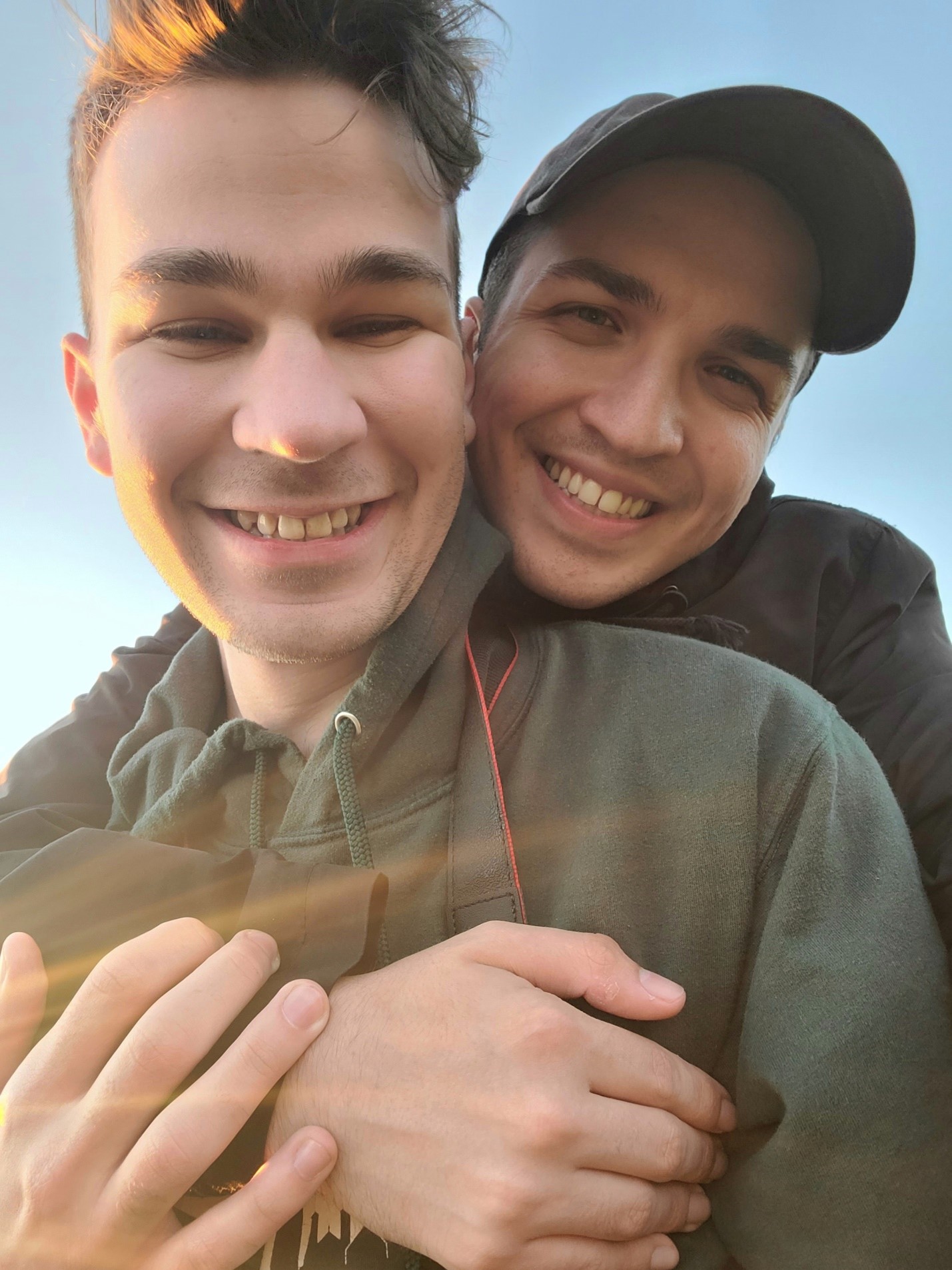
My name is Nathaniel, and I use he/they pronouns. I’m from Newfoundland and Labrador, Canada, and I’ve just finished my undergraduate degree at Memorial University of Newfoundland with Honours in Psychology. This fall, I will be starting my master’s in experimental psychology at the same university with a concentration in cognition. When I’m not deep into my research or studying, you can usually find me out in nature, indulging in activities like hiking, kayaking, and camping. I also have a deep passion for travelling, which has taken me to some incredible places and allowed me to experience diverse cultures. During these activities, my fiancé, Josh (he/they), is often right there with me, sharing these adventures. Josh is deeply involved in environmental research, working with Building Climate Resilience and CLIMAtlantic at Memorial University of Newfoundland to evaluate the utility and value of available climate change guidance for long-term planning in Newfoundland and Labrador. This connection to climate resilience ties into my own research interests, as understanding and protecting the habitats of Atlantic Puffins (Fratercula arctica) also involves considering the broader impacts of climate change on their ecosystems.
Understanding the Daily Lives of Atlantic Puffins: My Research on Colony Attendance
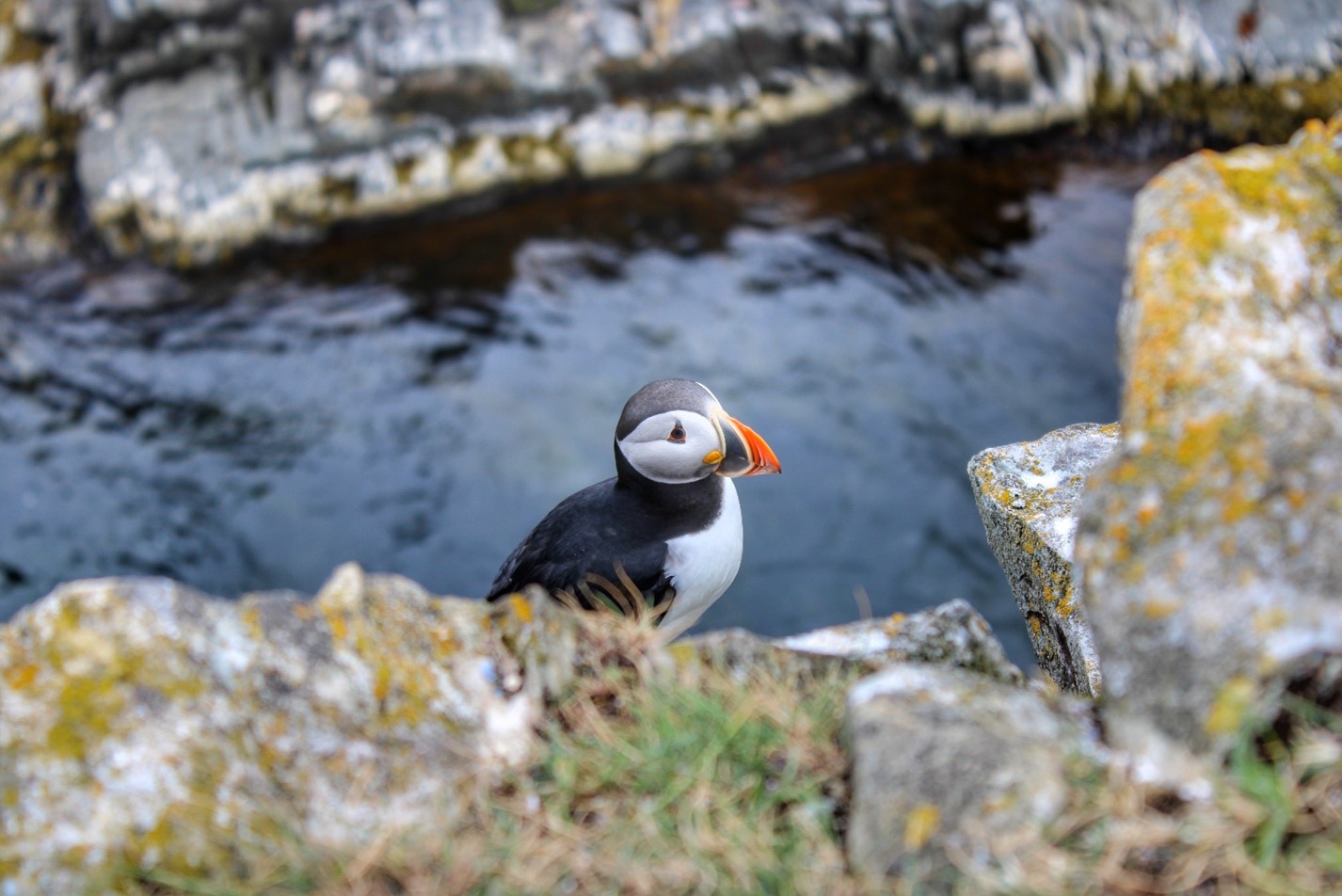
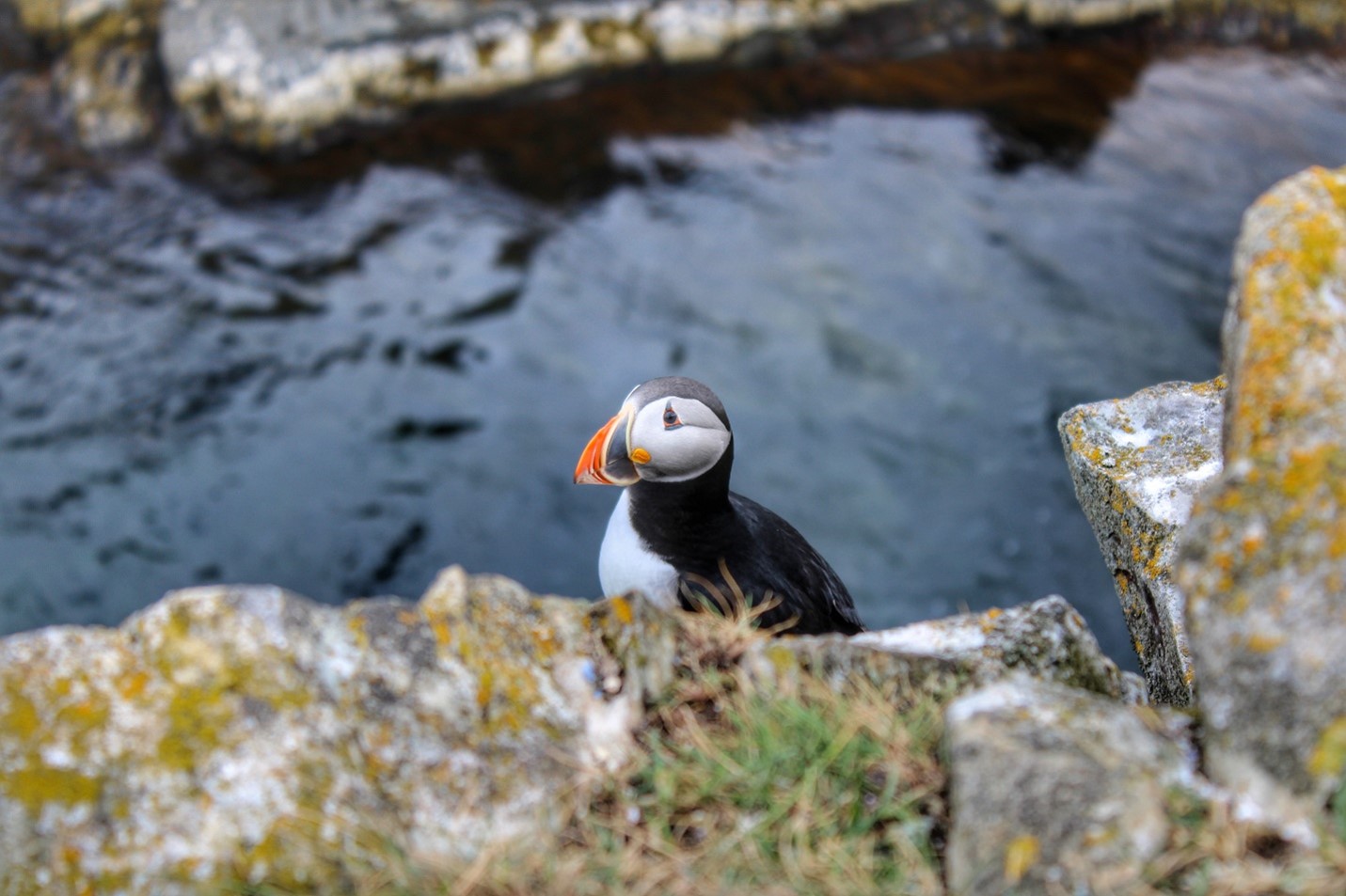
My journey into researching Atlantic Puffins started with my hobby of photography. During one of my excursions, I took some pictures of the puffins and instantly fell in love with these fascinating birds. In my third year of undergraduate studies, I took an animal behaviour course with Dr. Pierre-Paul Bitton, who would later become my supervisor. Dr. Bitton’s research on puffins piqued my interest, and I expressed my enthusiasm to get involved in his research. Fortunately, he welcomed me into his lab, and that marked the beginning of my exploration of puffin behaviour and ecology.
My research focused on what factors influence puffins’ colony attendance. We collected data from four different sites in Newfoundland and Labrador and noticed some fascinating patterns. One of the key findings was that puffins’ colony attendance followed a cyclical pattern, meaning there were regular ups and downs in their daily visits. Previous studies suggested that puffin attendance on any given day is related to their attendance on previous days, a concept known as autocorrelation. However, we suspected that autocorrelation might not fully explain these patterns. So, we decided to explore how environmental conditions might play a role. By comparing attendance patterns across different colonies, we aimed to uncover whether distant colonies showed synchronized attendance patterns. If they did, it would suggest an external environmental factor influencing their behaviour rather than just autocorrelation.
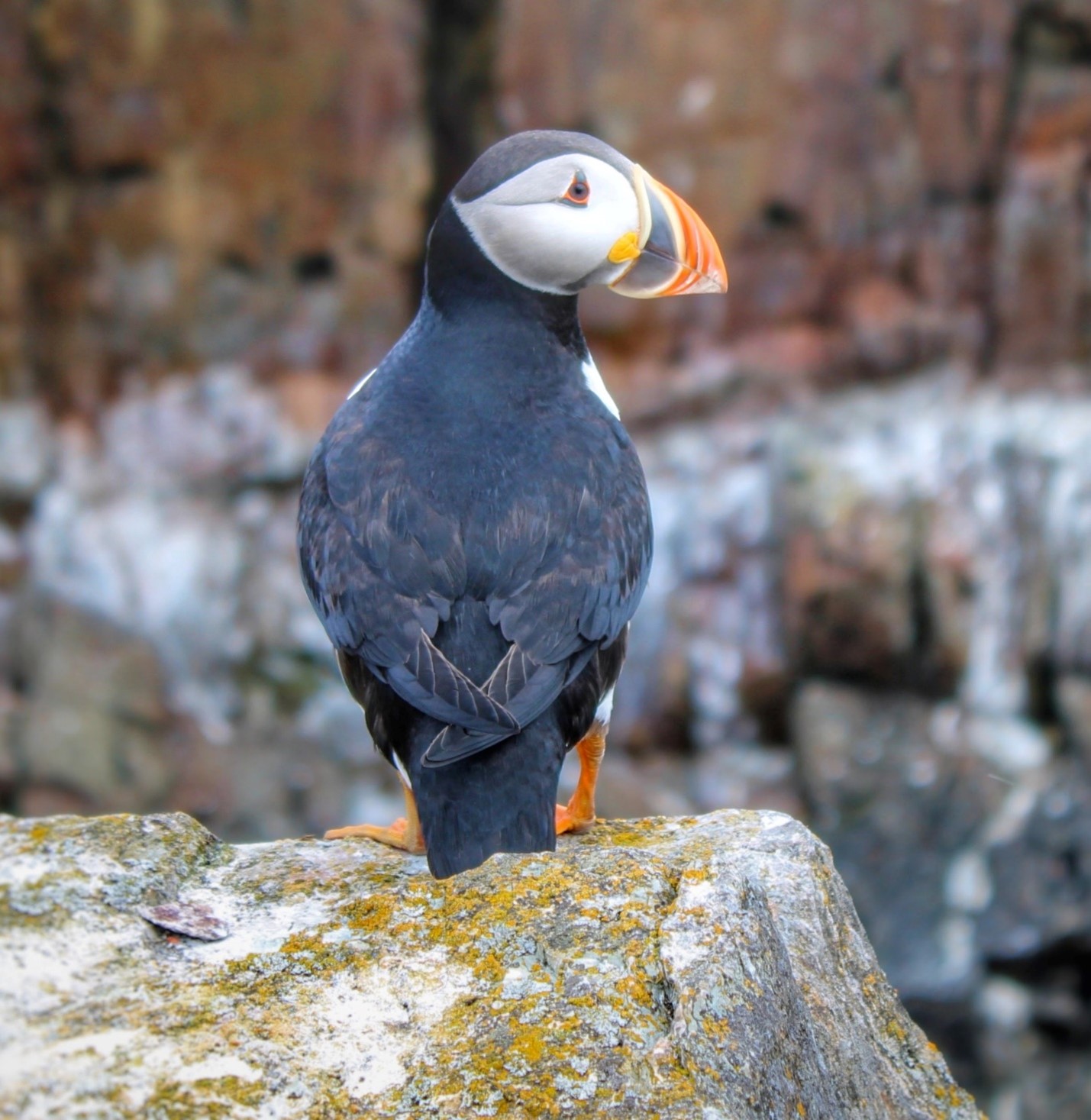
From the four sites, we mainly focused on two: Great Island and Elliston, which are about 150 kilometres apart. There, we observed significant oscillation patterns in attendance—highs and lows that did not align with previous autocorrelation assumptions. This means that the puffins’ attendance was not influenced by their attendance on previous days. At the same time, pairwise correlations among colonies revealed moderate to low synchrony, suggesting geographical factors might play a role in these patterns. To determine which environmental factors were influencing colony attendance, we built multiple regression models for Great Island and Elliston. Both sites showed a positive relationship between air temperature and colony attendance. This could mean that puffins avoid their burrows when it gets too hot, possibly to prevent overheating. While burrows can act as stable microclimates during extreme cold, they might not effectively buffer against heat. Interestingly, in Elliston, we found a positive relationship between rainfall and colony attendance, possibly due to terrain differences. Elliston’s flatter land might not drain water as effectively as Great Island’s sloped terrain, potentially affecting burrow stability and puffin attendance during rainy days.
Overall, our study demonstrates for the first time the potential for synchronized colony attendance patterns across geographically distant puffin colonies, suggesting a broader environmental influence beyond local conditions. Understanding these dynamics is crucial for conservation efforts, as it helps us protect the habitats that these birds rely on.
Seeking Representation and Visibility
As a gay man in the scientific community, I’ve often found myself searching for representation and a sense of belonging. Throughout my academic journey, I’ve learned the importance of visibility and representation. Seeing someone like me in a position of influence and leadership is incredibly powerful, and it has inspired me to step into that role myself. I strive to be a visible leader, advocating for inclusion and diversity within the scientific and ecological communities.
By sharing my experiences and being open about my identity, I hope to pave the way for others to feel confident and supported in their own journeys. Because of this openness, I’ve had other queer members, both out and closeted, approach me for advice and support. One memorable instance was when a fellow student, who had been struggling with coming out, reached out to me after a seminar where I mentioned my identity. We had several conversations about the challenges of being 2SLGBTQIA+ in academia and how to navigate them. These interactions have been deeply meaningful and reaffirm the importance of visibility and advocacy. Knowing that my openness could help someone else feel less alone and more confident in their identity has been incredibly rewarding.
Finding My Place as a Gay Man in Science
Starting my master’s under the supervision of Dr. Jonathan Fawcett marks an exciting new chapter in my academic journey. Transitioning from focusing on animal behaviour psychology to human psychology will be a significant shift, much like my experience in trying to find where I belong as a gay man in science. Just as studying puffins required me to understand their unique behaviours and environments, navigating my identity in the scientific community involves understanding and embracing the diverse perspectives and experiences that make up our field.
Being a gay man in a field that has not always been inclusive can be challenging, but it has also fueled my determination to create change and advocate for a more inclusive environment. In my journey, I have faced moments of uncertainty and isolation. However, these experiences have also given me a unique perspective and resilience. I have learned to find strength in my identity and to use it as a source of inspiration and motivation. Embracing who I am has allowed me to connect with others on a deeper level, fostering a sense of community and belonging.
Making Progress for the Community
One of my key goals is to advocate for greater 2SLGBTQIA+ inclusion within the scientific community. Representation matters, and it’s crucial to create spaces where everyone feels welcome and valued. I actively participate in initiatives and organizations that promote diversity and inclusion, working to ensure that the next generation of scientists and researchers see themselves reflected in their fields. By sharing my journey and being open about my experiences, I hope to inspire others to embrace their identities and pursue their passions without fear. Science thrives on diversity, and it’s through our unique perspectives that we can achieve groundbreaking discoveries and innovations.
Discover more stories from this year’s Pride Month blog series on the BES website.
 Methods Blog