This issue contains the latest methods in ecology and evolution, including our first Felsenstein Review! Read to find out about this month’s featured articles and the article behind our cover!
Featured
Simpson’s tachytely or bradytely? The importance of quantifying rate uncertainty
The spectacular variation in species forms and richness across space and time can be explored using sophisticated and powerful tools recently developed by evolutionary modellers. In our Felsenstein Review, Zenil-Ferguson and Hsiang Low ask if the classic ‘Simpsonian’ view of tachytelic (fast), horotelic (standard) and bradytelic (slow) diversification rates can be distinguished with currently available tools and data. They focus on identifying if a cohesive framework for rate estimation exists and whether the exceptional rates can be defined statistically and/or biologically and discuss if these definitions have a purpose.
The Aquatic Metatron: A large‐scale experimental facility to study the combined effects of habitat fragmentation and climate change on aquatic meta‐ecosystems
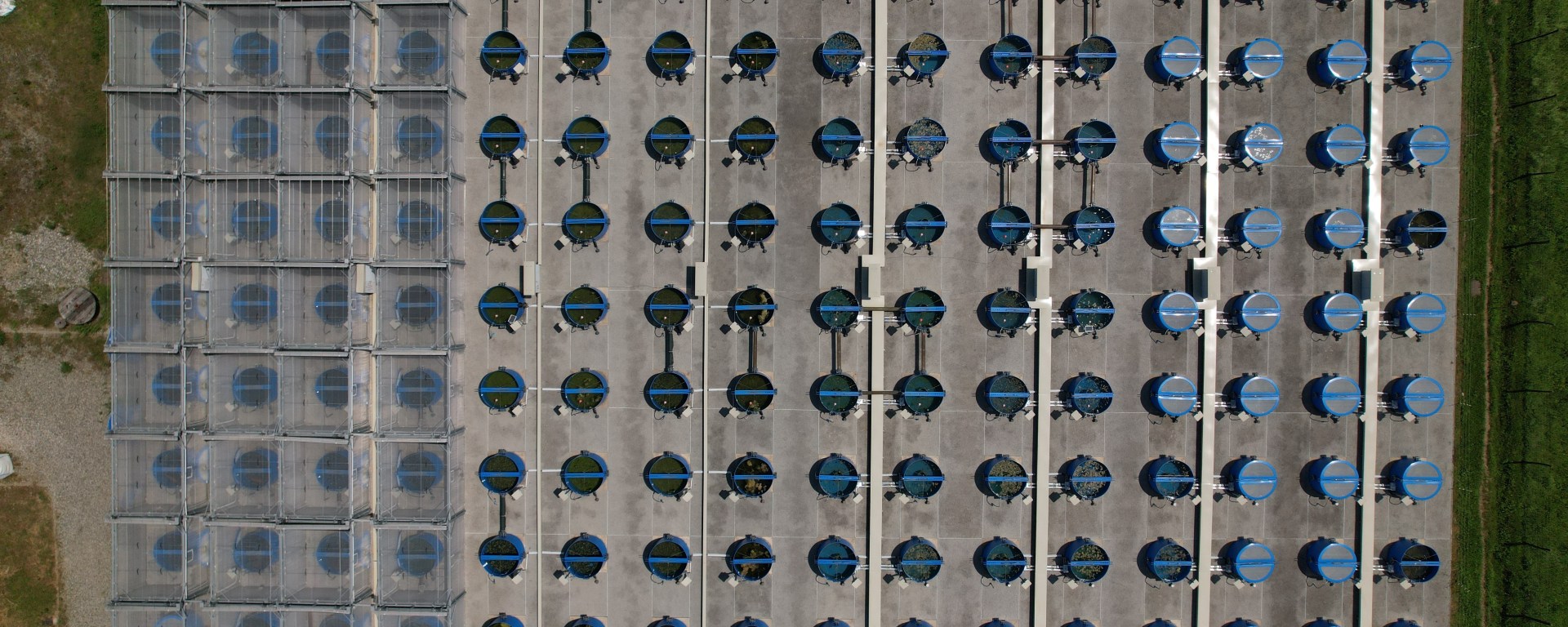
Richard et al. present the Aquatic Metatron, a unique mesocosm facility providing a large-scale experimental resource to study the combined effects of global change components, in particular climate change and habitat fragmentation, on the ecological and evolutionary dynamics of aquatic ecosystems. Authors describe the technical specificities of the platform, and illustrate how we can manipulate multiple components of global change and quantify various response variables. Finally, they discuss the novelty of the Aquatic Metatron compared to existing aquatic facilities and provide details on the platform’s accessibility.

Predicting adaptation and evolution of plasticity from temporal environmental change
Gallegos et al. extend classic evolutionary theory to develop a model for the evolution of environmental tolerance by the evolution of an underlying developmentally plastic trait, in response to major components of temporal change. Moreover, they have illustrated how this model—with its acknowledged limitations—might be used to generate testable predictions of adaptation and plasticity in natural environments facing accelerated climate change, and provide supporting materials (including Shiny app) to facilitate this. The authors approach offers a well-established, broadly-applicable, and pragmatic framework for understanding adaptation to complex, real-world environments, with scope to enhance the management and conservation of biological systems.
Combining Unity with machine vision to create low latency, flexible and simple virtual realities
In recent years, virtual reality arenas have become increasingly popular for quantifying visual behaviours. Ogawa et al. created a novel virtual reality arena combining machine vision with the gaming engine Unity. Their results show that combining Unity with machine vision tools provides an easy and flexible virtual reality environment that can be readily adjusted to new experiments and species. This can be implemented programmatically in Unity, or by using our new tool CAVE, which allows users to design new experiments without additional programming. They provide resources for replicating experiments and our interface CAVE via GitHub, together with user manuals and instruction videos, for sharing with the wider scientific community.

A transferable approach for quantifying benthic fish sizes and densities in annotated underwater images
Benthic fishes are a common target of scientific monitoring but are difficult to quantify because of their close association to bottom habitats that are hard to access. Esselman et al. present a method and open-source software called ‘FishScale’ to estimate benthic fish lengths, numeric abundance and biomass density in underwater environments assessed with down-looking monocular images. The method is applicable to data collected using a variety of nadir imaging approaches with widespread applications to fisheries monitoring and quantification of any species or object for which nadir images and working distances between the camera and feature of interest are available.

Introduction to deep learning methods for multi‐species predictions
Popular species distribution models use statistical and machine learning methods but face limitations with multi-species predictions at the community level, hindered by scalability and data imbalance sensitivity. Hu et al. explore the potential of deep learning methods to overcome these challenges and provide more accurate multi-species predictions. Specifically, they introduce four distinct deep learning models that use site × species community data but differ in their internal structure or on the input environmental data structure. The paper aims to shed light on the potential of deep learning methods in the domain of species distribution modelling, providing valuable insights for future research and applications in this field
Cover Image

This month’s cover image shows an aerial view of the Aquatic Metatron: a unique experimental platform allowing the study of the effects of climate change, habitat fragmentation, and biodiversity loss on aquatic ecosystems. The Aquatic Metatron is composed of 144 independent mesocosms, each of which can be used to create realistic freshwater ecosystems. Each mesocosm can be connected to others through aquatic and/or aerial corridors, allowing work at the meta-ecosystem scale. They can also be manipulated for their climate by either warming or cooling each mesocosm according to precise climate change scenarios. This experimental platform is fully described by Richard et al. in this issue, and they provide three concrete examples of how the platform can be used to study the combined effects of fragmentation, climate change, biodiversity loss, and eutrophication on the long-term ecological and evolutionary dynamics of aquatic ecosystems. This platform is open to external researchers, and Richard et al. provide useful information for future users.
 Methods Blog