Organising the BES Data and Code Hackathon

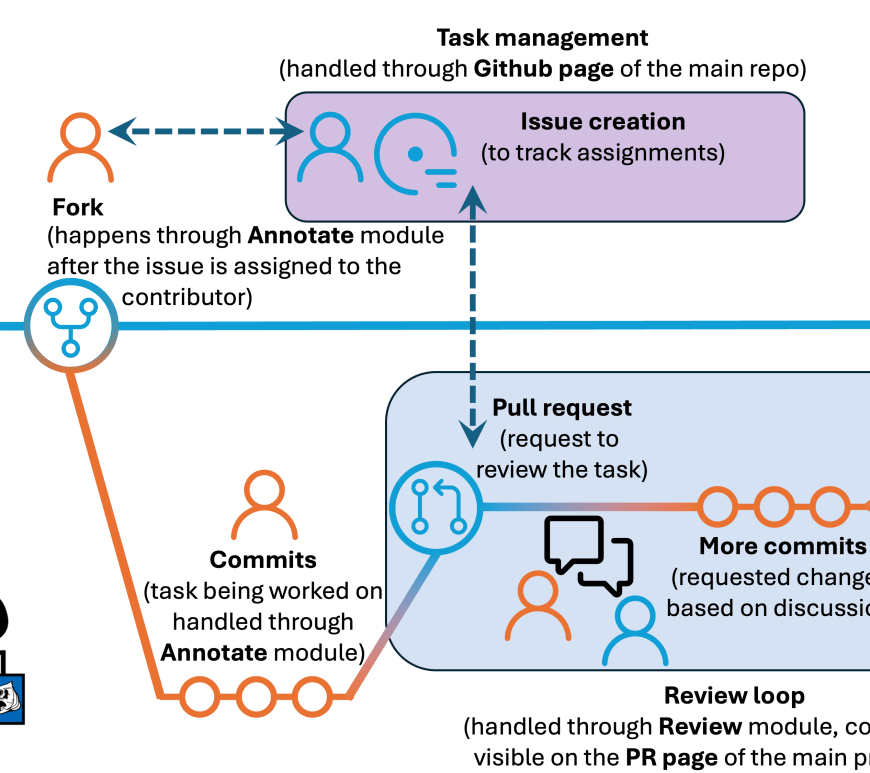
Post provided by Natalie Cooper, MEE Senior Editor In my last blog post I wrote generally about why and how to organise a hackathon. To help make those instructions a little clearer, below I provide an example from the BES Data and Code Hackathon we ran 29th-30th September 2025. Note that technically this was really a datathon rather than a hackathon! We followed the outline … Continue reading Organising the BES Data and Code Hackathon

The What, Why and How of Hackathons

Post provided by Natalie Cooper, MEE Senior Editor In September 2025 we ran a hackathon to collect data for a paper on data- and code-sharing across the BES journals. After the event, we thought it might be nice to share what we learned about hackathons here on the MEE blog. Massive thanks to all the participants of the BES Data and Code Hackathon for their … Continue reading The What, Why and How of Hackathons

Peter Dietrich: Advancing plant biomass measurements: Integrating smartphone-based 3D scanning techniques for enhanced ecosystem monitoring

Throughout March, we are featuring articles shortlisted for the 2025 Robert May Prize. The Robert May Prize is awarded by the British Ecological Society each year for the best paper in Methods in Ecology and Evolution written by an early career author. Peter Dietrich’s article ‘Advancing plant biomass measurements: Integrating smartphone-based 3D scanning techniques for enhanced ecosystem monitoring‘ is one of those shortlisted for the award. About the paper What … Continue reading Peter Dietrich: Advancing plant biomass measurements: Integrating smartphone-based 3D scanning techniques for enhanced ecosystem monitoring

Maia Austen: A computational framework to characterize and compare the tonal repertoires of toothed whales

Throughout March, we are featuring articles shortlisted for the 2025 Robert May Prize. The Robert May Prize is awarded by the British Ecological Society each year for the best paper in Methods in Ecology and Evolution written by an early career author. Maia Austen’s article ‘A computational framework to characterize and compare the tonal repertoires of toothed whales‘ is one of those shortlisted for the award. About the paper  … Continue reading Maia Austen: A computational framework to characterize and compare the tonal repertoires of toothed whales

Xiaotian Zheng: Spatial-statistical downscaling with uncertainty quantification in biodiversity modelling

Throughout March, we are featuring articles shortlisted for the 2025 Robert May Prize. The Robert May Prize is awarded by the British Ecological Society each year for the best paper in Methods in Ecology and Evolution written by an early career author. Xiaotian Zheng’s article ‘Spatial-statistical downscaling with uncertainty quantification in biodiversity modelling‘ is one of those shortlisted for the award. About the paper  What is your shortlisted paper about, and … Continue reading Xiaotian Zheng: Spatial-statistical downscaling with uncertainty quantification in biodiversity modelling

Robin Boyd: Using causal diagrams and superpopulation models to correct geographic biases in biodiversity monitoring data

Throughout March, we are featuring articles shortlisted for the 2025 Robert May Prize. The Robert May Prize is awarded by the British Ecological Society each year for the best paper in Methods in Ecology and Evolution written by an early career author. Robin Boyd’s article ‘Using causal diagrams and superpopulation models to correct geographic biases in biodiversity monitoring data‘ is one of those shortlisted for the award. Read Robs previous … Continue reading Robin Boyd: Using causal diagrams and superpopulation models to correct geographic biases in biodiversity monitoring data

Nina Schiettekatte: habtools: An R package to calculate 3D metrics for surfaces and objects

Throughout March, we are featuring articles shortlisted for the 2025 Robert May Prize. The Robert May Prize is awarded by the British Ecological Society each year for the best paper in Methods in Ecology and Evolution written by an early career author. Nina Schiettekatte’s article ‘habtools: An R package to calculate 3D metrics for surfaces and objects‘ is one of those shortlisted for the award. About the paper What is … Continue reading Nina Schiettekatte: habtools: An R package to calculate 3D metrics for surfaces and objects

Jordan Martin: Covariance reaction norms: A flexible method for estimating complex environmental effects on trait (co)variances

Throughout March, we are featuring articles shortlisted for the 2025 Robert May Prize. The Robert May Prize is awarded by the British Ecological Society each year for the best paper in Methods in Ecology and Evolution written by an early career author. Jordan Martin’s article ‘Covariance reaction norms: A flexible method for estimating complex environmental effects on trait (co)variances‘ is one of those shortlisted for … Continue reading Jordan Martin: Covariance reaction norms: A flexible method for estimating complex environmental effects on trait (co)variances

Kal Backman: Human inspired deep learning to locate and classify terrestrial and arboreal animals in thermal drone surveys

Throughout March, we are featuring articles shortlisted for the 2025 Robert May Prize. The Robert May Prize is awarded by the British Ecological Society each year for the best paper in Methods in Ecology and Evolution written by an early career author. Kal Backman’s article ‘Human inspired deep learning to locate and classify terrestrial and arboreal animals in thermal drone surveys‘ is one of those shortlisted for the award. About … Continue reading Kal Backman: Human inspired deep learning to locate and classify terrestrial and arboreal animals in thermal drone surveys

Winner! Jenna Kline: Studying collective animal behaviour with drones and computer vision

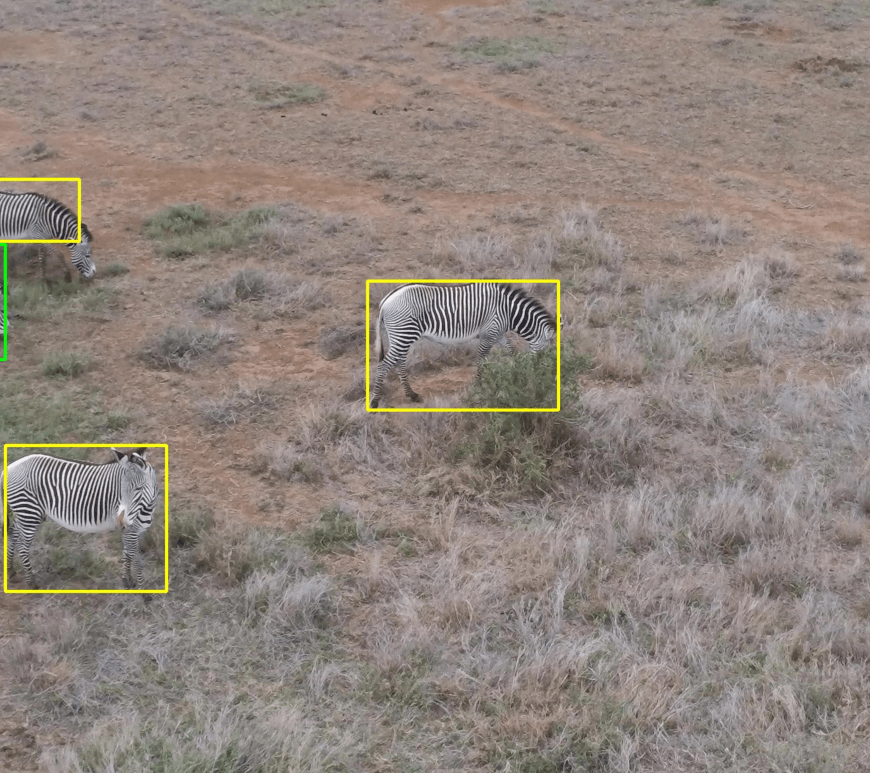
Throughout March, we are featuring articles shortlisted for the 2025 Robert May Prize. The Robert May Prize is awarded by the British Ecological Society each year for the best paper in Methods in Ecology and Evolution written by an early career author. Jenna Kline’s article ‘Studying collective animal behaviour with drones and computer vision‘ is the winner of the award. Read all shortlisted articles here. About the paper What is … Continue reading Winner! Jenna Kline: Studying collective animal behaviour with drones and computer vision