Post provided by Stéphanie Manel.
Why use HyRAD for eDNA capture?
Traditional population genetics approaches require sampling tissue from individuals, which is problematic in aquatic environments where specimen collection is often challenging. Filtering water allows researchers to collect environmental DNA (eDNA), genetic material shed by organisms into their surroundings. Unlike approaches targeting a single DNA barcode, HyRAD allows for the capture of multiple nuclear DNA fragments present in the eDNA sample, making it possible to study intraspecific genetic diversity and population structure.


Credit left : Claude Miaud. Right: free
How does it work?
The protocol was first developed nearly a decade ago in Nadir Alvarez’ lab at the University of Lausanne (Switzerland) for studying historical and ancient DNA. It was progressively refined and expanded as the Alvarez’ lab relocated, first to the Geneva Natural History Museum and more recently to the Lausanne Naturéum (Switzerland). Together, we adapted the protocol to environmental DNA applications. Probes made of fragments of the target DNA were produced from a few fresh tissue samples. These probes were then hybridized with eDNA samples after an enrichment step, followed by high-throughput sequencing. The lab work was carried out in Stéphanie Manel’ team at the Centre d’Ecologie Fonctionnelle et Evolutive (CEFE, Montpellier, France).

Putting HyRAD eDNA capture to the test.
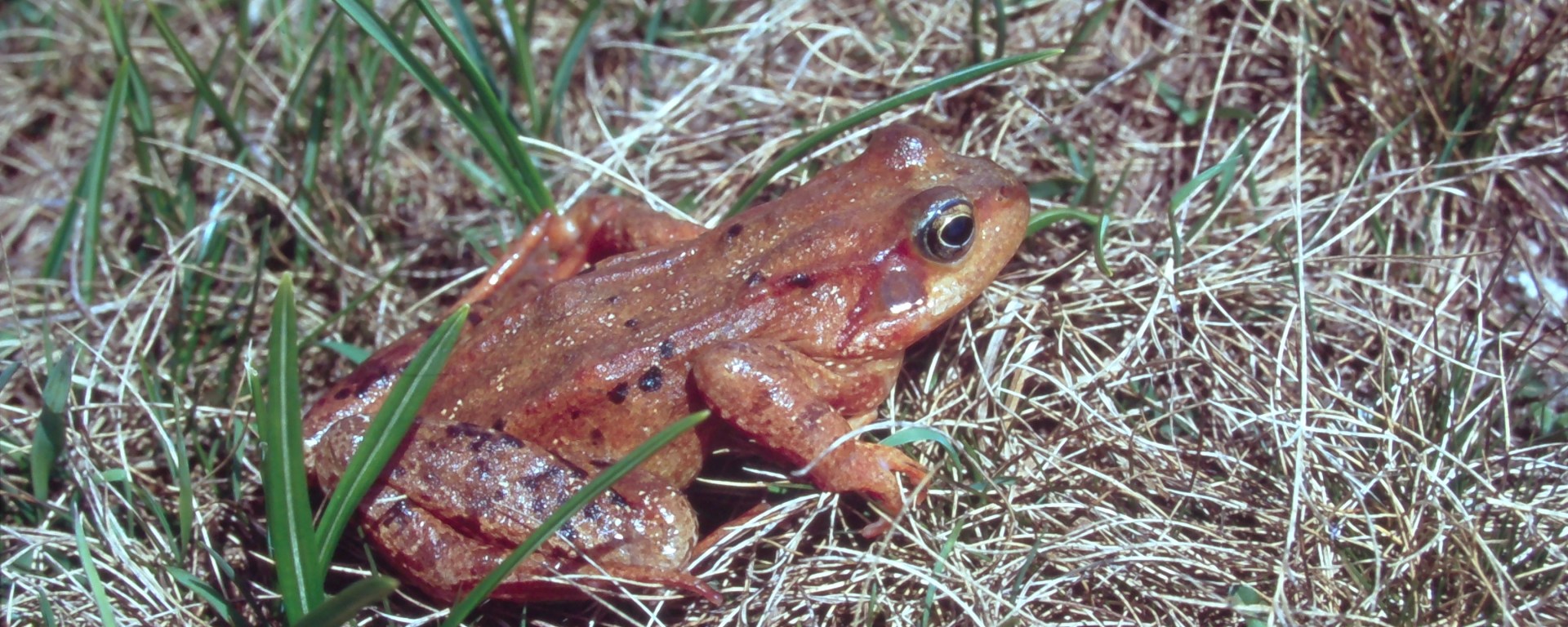
Targeting the common frog, we have detected previously known patterns of genetic differentiation between ponds, using nothing more than pond water samples.


Why it matters?
We are fascinated by this result. It opens great perspectives to explore genetic diversity in a non-invasive way, particularly for marine species that are difficult to study due to the challenges of traditional sampling methods. This is also an important step for conservation : eDNA could provide genetic indicators aligned with the new global goal of monitoring and preserving genetic diversity across all species, as stated at the 2022 Convention for Biological Diversity (CBD) meeting in Kunming-Montreal.
What’s next?
In collaboration with the Parc Naturel Marin Cap Corse et Agriate and the Office Français de la Biodiversité, we are currently applying this approach to eDNA samples collected behind pods of bottlenose dolphins. The key question is: how genetically distinct are dolphin pods in Corsican waters? This approach offers a non-invasive alternative to tissue sampling, such as biopsies, which are often used in cetacean studies but can be harmful to the animals and counterproductive to conservation efforts.


Read the full article here.
Post edited by Sthandiwe Nomthandazo Kanyile.
 Methods Blog