Using the Smith-Root ANDe System for Wildlife Conservation

POST PROVIDED BY TRACIE SEIMON, PHD
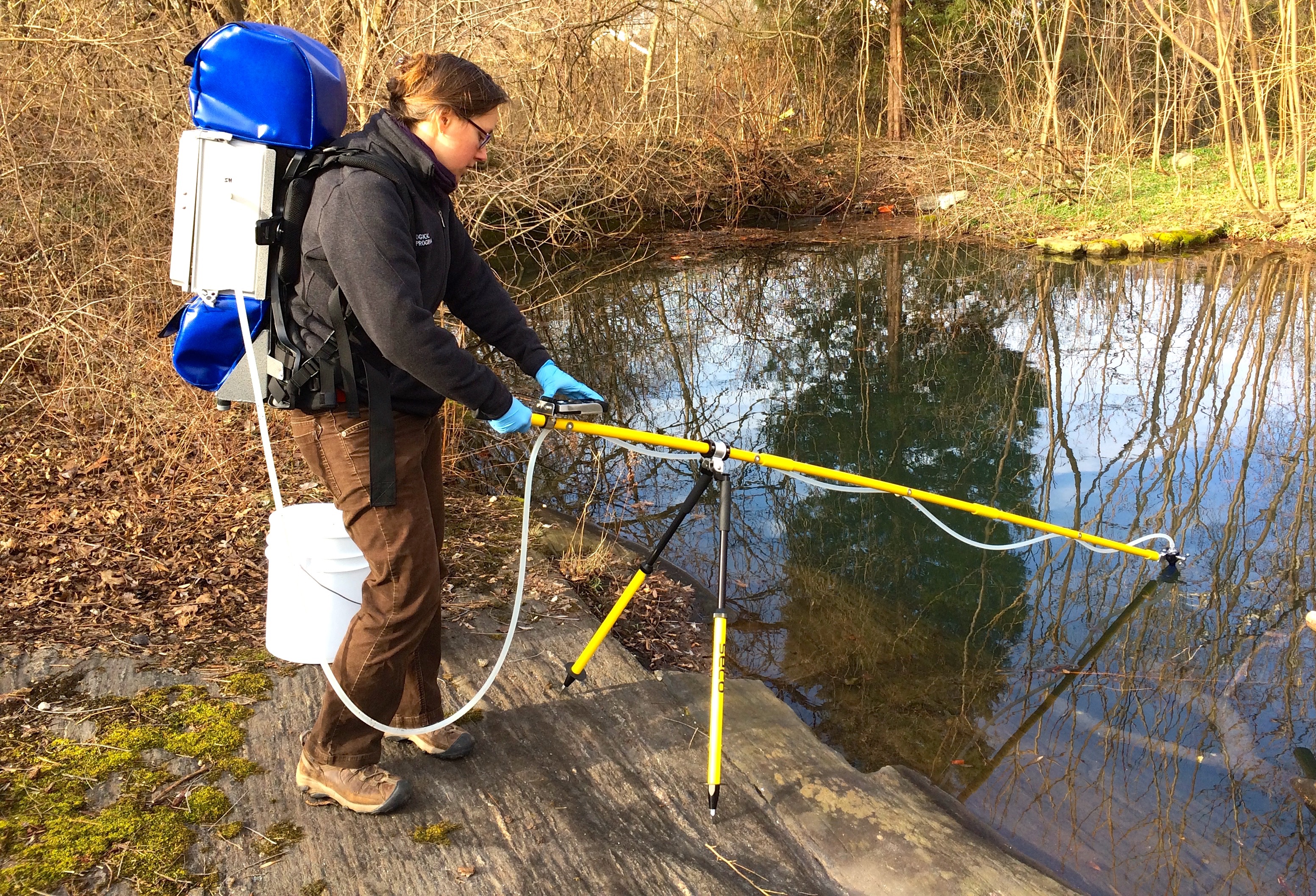
The ANDe system can help researchers tell whether endangered species are present.

In recent years, there have been a lot of studies on the use of environmental DNA (eDNA) for species detection and monitoring. This method takes advantage of the fact that organisms shed DNA into the environment in the form of urine, feces, or cells from tissue such as skin. As this DNA stays in the environment, we can use molecular techniques to search for traces of it. By doing this, we can determine if a species lives in a particular place.

At the Wildlife Conservation Society (WCS), we’re integrating and using the ANDe system in combination with ultra-portable qPCR (quantitative polymerase chain reaction) and DNA extraction technologies developed by Biomeme Inc. for eDNA capture and species detection of endangered turtles, and other aquatic organisms. This helps us to better monitor species within our global conservation programs. Continue reading “Using the Smith-Root ANDe System for Wildlife Conservation”

Editor Recommendation: The Ecologist’s Field Guide to Sequence-Based Identification of Biodiversity

Post provided by Pierre M Durand

A fossilized species of the diatom Thalassiosira. B. A species of the dinoflagellate Prorocentrum. Image provided by A. Ndhlovu).
A fossilized species of the diatom Thalassiosira. B. A species of the dinoflagellate Prorocentrum. (Image provided by A. Ndhlovu).

As any reader of Methods in Ecology and Evolution will know, advances in technologies and methodologies used by ecologists and evolutionary biologists are never-ending. Coupled with the tendency for researchers to become ever more specialised, this means that keeping up to date with all the advances is challenging at best. Occasionally, new advances revolutionise the kinds of questions we ask and encourage us to develop new approaches to answer them. One of these huge advances emerged from the ‘-omics’ revolution.

The application of -omics methodologies to evolution and ecology has been particularly rapid. These technologies usually aren’t part of the basic science education in these fields – it’s more usual for computational biologists to cross over to ecology and evolution than the other way around. The review by Simon Creer and colleagues ’The ecologist’s field guide to sequence-based identification of biodiversity’ helps bridge this gap. It’s not too technical, but sufficiently detailed, and it provides a very handy overview of how genomics, transcriptomics and their meta-analyses can be applied to evolutionary ecology. The paper is filled with enormously helpful workflows, pointers, examples and, as the title suggests, is a guide for those who are not experts in sequence based technologies. Continue reading “Editor Recommendation: The Ecologist’s Field Guide to Sequence-Based Identification of Biodiversity”

Editor Recommendation: Assessing Strengths and Weaknesses of DNA Metabarcoding-Based Macroinvertebrate Identification for Routine Stream Monitoring

Post provided by Andrew R. Mahon The use of molecular methods for monitoring and surveillance of organisms in aquatic and marine systems has become more and more common. We’ve since expanded this technology this through using both captured whole organisms and collecting/filtering environmental DNA (eDNA).  These methods naturally migrated from single species, active surveillance methods towards using high throughput sequencing as a method of passive … Continue reading Editor Recommendation: Assessing Strengths and Weaknesses of DNA Metabarcoding-Based Macroinvertebrate Identification for Routine Stream Monitoring

Practical Tools: A New Article Type and a Virtual Issue

Today, we’re pleased to announce that we’re launching a new article type for Methods in Ecology and Evolution: Practical Tools. Like our Applications articles, Practical Tools will be short papers (up to 3000 words). They’ll focus on new field techniques, equipment or lab protocols. From this point forward, our Applications papers will solely focus on software and code.

Practical tools need to clearly demonstrate how tools designed for specific systems or problems can be adapted for more general use. Online supporting information can include specific instructions, especially for building equipment. You can find some examples of Applications that would now fit into this article type here and here.

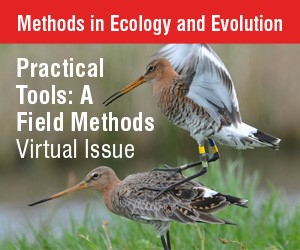
To help launch our new article type, we asked four of our Associate Editors – Pierre Durand, Graziella Iossa, Nicolas Lecomte and Andrew Mahon – to put together a Virtual Issue of papers about Field Methods that have previously been published in the journal. All of the articles in ‘Practical Tools: A Field Methods Virtual Issue‘ will be free to everyone for the next month. You can find out a bit more about each of the four sections of the Virtual Issue below. Continue reading “Practical Tools: A New Article Type and a Virtual Issue”

ANDe™: High‐Throughput eDNA Sampling in a Fully Integrated System

Current eDNA sampling technologies consist mainly of do‐it‐yourself solutions. The lack of purpose‐built sampling equipment is limiting the efficiency and standardization of eDNA studies. So, Thomas et al. (a team of molecular ecologists and engineers) designed ANDe™. In this video, the authors highlight the key features and benefits of ANDe™. This integrated system includes a backpack-portable pump that integrates sensor feedback, a pole extension with remote pump … Continue reading ANDe™: High‐Throughput eDNA Sampling in a Fully Integrated System

Virtually Trekking Across the Pond with the Newest Senior Editor: Aaron M. Ellison

Post Provided by Aaron Ellison

I’m delighted to be the newest member of the diverse team of Senior and Associate Editors who have made Methods in Ecology and Evolution one of the premier journals in the field. After 15 years working on the lead editorial teams of Ecology and Ecological Monographs, I’m really looking forward to applying my editorial energies to the ESA’s friendly competitor on the other side of the ‘pond’.

My background includes:

  • an undergraduate degree in East Asian Philosophy
  • a PhD in evolutionary ecology
  • research and teaching on the natural history and population, community, and landscape ecology of plants and animals (mostly invertebrates) in the marine intertidal and subtidal, among salt marshes and mangroves, tropical and temperate forests, and carnivorous plant bogs
  • extensive forays into statistics, mathematics, and software engineering
  • increasing attention to the history and practice of art and architecture and their relationship to ecological theory
  • a quirky social-media persona
  • and more than two decades of work in editing and publishing journals with scientific societies.

All of these things contribute to my open, catholic approach to scientific research, teaching, and publishing, and their relationship to the broader world.

The editors of Methods are always interested in seeing papers on methodological advances and approaches that lead to new directions. We love reading about creative solutions for new challenges in ecological and evolutionary research and applications in the broadest sense. As a new Senior Editor, I’m especially hoping to encourage more papers in three areas: field methods (about which I’ve published two of my own papers in Methods), reproducibility, and science communication. Continue reading “Virtually Trekking Across the Pond with the Newest Senior Editor: Aaron M. Ellison”

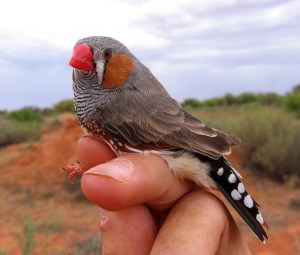
The Social Life of Birds: A New Technique for Studying Behavioural Ecology

Post provide by Damien Farine

Esta publicación de blog también está disponible en español

Key Challenges when Studying Social Behaviour

Researchers are increasingly interested in how social behaviour influences a range of biological processes. Social data have the interesting mathematical property that the number of potential connections among individuals is typically much larger than the number of individuals (because individuals can interact with every other member of their group). This introduces a huge challenge when it comes to collecting data on social interactions—not only does the amount of data needed increase exponentially with group size, the data can also be more difficult to record.

Larger groups have more simultaneous interactions, making it harder for observers to capture a complete or representative sample. It’s also more difficult for observers to tell individuals apart in larger groups. Coloured markers are often used to distinguish different members of a group – the bigger the group, the more complex the markers are needed.

Group-level properties or behaviours can also emerge or change rapidly over time or depending on the situation. This means that observations have to be made at high temporal resolution. To study social behaviour with group sizes that resemble those occurring in nature, we need new techniques to extract sufficient information from social groups. Continue reading “The Social Life of Birds: A New Technique for Studying Behavioural Ecology”

Un nuevo método para automatizar los estudios de comportamiento en aves

Escrito por Gustavo Alarcon-Nieto

This blog post is available in English

Existe un creciente interés por parte de muchos investigadores por entender cómo el comportamiento social de los animales influencia otros procesos biológicos. Sin embargo, estudiar las interacciones entre múltiples individuos presenta un enorme reto metodológico, ya que el número de potenciales interacciones simultáneas aumenta, casi exponencialmente, con el tamaño del grupo (cada individuo puede interactuar con todos los demás miembros del grupo). Además, la cantidad de datos necesarios para un análisis robusto también se incrementa, haciendo difícil que los registros sean completos y representativos. Continue reading “Un nuevo método para automatizar los estudios de comportamiento en aves”

The Global Pollen Project: An Update for Methods Readers

Post Provided by Andrew C. Martin

The Global Pollen Project is an online, freely available tool and data source developed to help people identify and disseminate palynological resources. Palynology – the study of pollen grains and other spores – is used across many fields of study including modern and fossil vegetation dynamics, forensic sciences, pollination, and beekeeping. To help make pollen identification quicker and more transparent, we developed the Global Pollen Project (GPP) – an open, peer-reviewed database of global pollen morphology, where content and expertise is crowdsourced from across the world. Our approach to developing this tool was open: open code, open data, open access. It connects to other data services, including the Global Biodiversity Information Facility and Neotoma Palaeoecology Database, to provide occurrence data for each taxon, alongside pollen images and metadata. Continue reading “The Global Pollen Project: An Update for Methods Readers”

How Strong is Natural Selection? Stitching Together Linear and Nonlinear Selection on a Single Scale

Post provided by Robert May Prize Winner Jonathan Henshaw

Some individuals survive and reproduce better than others. Traits that help them do so may be passed on to the next generation, leading to evolutionary change. Because of this, evolutionary biologists are interested in what differentiates the winners from the losers – how do their traits differ, and by how much? These differences are known as natural selection.

Linear and Nonlinear Selection

Traditionally, natural selection is separated into linear selection (differences in average trait values) and nonlinear selection (any other differences in trait distributions between winners and the rest). For example, successful individuals might be unusually close to average: this is known as stabilizing selection. Alternatively, winners might split into two camps, some with unusually high trait values, and others with unusually low trait values. This is disruptive selection (famously thought to explain the ur-origin of sperm and eggs). Stabilizing and disruptive selection are important types of nonlinear selection. In general, though, the trait distribution of successful individuals can differ from the general population in arbitrarily complicated ways.

When individuals with larger trait values have higher fitness on average (left panel), the trait distribution of successful individuals is shifted towards the right (right panel, orange curve). The difference in mean trait values between the winners and the general population is called linear selection.

Continue reading “How Strong is Natural Selection? Stitching Together Linear and Nonlinear Selection on a Single Scale”