Fostering a network for creating and implementing open education resources in ecology

Blog post provided by Ann Russell The Need for Authentic, Open Educational Resources Given the rapid changes underway in undergraduate STEM education, the teaching community aspires to move beyond models that involve static content to develop agile, scalable ways to create authentic open educational resources (OERs). Researchers can provide authentic case studies, but they may lack the skills to create engaging OERs based on their … Continue reading Fostering a network for creating and implementing open education resources in ecology

How to spot river-borne diseases with almost no data

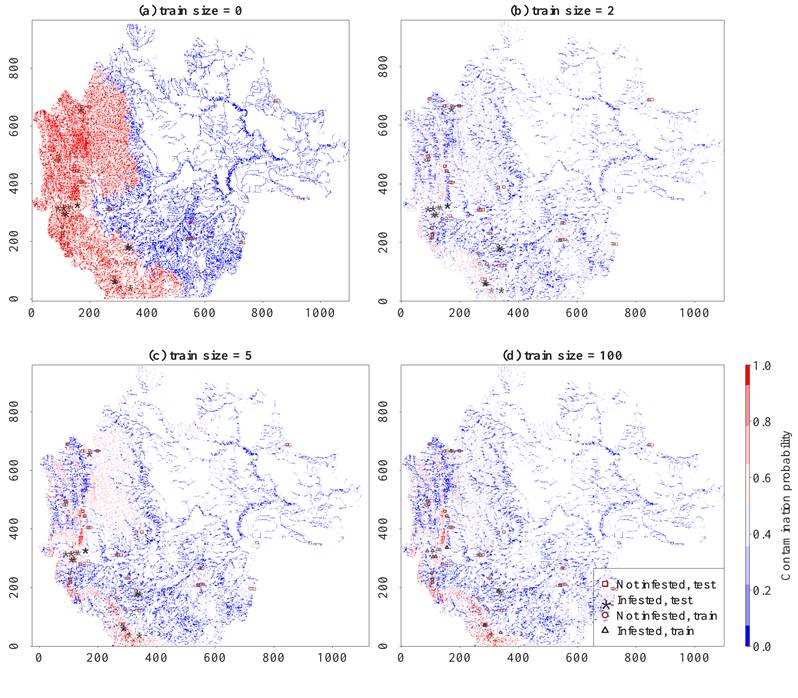
Post provided by Pouria Ramazi When Alberta Environment and Parks brought this problem to our group in 2018, the question was practical. Whirling disease had been detected in Alberta, but testing every stretch of a river was impossible. Could a few scattered fish and worm tests show where the parasite Myxobolus cerebralis was most likely to occur across the Oldman River? I had just begun … Continue reading How to spot river-borne diseases with almost no data

Black History Month 2023 – Blessing Allen-Adebayo.

For Black History Month 2023, the British Ecological Society (BES) journals are celebrating the work of Black ecologists from around the world and sharing their stories. In this blog, Blessing shares her story and journey in academia. Name: Blessing Allen-Adebayo Affiliation : Igbinedion Univerisity, Okada (School)/ People in Need (Work place) Links: https://www.linkedin.com/in/blessingallen-adebayo/ Interests: 1. Environmental sustainability 2. Climate Resilience 3. Ecology Your story – How … Continue reading Black History Month 2023 – Blessing Allen-Adebayo.

How to write clean code

Alessandro Filazzola & Christopher Lortie tell us about their new article ‘A call for clean code to effectively communicate science‘, which provides a series of recommendations and a suite of tools that can be used to help support scientists to produce cleaner code. Can you clearly understand the code that you have written? What about if you gave it to a colleague? Or a reviewer? … Continue reading How to write clean code

September 2022 Issue Out Now!

Our September issue is now online! This issue contains 22 articles about the latest methods in ecology and evolution, including methods for using the US National Ecological Observatory Network (NEON), measuring understory vegetation structure, inducing cancer in invertebrates and much more! Read on to find out about this month’s featured articles and the article behind our magical marine cover. National Ecological Observatory Network (NEON) In this … Continue reading September 2022 Issue Out Now!

August 2022 Issue Out Now!

Our August Issue is now online! This issue contains 15 articles about the latest methods in ecology and evolution, including methods for estimating forest above-ground biomass, tracing essential amino acid assimilation, autonomous biodiversity surveys and much more! Read on to find out about this month’s featured articles and the article behind our wonderful whale cover. Featured Articles Estimating forest above-ground biomass with terrestrial laser scanning Improving the … Continue reading August 2022 Issue Out Now!

July 2022 Issue Out Now!

Our July Issue is now online! This issue contains 20 articles about the latest methods in ecology and evolution, including methods for characterising soil bacterial biodiversity, identifying fish species in fish markets using eDNA, standarising and cleaning biodiversity data and much more! Plus, read the editorial about our switch to a gold open access model this month. Read on to find out about this month’s featured articles … Continue reading July 2022 Issue Out Now!

Another year ALDER, another year wiser.

Pride Month is almost over, and to round off this year’s wonderful Rainbow Research blog series we are pleased to host this post from Lewis Bartlett announcing the launch of the ALDER Network: the British Ecological Society’s relaunched LGBTQIA+ Network. Hello readers! Welcome to my second year in a row getting to write a Rainbow Research blog post for the BES, and this Pride month … Continue reading Another year ALDER, another year wiser.

June 2022 Issue Out Now

Our June Issue is now online! This issue contains 16 brilliant articles about the latest methods in ecology and evolution, including methods for extracting forest information from LiDAR data, digitising wood samples, optimising stable isotope sampling design and much more! Read on to find out about this month’s featured articles and the article behind our butterfly cover. Featured Articles treetop Individual tree detection and crown delineation are … Continue reading June 2022 Issue Out Now

Hidden Markov models have pitfalls…

…but also opportunities! Hidden Markov models (HMMs) and their extensions are attractive methods for analysing ecological data. In recent years, a variety of extensions of the basic model have been proposed, yielding great opportunities for ecological inference. Yet, as these models become more complex and challenging to understand, it is important to consider what pitfalls these methods have and what opportunities there are for future … Continue reading Hidden Markov models have pitfalls…