Editor Recommendation: A Multi-State Species Distribution Modelling Framework for Species Using Distinct Habitats

Post provided by Jana McPherson
© Amélie Augé
© Amélie Augé

Correlative distribution models have become essential tools in conservation, macroecology and ecology more generally. They help turn limited occurrence records into predictive maps that help us get a better sense of where species might be found, which areas might be critical for their protection, how large their range currently is, and how it might change with climate change, urban encroachment or other forms of habitat conversion.

It can be frustrating, however, when species distribution models (and the predictive maps they produce) don’t adequately capture what we already know about the habitat needs of a species. A major challenge to date has been to represent the environmental needs of species that require distinct habitats during different life stages or behavioural states. Rainbow parrotfish (Scarus guacamaia), for example, spend their youth sheltered from predators in mangrove areas before moving onto coral reefs, and European nightjars (Caprimulgus europaeus) breed in heathland but require access to grazed grassland for foraging. Correlative distribution models confronted with occurrence records from both life stages or behavioural modes tend to produce poor predictive maps because they confound these distinct requirements. Continue reading “Editor Recommendation: A Multi-State Species Distribution Modelling Framework for Species Using Distinct Habitats”

Editor Recommendation: How Do Trait Distributions Differ Across Species and Their Environments?

Post provided by Pedro Peres-Neto

The rise of trait ecology led to many quantitative frameworks to understand the underlying rules that determine how species are assembled into local communities from regional pools. Ecologists are interested in understanding whether environmental features select for particular traits that optimise local fitness and regulate species co-existence.

In ‘Assessing the joint behaviour of species traits as filtered by environment’, Erin Schliep and her co-authors aimed to develop a joint probabilistic model under a Bayesian framework to help explain the correlations among traits and how trait distributions differ across species and their environments. The end product is a model of trait-environmental relationships that takes full advantage of information on intra- and interspecific variation typically found within and among species.  Continue reading “Editor Recommendation: How Do Trait Distributions Differ Across Species and Their Environments?”

Editor recommendation: Predicting Animal Behaviour Using Deep Learning

Post provided by Jana McPherson

Common guillemots were one of the species used in this study. ©Richard Crossley

Understanding key habitat requirements is critical to the conservation of species at risk. For highly mobile species, discerning what is key habitat as opposed to areas that are simply being traversed (perhaps in the search for key habitats) can be challenging. For seabirds, in particular, it can be difficult to know which areas in the sea represent key foraging grounds. Devices that record birds’ diving behaviour can help shed light on this, but they’re expensive to deploy. In contrast, devices that record the birds’ geographic position are more commonly available and have been around for some time.

In their recent study entitled ‘Predicting animal behaviour using deep learning: GPS data alone accurately predict diving in seabirds,’ Ella Browning and her colleagues made use of a rich dataset on 399 individual birds from three species, some equipped with both global positioning (GPS) and depth recorder devices, others with GPS only. The data allowed them to test whether deep learning methods can identify when the birds are diving (foraging) based on GPS data alone. Results were highly promising, with top models able to distinguish non-diving and diving behaviours with 94% and 80% accuracy. Continue reading “Editor recommendation: Predicting Animal Behaviour Using Deep Learning”

Remote Sensing for Counting Animals: Polar Bears, Sheep and Everything In-Between

Post provided by Tracey Hollings

In an age of rapid technological advances, ecologists need to keep abreast of how we can improve or reinvent the way we do things. Remote sensing technology and image analysis have been developing rapidly and have the potential to revolutionise how we count and estimate animal populations.

Using remotely sensed imagery isn’t new in ecology, but recent innovations mean we can use it for more things. Land use change and vegetation mapping are among the areas of ecology where remote sensing has been used extensively for some time. Estimating animal populations with remotely sensed imagery was also demonstrated more than 40 years ago by detecting indirect signs of an animal with some success: think wombat burrows and penguin poop.

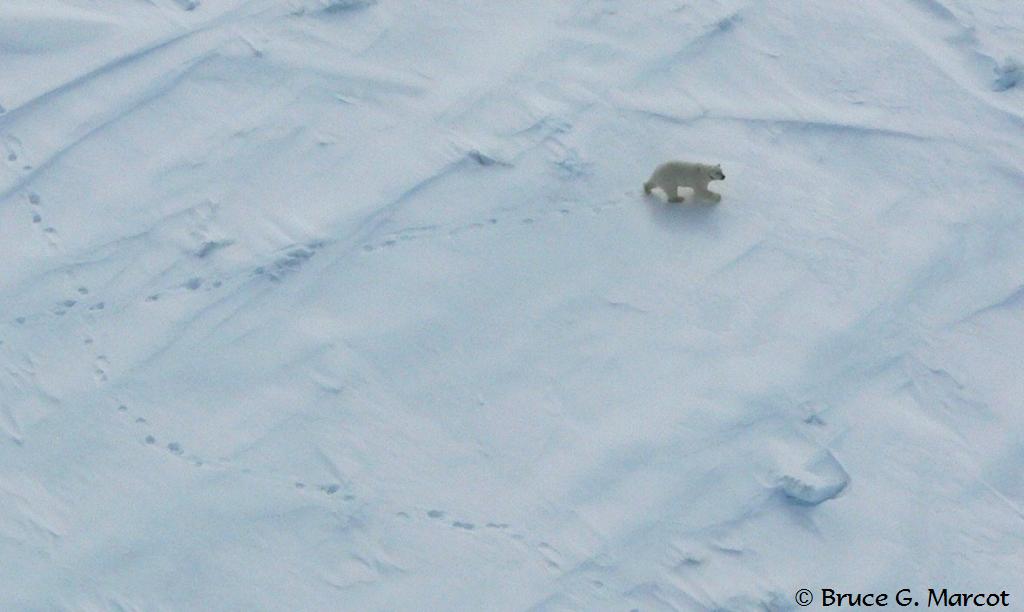
A polar bear from a helicopter

Thanks to improved spatial and spectral resolution (see the text box at the bottom of the post for a definition), accessibility, cost and coverage of remotely sensed data, and software development we have now reached a point where we can detect and count individual animals in imagery. Many of the first studies to demonstrate automated and semi-automated techniques have taken computer algorithms from other disciplines, such as engineering or biomedical sciences, and applied them to automate counting of animals in remotely sensed imagery. It turns out that detecting submarines is not so different to detecting whales! And finding abnormal cells in medical imaging is surprisingly similar to locating polar bears in the arctic! Continue reading “Remote Sensing for Counting Animals: Polar Bears, Sheep and Everything In-Between”

Remotely Tracking Movement and Behaviour with Biologgers: How to Add Accelerometer Data to the Mix

Post provided by Sam Cox, Florian Orgeret and Christophe Guinet

Animal biologging is a technique that’s quickly becoming popular in many cross-disciplinary fields. The main aim of the method is to record aspects of an animal’s behaviour and movement, alongside the bio-physical conditions they encounter, by attaching miniaturised devices to it. In marine ecosystems, the information from these devices can be used not only to learn how we can protect animals, many of whom are particularly vulnerable to disturbance (e.g. large fish, marine mammals, seabirds and turtles), but also more about the environments they inhabit.

Challenges when Tracking Marine Animals

Many marine animals have incredibly large ranges, travelling 1000s of kilometres. A huge advantage of biologging technologies is the ability to track an individual remotely throughout its range. For animals that dive, information on sub-surface behaviour can be obtained too. This information can then be retrieved when an animal returns to a set location. If this isn’t possible (e.g. individuals that make trips that are too long or die at sea), carefully constructed summaries can be relayed via satellite. This option provides information in real time, which can be very useful for researchers.

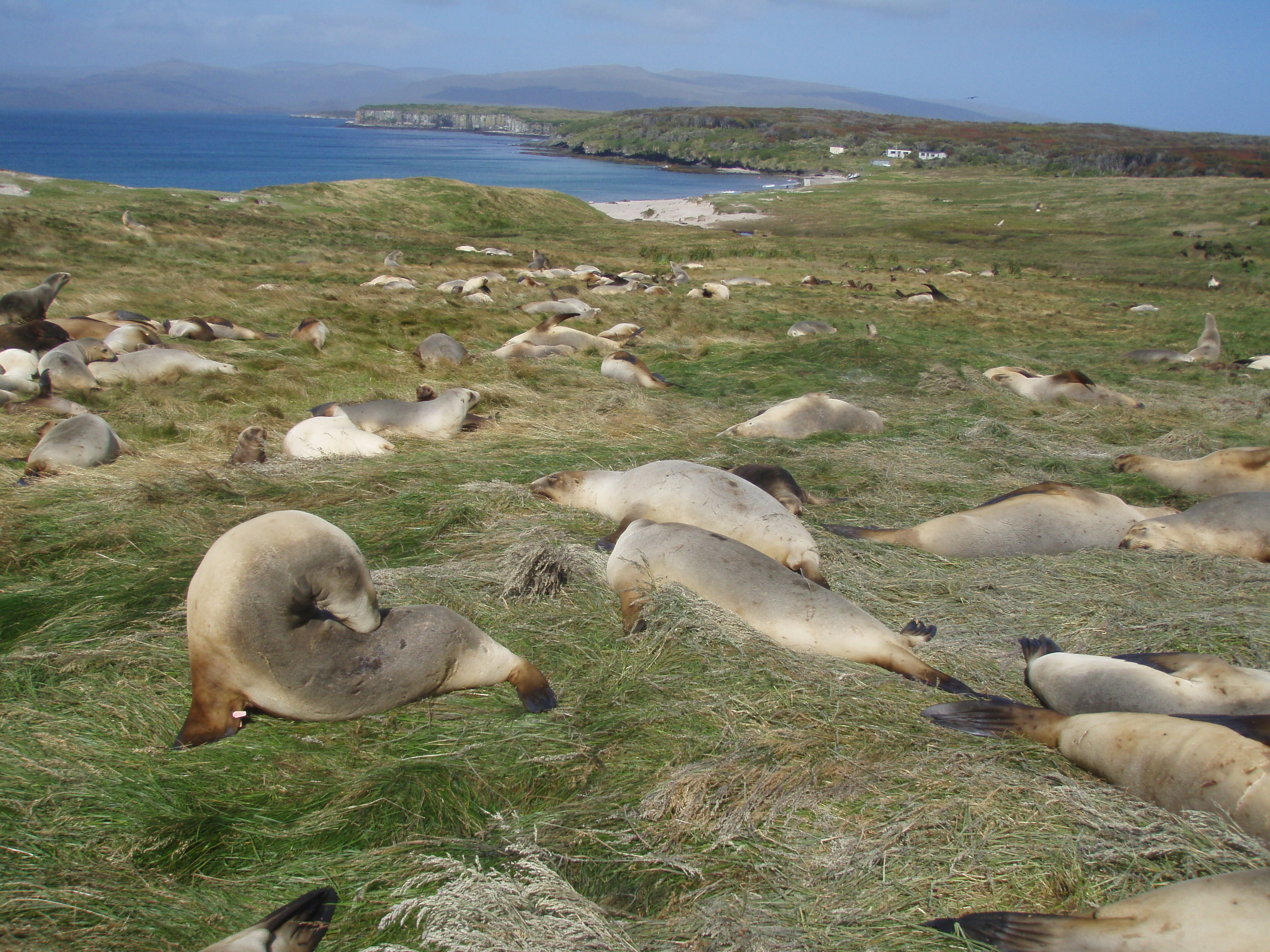
Tracks of juvenile southern elephant seals. Red tracks are individuals that returned to their natal colony. Grey are those individuals whose information would have been lost had it not been transmitted via the Argos satellite system.

Continue reading “Remotely Tracking Movement and Behaviour with Biologgers: How to Add Accelerometer Data to the Mix”

#EpicDuckChallenge Shows we can Count on Drones

Below is a press release about the Methods in Ecology and Evolution  article ‘Drones count wildlife more accurately and precisely than humans‘ taken from the University of Adelaide.

Lead author Jarrod Hodgson, University of Adelaide, standing in one of the replica colonies of seabirds constructed for the #EpicDuckChallenge.

A few thousand rubber ducks, a group of experienced wildlife spotters and a drone have proven the usefulness and accuracy of drones for wildlife monitoring.

A study from the University of Adelaide showed that monitoring wildlife using drones is more accurate than traditional counting approaches. This was published recently in the British Ecological Society journal Methods in Ecology and Evolution.

“For a few years now, drones have been used to monitor different animals that can be seen from above, including elephants, seals and nesting birds. But, until now, the accuracy of using drones to count wildlife was unclear,” says the study’s lead author, Jarrod Hodgson from the University’s Environment Institute and School of Biological Sciences. Continue reading “#EpicDuckChallenge Shows we can Count on Drones”

Resolving Conservation Conflicts: The Nominal Group Technique

Post provided by Jean Hugé

Conservation conflicts are actually conflicts among people with different priorities and values
Conservation conflicts are actually conflicts among people with different priorities.

Conservation issues seem to be getting ever more complex and challenging. Practitioners and society at large agree on the need to gather – and somehow use – as much information as possible before making any conservation-related decisions. Talking to all kinds of people, ranging from local villagers, fishermen and hunters to international experts, community leaders and environmentalists, is now common practice in conservation research. Not everyone will agree on the eventual conservation decisions, but the idea is that decisions should only be made after (almost) everyone’s opinion has been heard.

So far so good. The calls for inclusive conservation are being acknowledged, and we should be ready to move on and make better decisions, right? Well, it’s not always that easy. Conservation conflicts are actually conflicts among people with different priorities and values. Just calling for dialogue and hoping that consensus and effective conservation action will just follow isn’t enough. Continue reading “Resolving Conservation Conflicts: The Nominal Group Technique”

Issue 9.2

Issue 9.2 is now online!

The February issue of Methods is now online!

This double-size issue contains six Applications articles (one of which is Open Access) and two Open Access research articles. These eight papers are freely available to everyone, no subscription required.

 Temperature Manipulation: Welshofer et al. present a modified International Tundra Experiment (ITEX) chamber design for year-round outdoor use in warming taller-stature plant communities up to 1.5 m tall.This design is a valuable tool for examining the effects of in situ warming on understudied taller-stature plant communities

 ZoonThe disjointed nature of the current species distribution modelling (SDM) research environment hinders evaluation of new methods, synthesis of current knowledge and the dissemination of new methods to SDM users. The zoon R package aims to overcome these problems by providing a modular framework for constructing reproducible SDM workflows.

 BEIN R Package: The Botanical Information and Ecology Network (BIEN) database comprises an unprecedented wealth of cleaned and standardised botanical data. The bien r package allows users to access the multiple types of data in the BIEN database. This represents a significant achievement in biological data integration, cleaning and standardisation.

Continue reading “Issue 9.2”

A New Method for Computing Evolutionary Rates and Rate Shifts

Post provided by Pasquale Raia

Phylogenetic Effects

Today, everyone knows about the importance of accounting for phylogenetic effects when it comes to understanding trait evolution. How to account for phylogenetic effects is another matter though.

A couple of years ago, I was having a discussion on the R-sig-phylo blog and dared to define the Brownian Motion (BM) as kind of a null hypothesis that more realistic scenarios should be compared to. Maybe I crossed a line or made too simplistic a statement (see Adams and Collyer’s article in Systematic Biology for an explanation of why this matter is far trickier and more complicated than my reply suggested). The point is, my comment was hotly contested and a colleague ‘put the onus on me’ to do something better than the almighty (emphasis mine) BM.

The RRphylo method was my attempt to do just that. It may not be better than BM, but it is different. Often, that can be exactly what you need. Continue reading “A New Method for Computing Evolutionary Rates and Rate Shifts”

Bias, Role Models and Women in STEM

Post provided by Lee Hsiang Liow

As the newest Senior Editor of Methods in Ecology and Evolution – and someone who happens to have two X chromosomes – I’ve been asked to write a blog post to mark the International Day of Women and Girls in Science.

After being a postdoc for almost ten years, I landed a permanent academic job in the city I wanted to live and raise my daughter in. I have great colleagues and I love my job as a researcher and teacher. I feel incredibly lucky: I am a female scientist and I “made it”.

When I showed the previous paragraph to a close friend and fellow “scientist who made it” he reminded me that a male colleague could easily have written exactly the same thing, only replacing “female” with “male”. Although I agree with his observation, I was deeply frustrated by what could be implied by his response.

His response illustrates a problem: some people may think it’s “all fine” now or that the issue of gender inequality has been solved. They cite the numerous measures in place at different levels to help women enter STEM fields and to ensure female scientists get an equal chance at staying in the game. It might be close to “all fine” in Scandinavia – a region known for long periods of parental leave and ingrained culture to put children and families above work – but it’s not all chocolate mousse and cheesecake everywhere in the world. Continue reading “Bias, Role Models and Women in STEM”