An Interview with Tony Ives

David Warton interviews Tony Ives, a Keynote speaker at the Statistics in Ecology and Environmental Monitoring (SEEM) conference in Queenstown, NZ. Tony has published a few papers in Methods in Ecology and Evolution over the last couple of years – first we discuss the exchanges on log-transformation of counts (including a paper co-authored with David Warton). Tony and David then talk about a recent paper … Continue reading An Interview with Tony Ives

Policy on Publishing Code Virtual Issue

In January 2018, Methods in Ecology and Evolution launched a Policy on Publishing Code. The main objective of this policy is to make sure that high quality code is readily available to our readers. set out four key principles to help achieve this, as well as explaining what code outputs we publish, giving some examples of things that make it easier to review code, and giving some advice on how to store code once it’s been published.

To help people to understand how to meet the guidelines and principles of the new policy, a group of our Applications Associate Editors (Nick Golding, Sarah Goslee, Tim Poisot and Samantha Price) have put together a Virtual Issue of Applications articles published over the past couple of years that have followed at least one aspect of the guidelines particularly well. Continue reading “Policy on Publishing Code Virtual Issue”

Using Interviews in Conservation Science Research

Post provided by David Christian Rose

Why Use Interviews in Conservation?

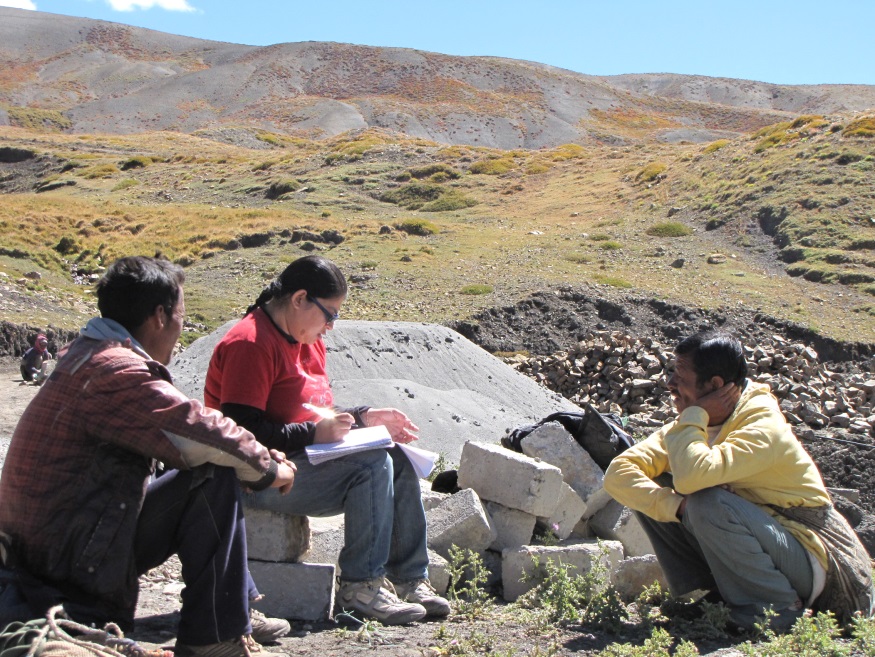
Key herder interviews by Chandrima Home (co-author) in the Upper Spiti Landscape © Kesang Chunit

Conservation interventions need to be implemented on the ground, so a range of people are required to make decisions. Decision-makers can be people like conservation practitioners, policy-makers, and stakeholders who could be affected by an intervention. This usually includes local residents, as well as people who make their living in the area, like fishers, farmers, hunters, and other businesses.

Since decision-making structures are complex and multi-layered, scientific evidence alone is not enough to guide the implementation of a conservation intervention. Researchers need to understand who’s involved in making decisions, who could be affected by the proposed intervention, and gain an appreciation of how local communities use and value their land. Often they’ll also need to find out what local communities think of particular species and habitats. Continue reading “Using Interviews in Conservation Science Research”

Ending the Terror of R Errors

Post provided by Paul Mensink

Last year, I introduced R to petrified first-year biology students in a set of tutorials. I quickly realised that students were getting bogged down in error messages (even on very simple tasks), so most of my time was spent jumping between students like a wayward Markov chain. I would often find a desperate face at the end of a raised hand looking hopelessly towards their R console muttering some version of “What the $%# does this mean?”. I instantly morphed from teacher to translator and our class progress was slower than a for-loop caught in the second Circle.

Error messages are often not very helpful

Fast forward to Ecology Across Borders last December in Ghent, where rOpenSci and special interest groups from the BESGfÖ and NecoV  and Methods in Ecology and Evolution  co-hosted a pre-conference R hackathon. I was elated to see that one of the challenges was focused on translating R error messages into “Plain English” (thanks to @DanMcGlinn for the original suggestion!). Continue reading “Ending the Terror of R Errors”

Ecology Hackathon at Ecology Across Borders 2017

Post provided by Gergana Daskalova

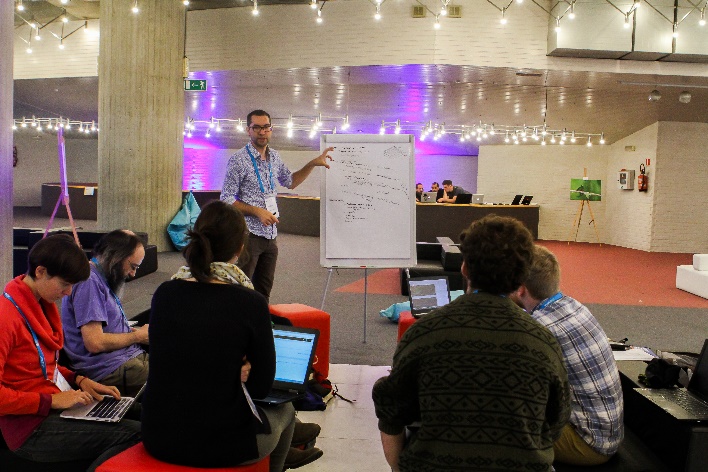
Brainstorming ideas at the Ecology Hackathon in Ghent.
Brainstorming ideas at the Hackathon.

Imagine an ecologist. Now imagine a programmer. Did you imagine the same person? If you were at the Ecology Hackathon on the day before the Ecology Across Borders (#EAB2017) conference in Ghent, Belgium (a joint conference between the BES, GFÖ, NecoV and EEF), you probably did (or at least we hope you did!).

Ecology is becoming increasingly quantitative and, as a result, we can add one more item on our daily to do lists as scientists:

  • Think of questions
  • Go on fieldwork / run simulations
  • Supervise students
  • Meet with our own supervisors
  • Teach
  • Write articles and review manuscripts
  • Answer emails
  • And now code as well

A Coding Community

Coding doesn’t need to be a lonely activity – one of the areas where it truly shines is collaborative coding. This can take us across borders and bring us together to figure out the best way to answer our research questions. That is exactly what the EAB Ecology Hackathon set out to do. Continue reading “Ecology Hackathon at Ecology Across Borders 2017”

New Associate Editor: Chris Sutherland

Today, we are pleased to welcome the latest new member of the Methods in Ecology and Evolution Associate Editor Board. Chris Sutherland joins us from the University of Massachusetts, USA and you can find out a little more about him below. Chris Sutherland “I’m an applied ecologist with a focus on spatial population ecology. I am particularly interested in understanding how spatial processes such as movement, … Continue reading New Associate Editor: Chris Sutherland

Exploring Coevolutionary History: Do Entire Communities Shape the Evolution of Individual Species?

Post provided by Laura Russo, Katriona Shea, and Adam Miller

Diffuse Coevolution

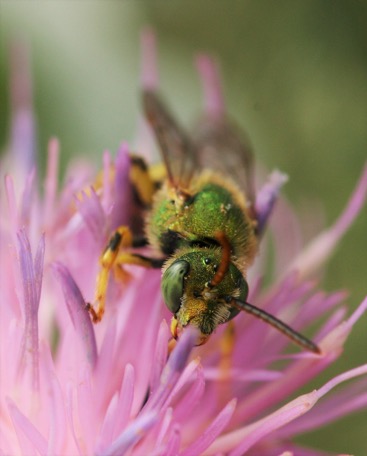
Interactions between plants and pollinators tend to be highly generalized.

In 1980, Janzen published an article titled “When is it coevolution?” where he explained the concept of diffuse coevolution: the idea that evolution of interacting species is shaped by entire communities, rather than simple paired interactions. This idea, though compelling, remains poorly understood, and strong evidence of diffuse coevolution acting on a community is lacking. Perhaps this is because there’s a lack of consensus on what would constitute evidence in support of the concept of diffuse coevolution, or, indeed, coevolution in general (Nuismer et al 2010). Continue reading “Exploring Coevolutionary History: Do Entire Communities Shape the Evolution of Individual Species?”

Policy on Publishing Code: Encouraging Good Practice to Ensure Quality

Following on from our sponsorship of the Guide to Reproducible Code in Ecology and Evolution and our collaboration with rOpenSci, we have now released a new policy on publishing code. The main objective of this policy is to make sure that high quality code is readily available to our readers.

We’ve set out four key principles to help achieve this, as well as explaining what code outputs we publish, giving some examples of things that make it easier to review code, and giving some advice on how to store code once it’s been published. Below is a summary of some highlights of the policy, but you can find it in full on the Methods in Ecology and Evolution website. Continue reading “Policy on Publishing Code: Encouraging Good Practice to Ensure Quality”

New Studies Aim to Boost Social Science Methods in Conservation Research

Below is a press release about the Methods Special Feature ‘Qualitative Methods for Eliciting Judgements for Decision Making‘ taken from the University of Exeter.

Scientists have produced a series of papers designed to improve research on conservation and the environment.

A group of researchers have contributed to a Special Feature of the journal Methods in Ecology and Evolution to examine commonly used social science techniques and provide a checklist for scientists to follow.

Traditional conservation biology has been dominated by quantitative data (measured in numbers) but today it frequently relies on qualitative methods such as interviews and focus group discussions. The aim of the special issue is to help researchers decide which techniques are most appropriate for their study, and improve the “methodological rigour” of these techniques. Continue reading “New Studies Aim to Boost Social Science Methods in Conservation Research”

Issue 9.1: Qualitative Methods for Eliciting Judgements for Decision Making

Issue 9.1 is now online!
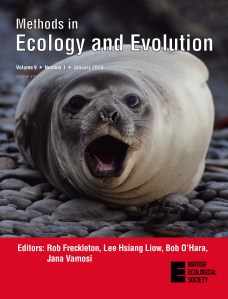
Our first issue of 2018, which includes our latest Special Feature – “Qualitative methods for eliciting judgements for decision making” – is now online!

This new Special Feature is a collection of five articles (plus an Editorial from Guest Editors Bill Sutherland, Lynn Dicks, Mark Everard and Davide Geneletti) brings together authors from a range of disciplines (including ecology, human geography, political science, land economy and management) to examine a set of qualitative techniques used in conservation research. They highlight a worrying extent of poor justification and inadequate reporting of qualitative methods in the conservation literature.

As stated by the Guest Editors in their Editorial “these articles constitute a useful resource to facilitate selection and use of some common qualitative methods in conservation science. They provide a guide for inter-disciplinary researchers to gauge the suitability of each technique to their research questions, and serve as a series of checklists for journal editors and reviewers to determine appropriate reporting.”

All of the articles in the ‘Qualitative methods for eliciting judgements for decision making‘  Special Feature are all freely available.
Continue reading “Issue 9.1: Qualitative Methods for Eliciting Judgements for Decision Making”