Scat Collection Protocols for Dietary DNA Metabarcoding

DNA dietary analysis is a non-invasive tool used to identify the food consumed by vertebrates. The method relies on identifying prey DNA in the target animals’ scats. It’s especially useful for marine animals such as seals and seabirds as it is difficult to watch their feeding events.

In the video below, Julie McInnes describes scat collection protocols that she (along with Rachael Alderman, Bruce Deagle, Mary-Anne Lea, Ben Raymond and Simon Jarman) developed to optimise the detection of food DNA in vertebrate scat samples. The authors use the shy albatross to demonstrate their new methods.

Continue reading “Scat Collection Protocols for Dietary DNA Metabarcoding”

Testing the Effects of Underwater Noise on Aquatic Animals

Post provided by Karen de Jong

Most people assume that research equipment is expensive and complicated. But, it doesn’t need to be and the noise egg is a perfect example of this. It consists of a watertight container (as used by scuba divers) and the buzzer from a cellphone and does exactly what it says: it produces low frequency noise. This allows researchers to test the effect of noise on underwater life. It is a small, simple and cheap device that anyone can build.

Why Test Effects of Noise?

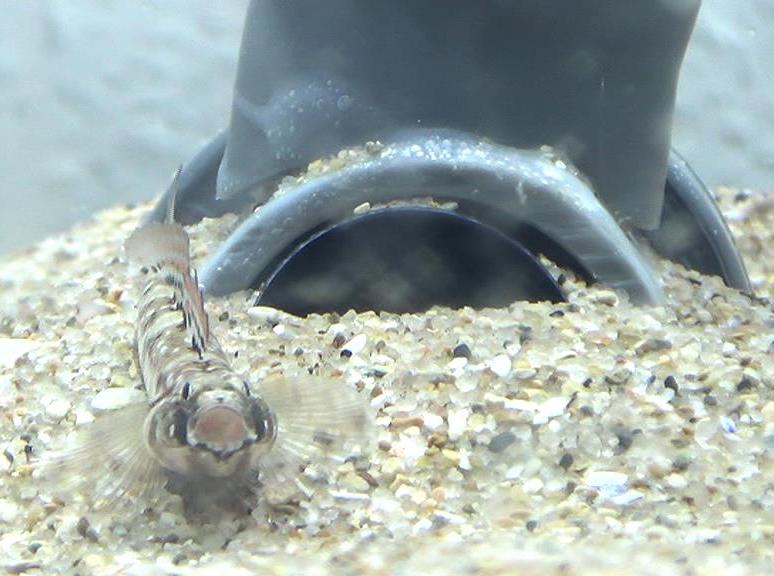
A painted goby in front of his nest ©K. de Jong

Underwater noise is rapidly increasing due to, for example, boat traffic and offshore wind farms. This can lead to stress for animals and difficulties in communication. Just as people have a hard time communicating in a noisy pub, animals may struggle to get their messages across when background noise is high. A nice description of how animals use sound and how noise may affect this can be found at www.dosits.org

While there is some knowledge on the effect of noise on large aquatic animals, we still know very little about how fish and other small aquatic animals are affected. Such knowledge is vital for management of protected areas. It’s also important to know whether wind farms and boat traffic can affect reproduction in populations of underwater resources such as fish and mussels. The answers to these questions are likely to be species specific, so we’ll need data on a large number of species in different habitats. Continue reading “Testing the Effects of Underwater Noise on Aquatic Animals”

Flawed Analysis Casts Doubt on Years of Evolution Research

Below is a press release about the Methods in Ecology and Evolution paper ‘‘Residual diversity estimates’ do not correct for sampling bias in palaeodiversity data‘ taken from the University of Bristol.

Years of research on the evolution of ancient life, including the dinosaurs, have been questioned after a fatal flaw in the way fossil data are analysed was exposed by scientists from the universities of Reading and Bristol.

Studies based on the apparently flawed method have suggested Earth’s biodiversity remained relatively stable – close to maximum carrying capacity – and hinted many signs of species becoming rapidly extinct are merely reflections on the poor quality of the fossil record at that time.

However, new research by scientists at the University of Reading suggests the history of the planet’s biodiversity may have been more dynamic than recently suggested, with bursts of new species appearing, along with crashes and more stable periods.

Continue reading “Flawed Analysis Casts Doubt on Years of Evolution Research”

Jellyfish Help Scientists to Fight Food Fraud

Below is a press release about the Methods paper ‘Stable isotope-based location in a shelf sea setting: accuracy and precision are comparable to light-based location method‘ taken from the University of Southampton.

©Katie St John Glew
©Katie St John Glew

Animals feeding at sea inherit a chemical record reflecting the area where they fed, which can help track their movements, according to a new study by scientists from the University of Southampton.

Chemical testing of the source of marine food products could be a powerful tool to help to fight food fraud, maintain healthy sustainable fish stocks or marine protected areas, and ensure consumer confidence in marine eco-labelling. Continue reading “Jellyfish Help Scientists to Fight Food Fraud”

Issue 7.10

Issue 7.10 is now online!

The October issue of Methods is now online!

This month’s issue contains three Applications articles and two Open Access articles, all of which are freely available.

– CODYN: New analytical tools applied to long-term data demonstrate that ecological communities are highly dynamic over time. The R package, library(“codyn”), helps ecologists implement these tools and gain insi–ghts into ecological community dynamics.

– Geometric Morphometrics: A tool for the R statistical environment that optimises the smoothing procedure for 3D surfaces used in Geometric Morphometrics.

– TRAPPER: Open source, multi-user software that facilitates analysis of videos and images, provides spatial filtering and web-mapping, allows flexible implementation of specific data collection protocols, and supports data re-use and (re)discovery.

Continue reading “Issue 7.10”

Automatic Camera Monitoring: A Window into the Daily Life of Pollinators

Post provided by Ronny Steen

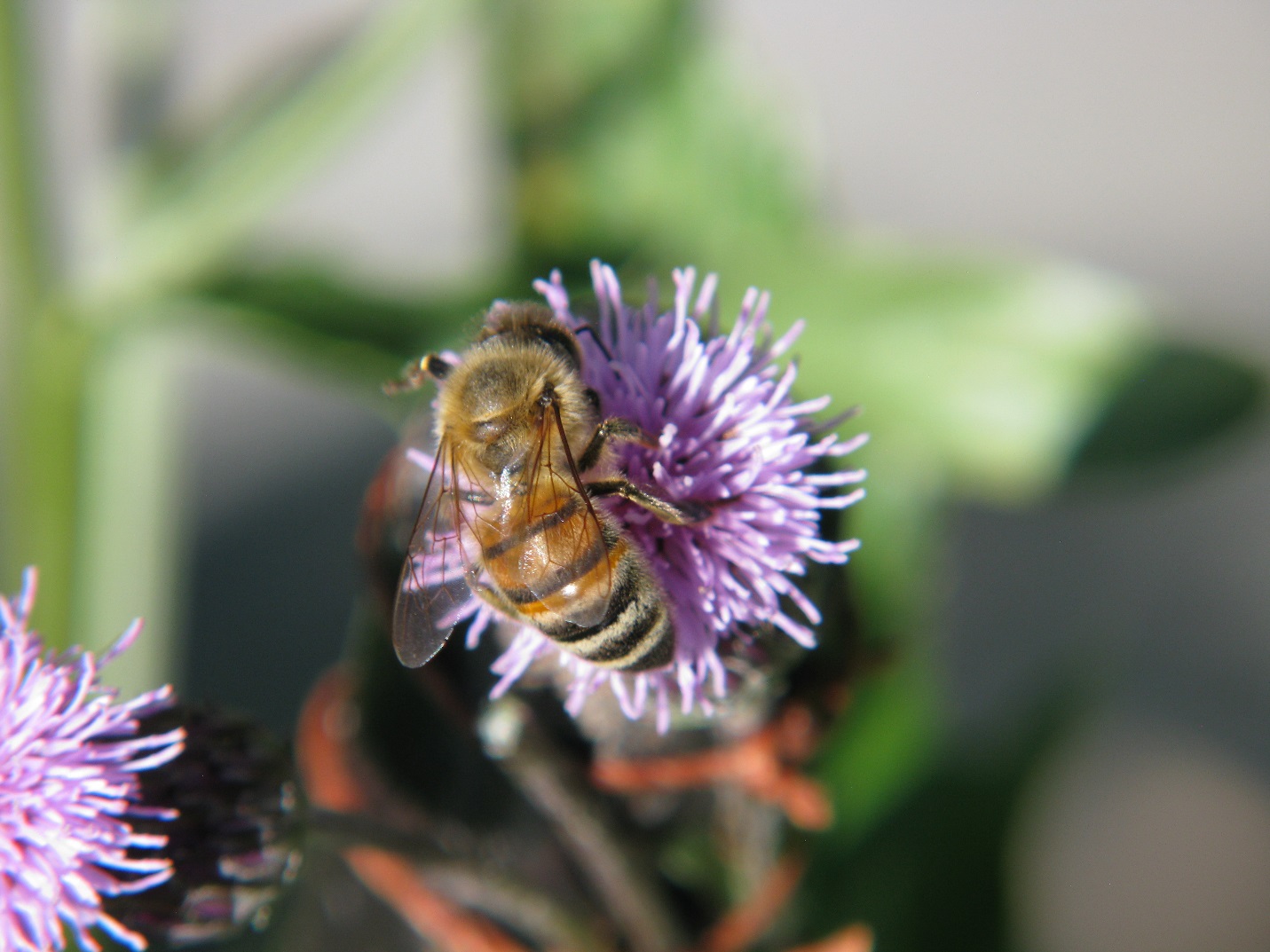
Image from the Canon PowerShot camera with CHDK script ‘Motion Detect Plus’. The thistle flower being visited by ♀ honeybee Apis mellifera L.

Pollinators have fascinated ecologists for decades, and they have traditionally been monitored by on-site human observations. This can be a time-consuming enterprise and – more importantly – species identification and recordings of behaviour have to be registered at the time of observation. This has two complications:

  1. While writing notes, or recording them electronically, the observer cannot continue focusing on the animal or behaviour in question.
  2. Such data then have to be transcribed, with the risk of making transcription errors.

Bringing Monitoring into the 21st Century

Although on-site human observations have predominated, today’s widespread availability of digital monitoring equipment has enabled unique data on flower visitors to be collected. In my research, I have used a time-efficient automated procedure for monitoring flower-visiting animals – namely foraging bumblebees visiting focal white clovers and honeybees visiting thistles.

Continue reading “Automatic Camera Monitoring: A Window into the Daily Life of Pollinators”

Making Your Research Reproducible with R

Post provided by Laura Graham

tweetReproducible research is important for three main reasons. Firstly, it makes it much easier to revisit a project a few months down the line, for example when making revisions to a paper which has been through peer review.

Secondly, it allows the reader of a published article to scrutinise your results more easily – meaning it is easier to show their validity. For this reason, some journals and reviewers are starting to ask authors to provide their code.

Thirdly, having clean and reproducible code available can encourage greater uptake of new methods. It’s much easier for users to replicate, apply and improve on methods if the code is reproducible and widely available

Throughout my PhD and Postdoctoral research, I have aimed to ensure that I use a reproducible workflow and this generally saves me time and helps to avoid errors. Along the way I’ve learned a lot through the advice of others, and trial and error. In this post I have set out a guide to creating a reproducible workflow and provided some useful tips. Continue reading “Making Your Research Reproducible with R”

RSS Meeting on Model Averaging: Elephants, Oscars and Spiky Data

Post provided by Dr Eleni Matechou

Eleni is a Lecturer in Statistics and a member of the Statistical Ecology @ Kent (SE@K) group at the University of Kent. She develops statistical models motivated by ecological applications to study populations of birds, insects and, more recently, humans.

On September 15th 2016, a half-day meeting on Model Averaging – organised by the Environmental Statistics section and the East Kent local group of the Royal Statistical Society (RSS) – took place at the University of Kent in Canterbury .

There were three invited speakers: Professor Richard Chandler, from University College London, Professor Jonty Rougier, from the University of Bristol and Dr Kate Searle, from the Centre for Ecology and Hydrology, who presented via Skype.

All three talks included interesting motivating data, clever modelling and great insight.

Taming the Pachyderm

elephant-in-the-roomProfessor Richard Chandler presented joint work with Marianna Demetriou on “The interpretation of climate model ensembles”. Projecting future global temperatures is clearly a timely topic and Richard’s talk highlighted the challenges of doing this reliably. And they’re certainly not minor challenges, in his own words, this is a problem he has spent 10 years thinking about! Continue reading “RSS Meeting on Model Averaging: Elephants, Oscars and Spiky Data”

Animal Density and Acoustic Detection: An Interview with Ben Stevenson

David Warton (University of New South Wales) interviews  interviews  Ben Stevenson (University of St Andrews) about his 2015 Methods in Ecology and Evolution paper ‘A general framework for animal density estimation from acoustic detections across a fixed microphone array’. They also discuss what Ben is currently up to, including an interesting new method for dealing with uncertain identification in capture-recapture, published in Statistical Science as ‘Trace-Contrast Models for Capture–Recapture Without Capture Histories’.

Continue reading “Animal Density and Acoustic Detection: An Interview with Ben Stevenson”

Next-Gen Peer Review: Solving Today’s Problems with Tomorrow’s Solutions

Post provided by Jess Metcalf and Sean McMahon

640px-scientificreview
Subject area experts are asked to review a lot of papers!

The primary challenge Associate Editors face is finding Reviewers for manuscripts. When times get desperate, it may feel like anyone with a pulse will do! But of course the reality is that Reviewers need some relevant expertise. They also need to be able to carve out time from busy schedules. These two requirements are remarkably efficient at eliminating every name on a list of candidate Reviewers.

This Reviewer drought slows down the publishing process, and frustrates and stresses all involved. It also runs the risk of affecting quality – busy experts have no time to contribute to reviews of papers in their area, so manuscripts end up being reviewed hastily or by people in adjacent fields. However, so much effort goes into writing a manuscript (even a bad one), and so much in science depends fundamentally on the peer review process, that finding the right Reviewers is an important academic – and even ethical – obligation as Editors.  Continue reading “Next-Gen Peer Review: Solving Today’s Problems with Tomorrow’s Solutions”