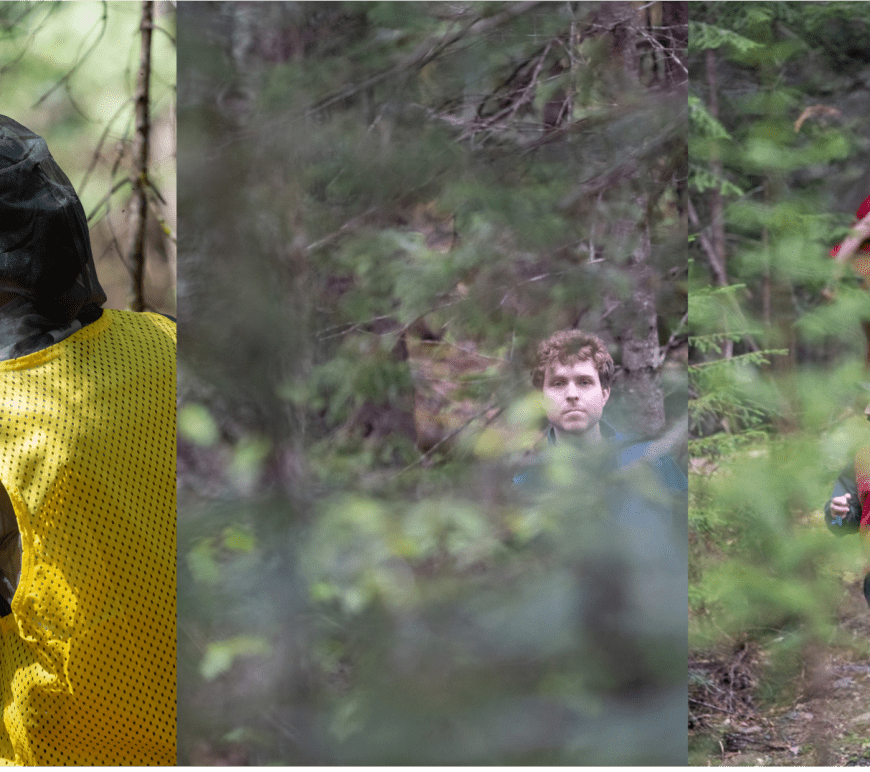
We impersonated predators and prey to study trophic interactions. It was quite fun, but mostly, it worked

Post provided by David Bolduc and Frederic Dulude-de Broin Most people have played some form of tag during childhood – games where certain players try to catch others, who in turn may be able to take refuge in designated areas, or who must collect a flag or another item to win the game. These games are fun and engaging perhaps because they tap into some … Continue reading We impersonated predators and prey to study trophic interactions. It was quite fun, but mostly, it worked

10,000 Arthropods in a Hectare: What We Found Crawling, Flying, and Hiding in Panama’s Rainforest

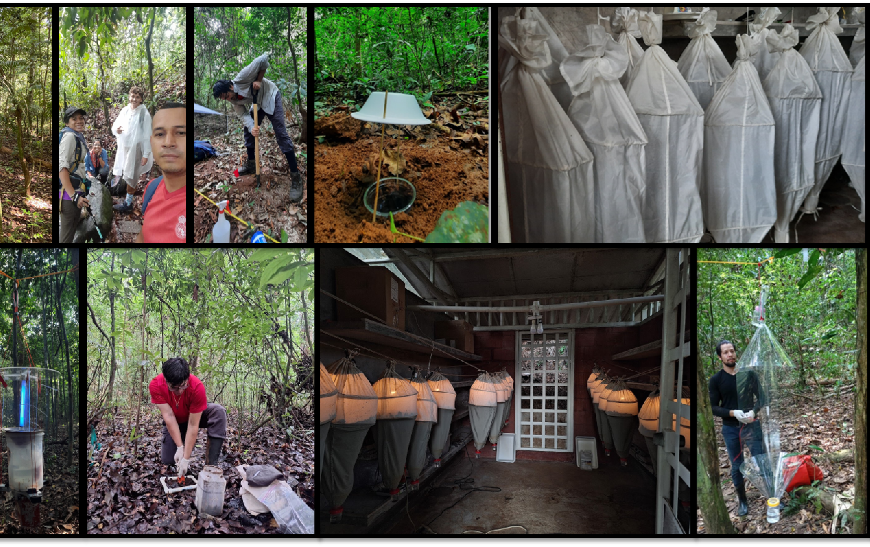
Post provided by Daniel Souto-Vilarós. I’m a molecular ecologist who currently works as a postdoctoral researcher at the University of Utah, with a long-standing obsession with biodiversity. While much of my work has focused on plant-pollinator interactions, this project took me down a very different path: into the leaf litter, soil, and night sky of a tropical forest to try and find out how many … Continue reading 10,000 Arthropods in a Hectare: What We Found Crawling, Flying, and Hiding in Panama’s Rainforest

What’s That Sound? A New Way to Explore Freshwater Soundscapes

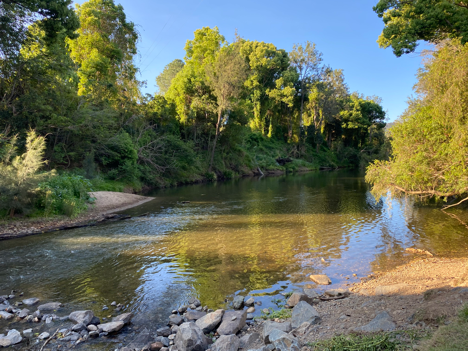
Post provided by Katie Turlington I’m Katie Turlington, a soundscape ecologist and PhD candidate at the Australian Rivers Institute, Griffith University. My research explores how we can use sound to monitor freshwater ecosystems, which are incredibly diverse but often under-surveyed. I’ve spent the last few years working on rivers in South-East Queensland, trying to make sense of the many sounds these systems produce—from insect stridulations … Continue reading What’s That Sound? A New Way to Explore Freshwater Soundscapes

Smart cameras in the wild: A centralised solar-powered Raspberry Pi system for automated animal observation and environmental monitoring

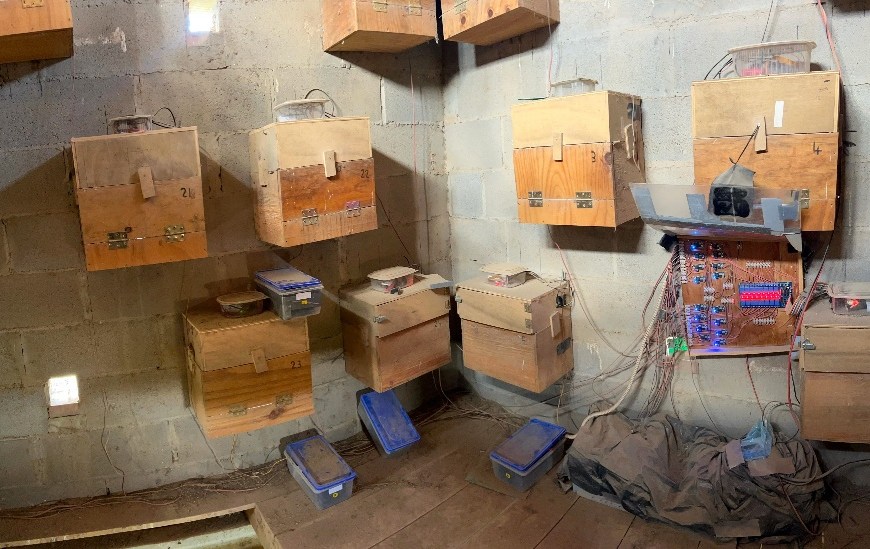
Post provided by Marçal Pou-Rossell Many studies of animal behaviour – especially parental care – rely on short, fragmented observations. Whether due to battery limitations, human resources, or remote field conditions, collecting continuous data throughout an entire reproductive cycle is often just not feasible. As a result, key behaviours can go undocumented, and our understanding of how animals make decisions across time remains incomplete. We … Continue reading Smart cameras in the wild: A centralised solar-powered Raspberry Pi system for automated animal observation and environmental monitoring

Citizen scientist coders for wildlife conservation – a MoveApps story

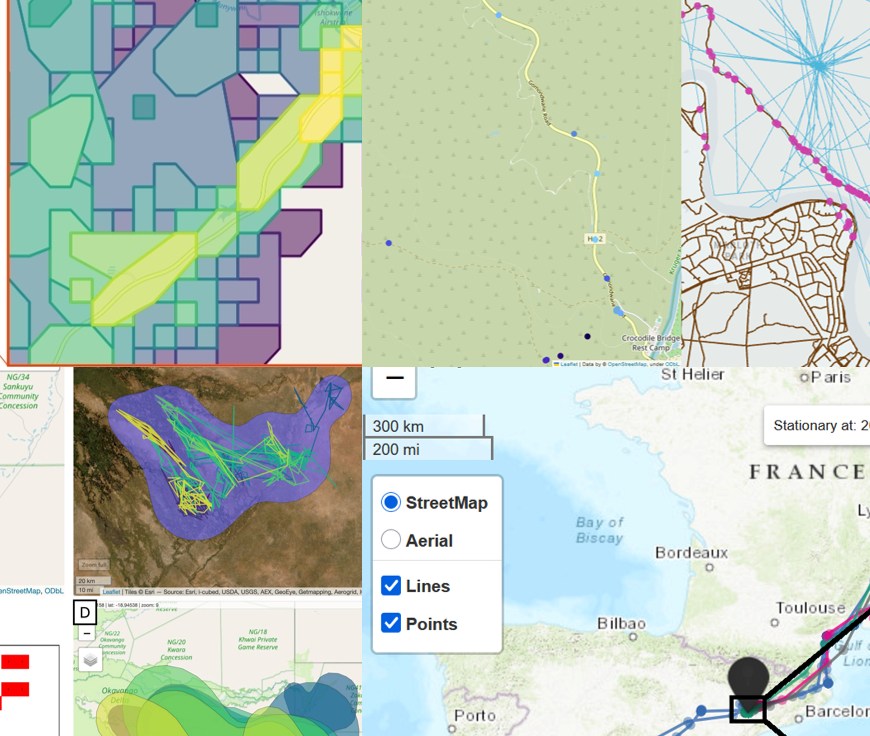
Post provided by Andrea Kölzsch. I am a movement ecologist and have until recently worked as a PostDoc at the Max Planck Institute of Animal Behavior in Radolfzell, Germany. My research focusses, on the one hand, on the tracking of waterbird movement, but in a more general capacity on the empowering of ecologists to gain knowledge from complex data. The background story of our presently … Continue reading Citizen scientist coders for wildlife conservation – a MoveApps story

No training necessary: Shark tracking simplified

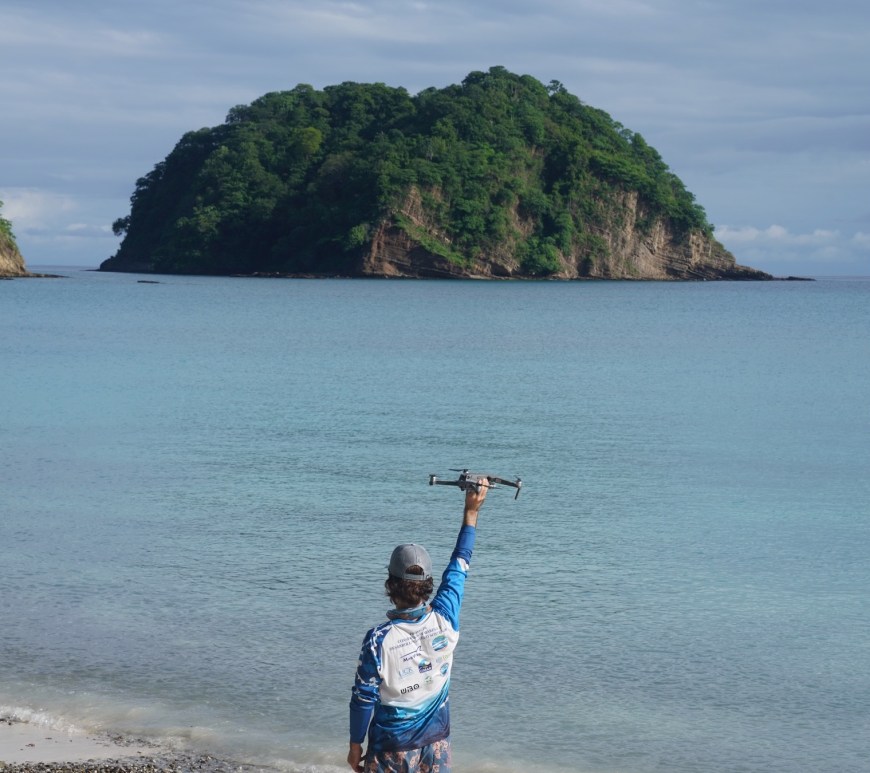
Post provide Chinmay Keshava Lalgudi. Drone imagery offers an efficient way to gather data on mobile animals. Drones are used for population surveys, creating 3D models of habitat, and even studying how animals move and behave in their environment. While collecting this data is relatively easy, manually annotating it is painstaking and slow. Analysing drone imagery can often mean spending hours in front of a … Continue reading No training necessary: Shark tracking simplified

Catching Biodiversity in the Wind: How a Simple Dust Cloth Revolutionizes Airborne eDNA Monitoring

Post provided by Meng Yao Biodiversity is disappearing at an alarming rate worldwide. To protect it, we first need to monitor it—but tracking species traditionally requires significant time, expertise, and often expensive equipment. What if we could detect the presence of plants and animals just by sampling the air around us? As the principal investigator of the molecular ecology and biodiversity laboratory at Peking University, … Continue reading Catching Biodiversity in the Wind: How a Simple Dust Cloth Revolutionizes Airborne eDNA Monitoring

False Causes, Meet Attractor Dimension

Post provided by Yair Daon Who am I? I’m Yair Daon, a mathematician-turned-epidemiologist at Bar-Ilan University’s Faculty of Medicine. Most days I stare at time-series curves that claim one thing “drives” another. When those claims are wrong, public-health decisions can drift off course. Our new Methods in Ecology & Evolution paper introduces a fast way to shout “no!” before that happens. A two-minute primer for … Continue reading False Causes, Meet Attractor Dimension

Practical tools to advance Image-Based bio-logging in marine ecosystems

Post provided by Marianna Chimienti My name is Dr Marianna Chimienti, and I am a lecturer in Marine Top Predator Ecology at the School of Ocean Sciences at Bangor University (UK). I’m fascinated by animal movements. My main research focuses on understanding how, where, when, and why animals move, using bio-logging technology (devices attached to animals that can record location, depth, acceleration, orientation, environmental conditions, … Continue reading Practical tools to advance Image-Based bio-logging in marine ecosystems

Charting the Unheard: A Primer for Analysing Toothed Whale Vocal Repertoires

Post provided by Maia Austen Introduction: Why toothed whale voices matter I’m a PhD candidate in the ONDAS Lab at the University of Vermont, advised by Dr. Laura May-Collado. My PhD looks to utilize machine learning analysis to better understand how and why dolphins communicate with each other. Toothed whales – like dolphins and belugas – are among the most acoustically sophisticated animals on Earth. … Continue reading Charting the Unheard: A Primer for Analysing Toothed Whale Vocal Repertoires