New Studies Aim to Boost Social Science Methods in Conservation Research

Below is a press release about the Methods Special Feature ‘Qualitative Methods for Eliciting Judgements for Decision Making‘ taken from the University of Exeter.

Scientists have produced a series of papers designed to improve research on conservation and the environment.

A group of researchers have contributed to a Special Feature of the journal Methods in Ecology and Evolution to examine commonly used social science techniques and provide a checklist for scientists to follow.

Traditional conservation biology has been dominated by quantitative data (measured in numbers) but today it frequently relies on qualitative methods such as interviews and focus group discussions. The aim of the special issue is to help researchers decide which techniques are most appropriate for their study, and improve the “methodological rigour” of these techniques. Continue reading “New Studies Aim to Boost Social Science Methods in Conservation Research”

Issue 9.1: Qualitative Methods for Eliciting Judgements for Decision Making

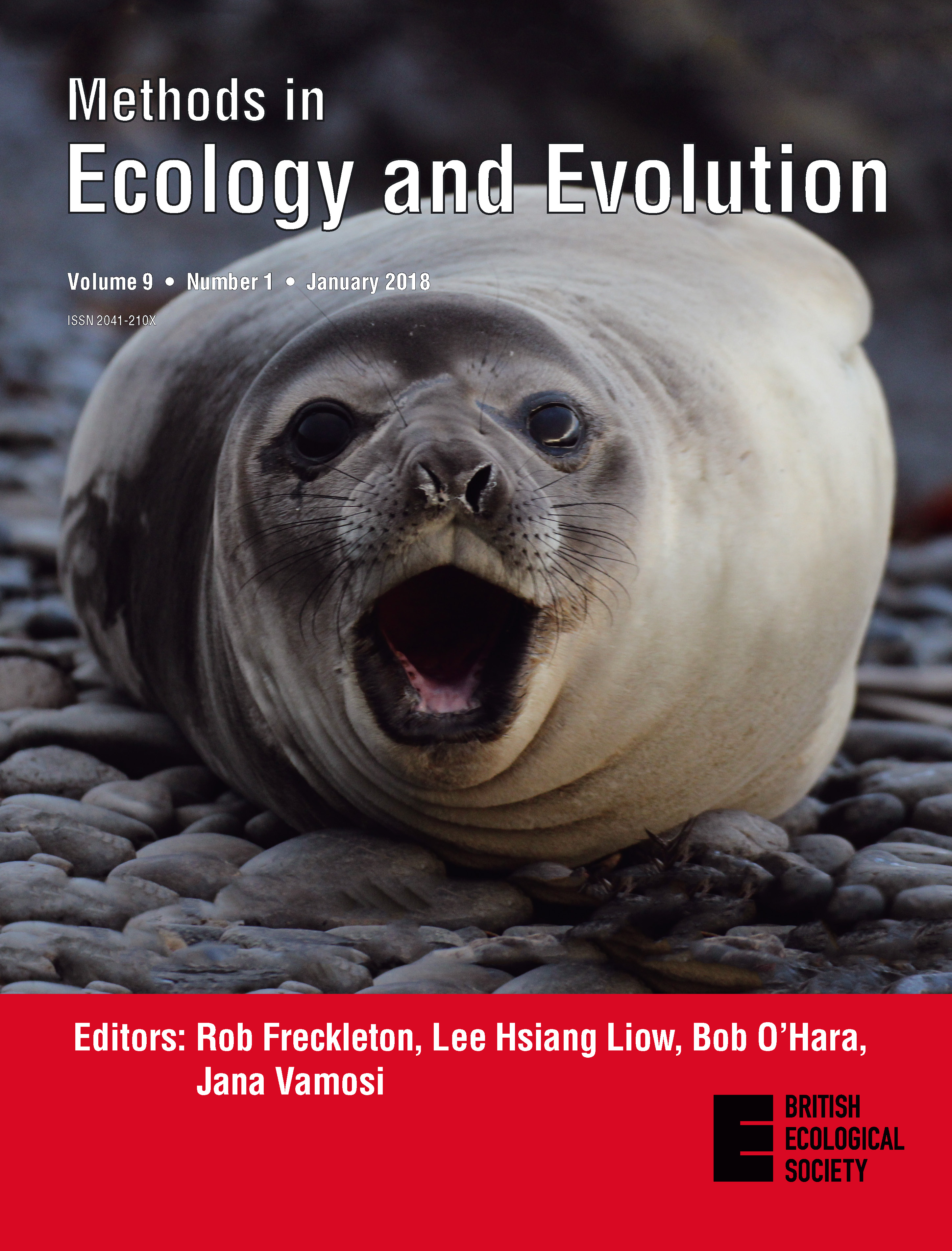
Issue 9.1 is now online!

Our first issue of 2018, which includes our latest Special Feature – “Qualitative methods for eliciting judgements for decision making” – is now online!

This new Special Feature is a collection of five articles (plus an Editorial from Guest Editors Bill Sutherland, Lynn Dicks, Mark Everard and Davide Geneletti) brings together authors from a range of disciplines (including ecology, human geography, political science, land economy and management) to examine a set of qualitative techniques used in conservation research. They highlight a worrying extent of poor justification and inadequate reporting of qualitative methods in the conservation literature.

As stated by the Guest Editors in their Editorial “these articles constitute a useful resource to facilitate selection and use of some common qualitative methods in conservation science. They provide a guide for inter-disciplinary researchers to gauge the suitability of each technique to their research questions, and serve as a series of checklists for journal editors and reviewers to determine appropriate reporting.”

All of the articles in the ‘Qualitative methods for eliciting judgements for decision making‘  Special Feature are all freely available.
Continue reading “Issue 9.1: Qualitative Methods for Eliciting Judgements for Decision Making”

Satellite Data Fusion for Ecologists and Conservation Scientists

What is satellite data fusion, and how can it benefit ecologists and conservation scientists? In a new Methods in Ecology and Evolution video, Henrike Schulte-to-Bühne answers this question using whiteboards and questionable drawing skills. The availability and accessibility of multispectral and radar satellite remote sensing (SRS) imagery are at an unprecedented high. However, despite the benefits of combining multispectral and radar SRS data, data fusion techniques, including image … Continue reading Satellite Data Fusion for Ecologists and Conservation Scientists

Methods in Ecology and Evolution 2017: The Year in Review

Happy New Year! We hope that you all had a wonderful Winter Break and that you’re ready to start 2018. We’re beginning the year with a look back at some of our highlights of 2017. Here’s how last year looked at Methods in Ecology and Evolution.

The Articles

We published some amazing articles in 2017, too many to mention them all here. However, we would like to take a moment to thank all of the Authors, Reviewers and Editors who contributed to the journal last year. Your time and effort make the journal what it is and we are incredibly grateful. THANK YOU for all of your hard work!

Technological Advances at the Interface between Ecology and Statistics

Our first Special Feature of the year came in the April issue of the journal. The idea for Technological Advances at the Interface between Ecology and Statistics  came from the 2015 Eco-Stats Symposium at the University of New South Wales and the feature was guest edited by Associate Editor David Warton. It consists of five articles based on talks from that conference and shows how interdisciplinary collaboration help to solve problems around estimating biodiversity and how it changes over space and time.

Continue reading “Methods in Ecology and Evolution 2017: The Year in Review”

Software Review Collaboration with rOpenSci

© The rOpenSci Project, 2017

The role of science journals is to publish papers about scientific research. We need to maintain some quality in what is published, so we use peer review, and ask experts in the subject of a paper to read it and check that it is correct, the arguments make sense etc.

One of the types of paper we publish is Applications, most of which describe software that will help ecologists and evolutionary biologists to do their research. Our focus is on the paper itself, but we also want to be confident that the software is well written, e.g. that it has no obvious bugs, and that it is written so that future versions will not break.

Of course, it takes a lot of time to thoroughly review software, and that is not the primary job of the journal’s peer review process. But we appreciate that this needs to be done, and indeed many of our reviewers and editors put a lot of time into doing just this, something we really appreciate. But can we do this better?

Fortunately, we were approached by the rOpenSci organisation, who wanted to collaborate with us to do this (a huge thanks to Scott Chamberlain for this initial approach and all of his hard work in putting this collaboration together). They are a group of coders, mainly in ecology, who have written a large number of open source R packages for a variety of tasks (e.g. importing data, visualisation). They also want to maintain good quality code, so they have implemented a variety of methods to do this.

One of these is code review. This is another form of peer review, but focused on the code, not the paper. This means the reviewer can concentrate on checking that the code works, that it is well written and documented (so other people can read the code and adapt it), and that it has the right sets of tests, so that if something changes, it is straightforward to check that it still works. Continue reading “Software Review Collaboration with rOpenSci”

New Associate Editor: Edward Codling

Today, we are pleased to be the latest new member of the Methods in Ecology and Evolution Associate Editor Board. Edward Codling joins us from the University of Essex, UK and you can find out a little more about him below. Edward Codling “My research is focused on using new mathematical and computational techniques to study problems in biology and ecology. In particular, I’m interested in movement ecology, and … Continue reading New Associate Editor: Edward Codling

How Can We Quantify the Strength of Migratory Connectivity?

Technological advancements in the past 20 years or so have spurred rapid growth in the study of migratory connectivity (the linkage of individuals and populations between seasons of the annual cycle). A new article in Methods in Ecology and Evolution provides methods to help make quantitative comparisons of migratory connectivity across studies, data types, and taxa to better understand the causes and consequences of the seasonal distributions … Continue reading How Can We Quantify the Strength of Migratory Connectivity?

New Associate Editor: David Soto

Today, we are pleased to be the latest new member of the Methods in Ecology and Evolution Associate Editor Board. David Soto joins us from the University of Leuven in Belgium and you can find out a little more about him below. David Soto “I am an isotope ecologist with interests in developing new stable isotope methods and techniques for tracing spatio-temporal changes in food webs, and understanding … Continue reading New Associate Editor: David Soto

Improved and Harmless Demethylation Method for Ecological Epigenetic Experiments

In a new Methods in Ecology and Evolution video, Javier Puy outlines a new method of experimental plant DNA demethylation for ecological epigenetic experiments. While the traditionally-used approach causes underdeveloped root systems and high mortality of treated plants, this new one overcomes the unwanted effects while maintaining the demethylation efficiency. The authors demonstrate its application for ecological epigenetic experiments: testing transgenerational effects of plant–plant competition. … Continue reading Improved and Harmless Demethylation Method for Ecological Epigenetic Experiments

Animal Behaviour through a Virtual Lens

Motion vision is an important source of information for many animals. It facilitates an animal’s movement through an environment, as well as being essential for locating prey and detecting predators. However, information on the conditions for motion vision in natural environments is limited. To address this, Bian et al. have developed an innovative approach that combines novel field techniques with tools from 3D animation to … Continue reading Animal Behaviour through a Virtual Lens