Building a Better Indicator

Post Provided by Charlie Outhwaite & Nick Isaac

Nick and Charlie are giving a presentation on ‘Biodiversity Indicators from Occurrence Records’ at the BES Annual Meeting on Wednesday 16 December at 13:30 in Moorfoot Hall. Charlie will also be presenting a poster on Tuesday 15 December between 17:00 and 18:30 on ‘Monitoring the UK’s less well-studied species using biological records‘ in the Lennox Suite.

Biodiversity Indicators are some of the most important tools linking ecological data with government policy. Indicators need to summarise large amounts of information in a format that is accessible to politicians and the general public. The primary use of indicators is to monitor progress towards environmental targets. For the UK, a suite of indicators are produced annually which are used to monitor progress towards the Aichi targets of the Convention on Biological Diversity as well as for European Union based commitments.  However, this is complicated by the fact that biodiversity policy within the UK is devolved to each of the four nations, so additional indicators have been developed to monitor the commitments of each country.

© Dave Colliers
© Dave Colliers

A range of biodiversity indicators exist within this suite covering the five strategic goals of the Convention; which include addressing the causes of biodiversity loss, reducing pressures on biodiversity and improving status of biodiversity within the UK. Within strategic goal C (improve status of biodiversity by safeguarding ecosystems, species and genetic diversity) there are currently 11 “State” indicators that use species data to monitor progress towards the targets underlying this goal. Most existing species based indicators use abundance data from large scale monitoring schemes with systematic protocols. However, there are other sources of data, such as occurrence records, that can offer an alternative if they are analysed using the appropriate methods. This post will discuss the development of species indicators for occurrence records to complement the current UK species based indicators, specifically relating to the C4b priority species indicator and the D1c pollinators indicator. Continue reading “Building a Better Indicator”

There’s Madness in our Methods: Improving inference in ecology and evolution

Post provided by JARROD HADFIELD

Last week the Center for Open Science held a meeting with the aim of improving inference in ecology and evolution. The organisers (Tim Parker, Jessica Gurevitch & Shinichi Nakagawa) brought together the Editors-in-chief of many journals to try to build a consensus on how improvements could be made. I was brought in due to my interest in statistics and type I errors – be warned, my summary of the meeting is unlikely to be 100% objective.

True Positives and False Positives

The majority of findings in psychology and cancer biology cannot be replicated in repeat experiments. As evolutionary ecologists we might be tempted to dismiss this because psychology is often seen as a “soft science” that lacks rigour and cancer biologists are competitive and unscrupulous. Luckily, we as evolutionary biologists and ecologists have that perfect blend of intellect and integrity. This argument is wrong for an obvious reason and a not so obvious reason.

We tend to concentrate on significant findings, and with good reason: a true positive is usually more informative than a true negative. However, of all the published positives what fraction are true positives rather than false positives? The knee-jerk response to this question is 95%. However, the probability of a false positive (the significance threshold, alpha) is usually set to 0.05, and the probability of a true positive (the power, beta) in ecological studies is generally less than 0.5 for moderate sized effects. The probability that a published positive is true is therefore 0.5/(0.5+0.05) =91%. Not so bad. But, this assumes that the hypotheses and the null hypothesis are equally likely. If that were true, rejecting the null would give us very little information about the world (a single bit actually) and is unlikely to be published in a widely read journal. A hypothesis that had a plausibility of 1 in 25 prior to testing would, if true, be more informative, but then the true positive rate would be down to (1/25)*0.5/((1/25)*0.5+(24/25)*0.05) =29%. So we can see that high false positive rates aren’t always the result of sloppiness or misplaced ambition, but an inevitable consequence of doing interesting science with a rather lenient significance threshold. Continue reading “There’s Madness in our Methods: Improving inference in ecology and evolution”

A Big Database and Big Models Pave the Way for Big Questions in Ecology

This post was provided by Sean McMahon.

Sean is an Associate Editor for Methods in Ecology and Evolution and is a staff scientist at the Smithsonian Institution based at the Smithsonian Environmental Research Center.  His research focuses on the ecological mechanisms that structure forest communities, with interests spanning the fields of demography, physiology, and remote sensing.

The 100th anniversary of the Ecological Society of America was celebrated in Baltimore, Maryland at their Annual Conference in August. This year a record 10,000 ecologists attended the six day event. ESA conferences now boast a staggering number of scientific presentations, ranging from numerous plenary talks, organized oral sessions and regular oral presentation sessions to lightening talks, posters, workshops and mixers. It was both exhilarating and overwhelming, but featured a truly impressive amount of science.

As the sheer magnitude of the event made attending even a fraction of the talks impossible, it feels odd to highlight any particular presentations. Two talks, however – both on the final morning of the conference – did strike me as worth mentioning; not because they featured groundbreaking science, or novel insights, but because they reflect potentially powerful new platforms from which groundbreaking science might develop. Continue reading “A Big Database and Big Models Pave the Way for Big Questions in Ecology”

How Much Methodology Should go into Conference Talks?

The following post was written by Tim Poisot. To see the original version, please visit his blog.

Tim is an Associate Editor who works on Applications submissions for Methods in Ecology and Evolution. His research interests include spatial and temporal dynamics of species interactions at the community level, the relevance of variability in community structure on emerging ecosystem properties, and the evolutionary dynamics of multi-species assemblages.

I am back from the centennial meeting of the Ecological Society of America. I met a lot of great people, saw a lot of great talks, and had lovely discussions. One thing that has been in the back of my mind for a while though, is the question of how much methodology should go into an oral presentation?

How much methodology should be in your presentation? © Phil Whitehouse

Methods are important  —  over the last two years I have found that this has been the part of papers I criticize the most during peer review. Any result is only as robust as its least robust element and there are, in ecology, enough sources of variability that we do not want methods to add any more. As a consequence, appreciating a result and its robustness require that we be able to understand and evaluate the methods by which this result has been obtained.

There are a few elements to evaluating a method. Does it rely on a sound and tested theory? Is it properly applied? Is the method correctly implemented? All of these questions (and some more) should be asked —  and answered in the affirmative  —  before we decide to accept a result. If not, we are putting ourselves in the position to blindly accept what we are being told. Continue reading “How Much Methodology Should go into Conference Talks?”

Statistics in Ecology and Environmental Monitoring: A Look Back at the SEEM 2015 Conference

Post provided by Dr Matt Schofield

Matt is an Associate Editor for Methods in Ecology and Evolution. He was the principle organiser of this year’s SEEM conference. His research interests include Bayesian inference and hierarchical modelling, computational methodology, ecological statistics and much more. Matt is based at the University of Otago.

A photo taken during a lunch break at the conference

The Statistics in Ecology and Environmental Monitoring (SEEM) conference was held in Queenstown, New Zealand on June 22-26, 2015. Queenstown is a resort town in the Southern Alps of New Zealand that looks out on Lake Wakatipu, surrounded by snow-capped mountains. The venue gave a chance to explore some of the natural beauty of New Zealand, with excursions to local ski fields, wineries and various hiking trails.

SEEM conferences have been organized by members of the Statistics group at the University of Otago since 1993. The first SEEM conference was held in Dunedin, New Zealand and conferences were then held regularly (every 3 years) until 2002. The last SEEM conference, in 2007, also served as the EURING (European Union for Bird Ringing) technical meeting. With nearly ten years passing since 2007, we had a smaller conference of around 50 attendees this year. There was an engaging atmosphere during the meeting and productive discussion followed each of the 40 talks. The SEEM 2015 meeting maintained the tradition of previous SEEM conferences with delegates from across a broad spectrum of statistical ecology coming together to discuss research. Continue reading “Statistics in Ecology and Environmental Monitoring: A Look Back at the SEEM 2015 Conference”

In Defence of Satellite Data: The Perfect Companion to Ground-Based Research

Post provided by Dr Nathalie Pettorelli

Nathalie is an Institute Research Fellow at the Zoological Society of London. She heads the Environmental Monitoring and Conservation Modelling (EMCM) team and her main research involves assessing and predicting the impacts of global environmental change on biodiversity and ecosystem services. Nathalie was one of the presenters at the UK half of the Methods in Ecology and Evolution 5th Anniversary Symposium in April. You can watch her talk, ‘Harnessing the Potential of Satellite Remote Research’ here.

If there is one question I hear over and over again, it’s this: “why, oh why, do you use satellite data instead of ground-based data in your research?” People seem to think that I believe satellite data are better than ground-based data. Do I not value fieldwork? Do I not trust ground-based data? My answer to all of this is: you’ll never catch me preaching that satellite remote sensing can solve the entire data collection gap in ecological monitoring.

I use satellite data because a lot of my work happens at relatively large spatial and temporal scales, targets regions where ground-based data are simply unavailable or extremely difficult to gather and relies on being able to access data that have been collected in a systematic and scalable manner.

Yes, satellite-based techniques can address spatial and temporal domains inaccessible to traditional, on-the-ground, approaches, but I am the first to acknowledge that satellite remote sensing cannot match the accuracy, precision and thematic richness of in-situ measurement and monitoring.

©Clare Duncan
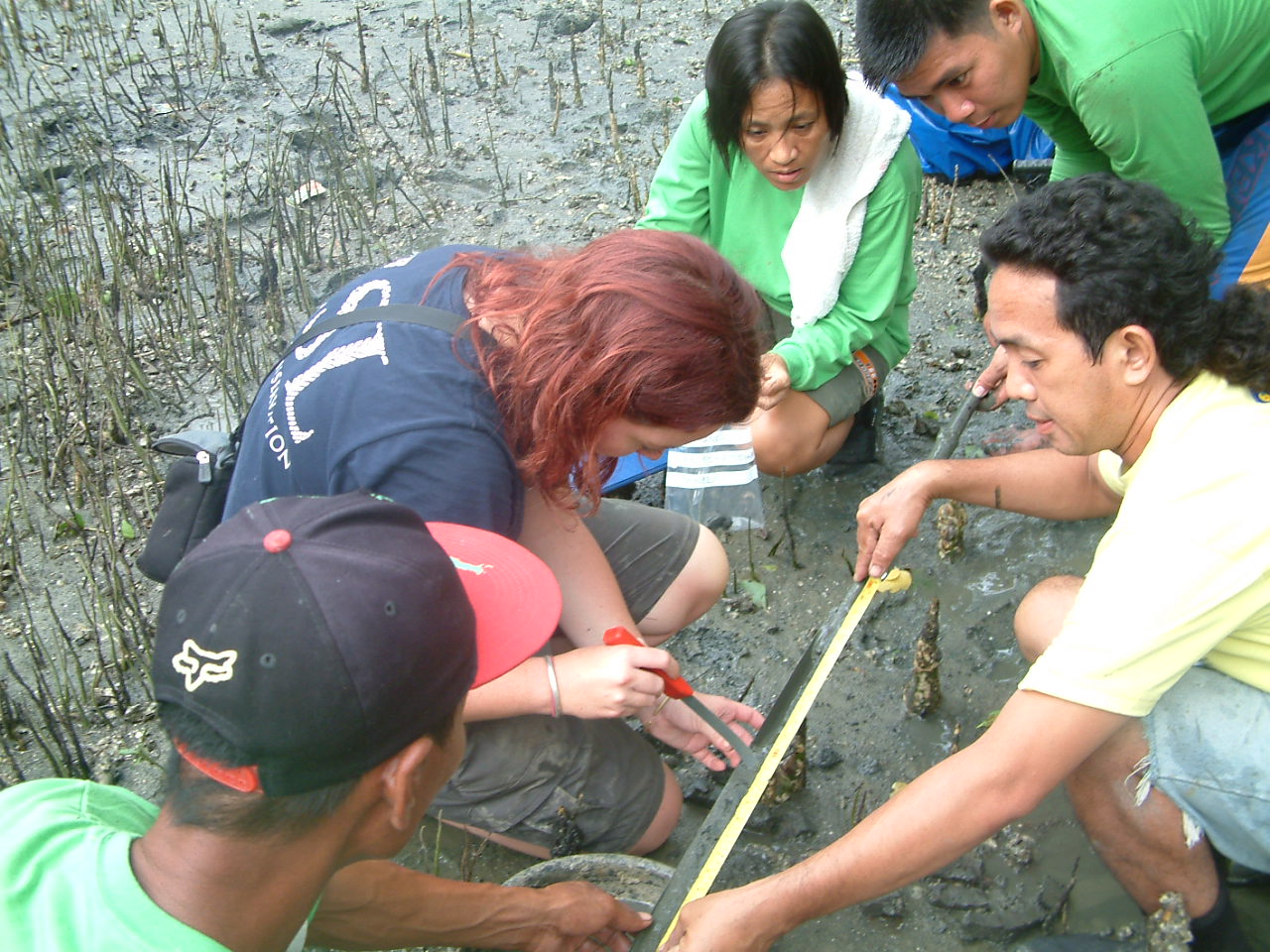
The New Generation of Ecologists in Action: Clare Duncan conducting field measurements in the Philippines to be combined with satellite remote sensing information to monitor ecosystem services delivery. ©Clare Duncan

In spite of this, data collected on the ground are currently difficult to use for mapping and predicting regional or global changes in the spatio-temporal distribution of biodiversity (a problem for those of us trying to tackle these kinds of issues). Ground-based data can also be expensive and tend to come from a single annual time period. This makes it difficult to gather information on temporal changes and phenology. Continue reading “In Defence of Satellite Data: The Perfect Companion to Ground-Based Research”

Ten Top Tips for Reviewing Statistics: A Guide for Ecologists

post provided by Dr Mark Brewer.

Mark is a statistician with Biomathematics & Statistics Scotland, based in Aberdeen. His main statistical research interests are Species Distribution Modelling, Compositional Data Analysis, Bayesian Mixture Modelling and Bayesian Ordinal Regression. Mark was one of the presenters at the UK half of the Methods in Ecology and Evolution 5th Anniversary Symposium in April. You can watch his talk, ‘Model Selection and the Cult of AIC’ here.

The level of statistical analysis in ecology journals is far higher than in most other disciplines. Ecological journals lead the way in the development of statistical methodology, necessitated by challenging practical problems involving complex data sets. As a statistician, publishing also in hydrology, soil science, social science and forensic science journals, I’ve found papers in those areas are much more likely to only use well-established methods than papers in ecology.

Here’s the big question though: why then do I have the most difficulty with ecological journals when it comes to statistical analyses? Let’s be clear here: when I say “difficulty”, I mean I receive reviews which are just plain wrong. Most statisticians I’ve spoken to who work in ecology have anecdotes from reviews which demonstrate a lack of understanding by the non-statistician reviewer (including the all-too-frequent “perhaps you should consult a statistician”). So, why the apparent disconnect?

The difference seems to be in how non-statisticians in different disciplines treat the statistics in a paper. In many subject areas, reviewers are almost deferential to the statistical analysis; in ecology, reviewers can be forthright in their condemnation, often without justification. Reviewers have every right to question the statistical analysis in a paper, but the authors have the exact same right to expect a high quality review from a genuine expert in the field. Has ecology become blasé about statistics? Continue reading “Ten Top Tips for Reviewing Statistics: A Guide for Ecologists”

Methods 5th Anniversary Symposium: A Gender Balanced Event?

Post provided by Alison Johnston

The Methods in Ecology and Evolution Symposium was an excellent conference with dynamic and interesting speakers representing a wide range of topics which have been published in the journal over the last five years. It was an unusual conference for a couple of reasons:

  1. It wasn’t all in one place. Talks were relayed between London and Calgary (during convenient times!), a couple of speakers presented via Skype from neither location and it was watched via livestream.com by hundreds of other participants
  2. There were equal numbers of male and female presenters. In my experience this gender balance of invited speakers is unusual and notable

Equal attendance
The gender balance of the speakers encouraged me to look around the room and write down a few figures for other gender dimensions of the London section of the symposium. As well as equal gender representation of speakers, there was also a good gender balance in the attendees – 42% of the attendees were female at the time I wrote down the numbers. These two figures suggest that it was a good conference for gender equality. However, I think these headline figures hide a number of more tricky aspects of gender equality.

Questionable numbers
There were a total of 23 questions asked of the 12 speakers presenting or livestreamed in London and only 3 of these were from women (2 out of 22 if I exclude my own question to reduce any investigator effects). These data points are not independent, as some people asked several questions, but I didn’t keep a record of individuals. Twitter revealed a similar reduced female presence compared to attendance: of those people tweeting to #Methods5th only 37% were women.

Proportion of different symposium participants that were female. Half the speakers and nearly half the attendees were female. But only just over 10% of questions were asked by women.
Proportion of different symposium participants that were female. Half the speakers and nearly half the attendees were female. But only around 10% of questions were asked by women.

Continue reading “Methods 5th Anniversary Symposium: A Gender Balanced Event?”

Methods in Ecology and Evolution 5th Anniversary Symposium: The Livestream

On Wednesday 22 April 2015, Methods in Ecology and Evolution will be celebrating its 5th Anniversary. Methods is the British Ecological Society’s youngest journal and over the past five years it has established itself as the leading publication for methodological advances for both the ecological and evolutionary academic communities.

For those of you who can’t make it to either the first half or the Symposium in London (Looking Forward to the Next Five Years) or the second half in Calgary (Next Generation Ecology and Evolution: Genomics Tools for the Study of Ecology, Evolution, and Biomonitoring) we will be livestreaming every presentation.

What You Need to Watch the Livestream

Our 5th Anniversary Symposium will be streamed though Livestream.com. This platform is optomised for all browsers as well as Android and iOS devices. So all that you need is a computer, tablet or smart phone and the ability to connect to the internet.

Continue reading “Methods in Ecology and Evolution 5th Anniversary Symposium: The Livestream”

Towards a More Reproducible Ecology

The following post has been provided by Dr Nick Isaac.

Nick is organising the OpenData and Reproducibility Workshop at Charles Darwin House, London on 21 April 2015 (more information below). He is also an Associate Editor for Methods in Ecology and Evolution.

Macro_finalThe open science movement has been a major force for change in how research is conducted and communicated. Reproducibility lies at the heart of the open science agenda. It’s a broad topic, covering how data are shared, interpreted and reported.

Reproducibility has been advanced by a coalition of publishers (who have been embarrassed by a series of high-profile retractions), funding agencies keen that data should be re-useable after the life of a grant, and young researchers taking a more collaborative attitude than previous generations.

There is now a vast range of tools and platforms to help scientists share data and other materials (e.g. Dryad, Github, Figshare) and to create efficient and reproducible workflows (e.g. Sweave, Markdown, Git and, of course, R). There’s even a MOOC (Massive Open Online Course) in Reproducible Research, run out of Johns Hopkins University.

Ecology has lagged behind wet-lab biology and other disciplines in the adoption of reproducibility concepts and there are few examples of ecological studies that are truly reproducible. To address this, we’re running a one-day workshop at Charles Darwin House, London on Tuesday 21 April entitled OpenData & Reproducibility Workshop: the Good Scientist in the Open Science era. Continue reading “Towards a More Reproducible Ecology”