Tackling uncertainty in landscape connectivity

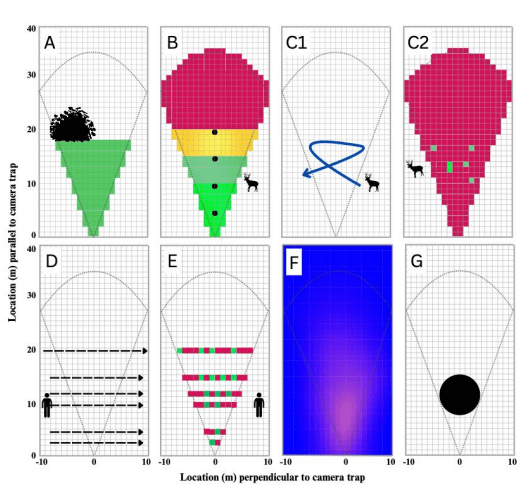
Post provided by Maëlis Kervellec  An Increased Interest Towards Landscape Connectivity Human activities not only contribute to climate change by producing greenhouse gases, but also directly degrade habitats. According to the 2019 IPBES report , about 75% of the Earth’s land surfaces have been heavily modified. Moreover, in Europe, 50% of the land is within 1.5 kilometres of a road (Torres, Jaeger, and Alonso, 2016 ). This … Continue reading Tackling uncertainty in landscape connectivity

Introducing sabinaNSDM: A New R Package for Improved Species Distribution Modeling based on Spatially-Nested Hierarchical models

Post provided by Teresa Goicolea and Alejandra Zarzo Esta publicación también está disponible en español. Species Distribution Models (SDMs) are essential tools for scientists and conservationists to predict where species are likely to be found, where they have existed in the past, and where they might appear in the future. As we face urgent issues like climate change and biodiversity loss, producing accurate predictions is … Continue reading Introducing sabinaNSDM: A New R Package for Improved Species Distribution Modeling based on Spatially-Nested Hierarchical models

Opening Ecology to Local, Traditional, and Indigenous Knowledge

Post provided by James T. Thorson Ecologists have a social responsibility to document, interpret, and forecast how human activities are impacting our shared world.  There’s an ongoing movement to open ecology to new voices: for example, the Biden-Harris Administration has directed US agencies to incorporate Indigenous Knowledge through ethical and mutually beneficial relationships with tribal nations.  This direction is clearly important, and requires developing new … Continue reading Opening Ecology to Local, Traditional, and Indigenous Knowledge

Tracking marine tetrapod carcasses, passive drifters and citizen science

In this new video Maurício Tavares and coauthors showcase the findings of their latest article. They designed and tested a system for tracking carcasses of marine tetrapods on the Southern Subtropical Shelf of the southwestern Atlantic Ocean. Their research contributes to findings on marine tetrapod drift patterns and can be replicated in other coastal regions of the world for tracking a wide range of marine … Continue reading Tracking marine tetrapod carcasses, passive drifters and citizen science

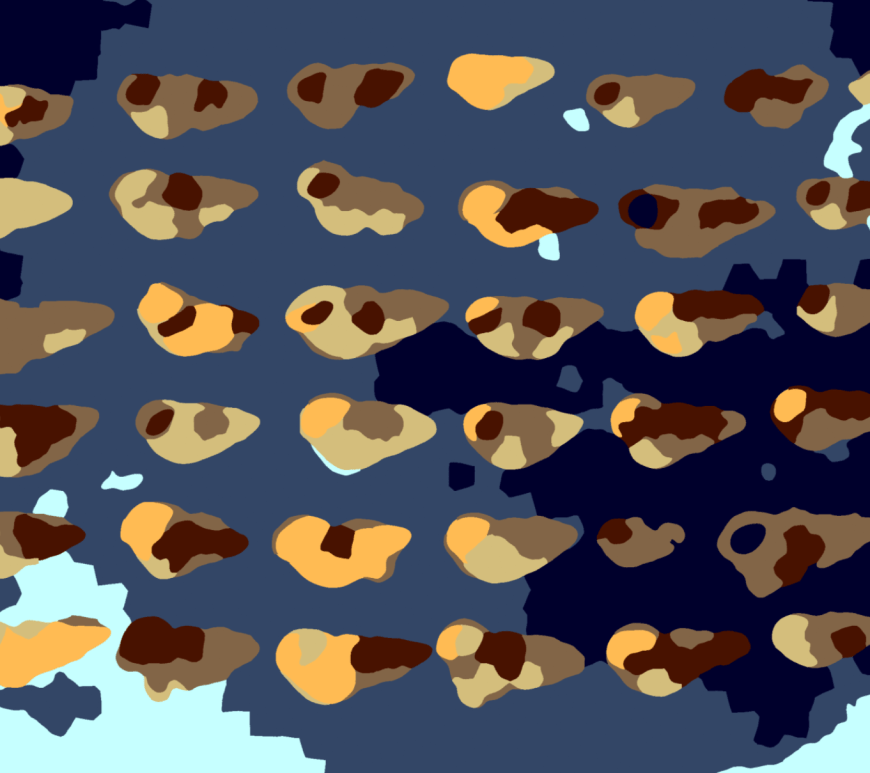
Seeds ‘exposed’! A method to automatically reveal seed morphological traits from images.

Post provided by Roberta L. C. Dayrell The knowledge of seed morphology is an essential resource for practitioners and scientists across diverse disciplines such as botany, agriculture, restoration, conservation, and archaeology. Morphological attributes can inform studies on topics such as seed dispersal, predation, longevity, and germination. This knowledge also has practical applications, including seed identification and assessments of quality and ripeness. But extracting meaningful information … Continue reading Seeds ‘exposed’! A method to automatically reveal seed morphological traits from images.

Heat waves reconstructed!

Post provided by Loke von Schmalensee For many decades, humans have tried to understand how to process continuous signals for our convenience. As a result, numerous innovative methods have been developed for recording, compressing, restoring, and transforming (and more) continuous signals. Consider, for instance, the relationship between signal processing and music: it comes into play directly through the recording of sound waves, and indirectly via … Continue reading Heat waves reconstructed!

Unraveling the identity of fish sounds to support marine conservation

Post provided by Xavier Mouy Fish sounds and marine conservation Many fish species produce sounds to attract mates, scare away predators or defend their territory. These sounds are very useful to us, scientists! Just by listening to the ocean, we can detect the presence of different fish species, infer their behaviour and potentially find out how many fish there are in an environment. This has … Continue reading Unraveling the identity of fish sounds to support marine conservation

Tracking harbour porpoises around gill nets

Post provided by Jamie Macaulay Entanglement in net fisheries (static and drift) is the largest known cause of direct anthropogenic mortality to many small cetacean species, including harbour porpoise (Phocoena phocoena), in UK waters. Despite this, little is known about the behaviour of small cetaceans in proximity to nets. In this blog post, Jamie Macaulay discusses the findings of his Methods in Ecology & Evolution … Continue reading Tracking harbour porpoises around gill nets

Insect tracking using retroreflective tags

Post provided by Michael Smith Tracking bee movement is anything but an easy task. Electronic tags are often too cumbersome and extensive electronic systems such as radars are costly to deploy. There is a need for a low-cost, low-impact tool, with high spatial resolution for tracking bees, to investigate how far they forage. In this blog post, Michael Smith discusses the development of retroreflective tags … Continue reading Insect tracking using retroreflective tags