Remote Sensing for Counting Animals: Polar Bears, Sheep and Everything In-Between

Post provided by Tracey Hollings

In an age of rapid technological advances, ecologists need to keep abreast of how we can improve or reinvent the way we do things. Remote sensing technology and image analysis have been developing rapidly and have the potential to revolutionise how we count and estimate animal populations.

Using remotely sensed imagery isn’t new in ecology, but recent innovations mean we can use it for more things. Land use change and vegetation mapping are among the areas of ecology where remote sensing has been used extensively for some time. Estimating animal populations with remotely sensed imagery was also demonstrated more than 40 years ago by detecting indirect signs of an animal with some success: think wombat burrows and penguin poop.

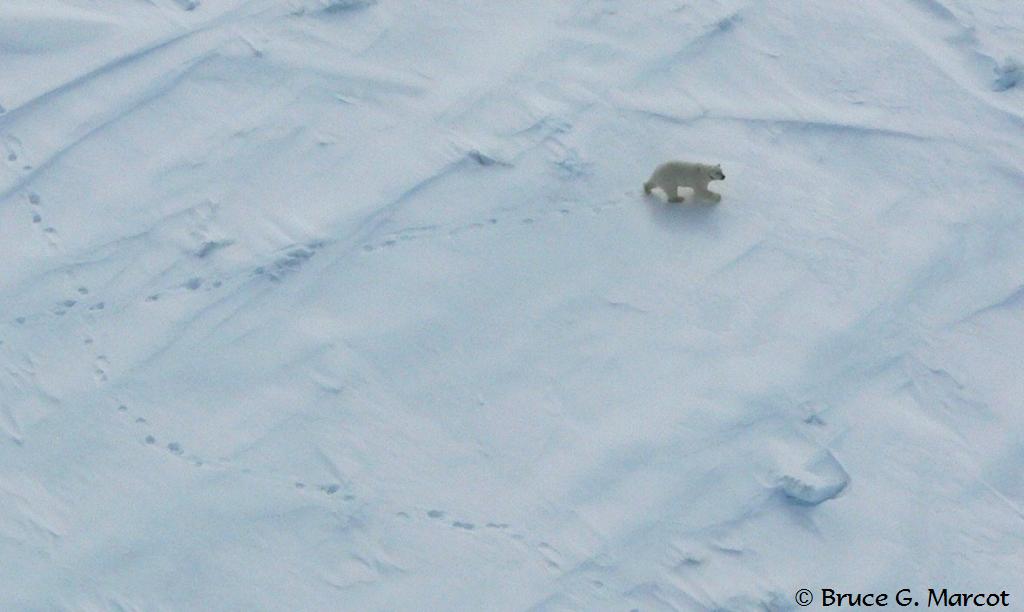
A polar bear from a helicopter

Thanks to improved spatial and spectral resolution (see the text box at the bottom of the post for a definition), accessibility, cost and coverage of remotely sensed data, and software development we have now reached a point where we can detect and count individual animals in imagery. Many of the first studies to demonstrate automated and semi-automated techniques have taken computer algorithms from other disciplines, such as engineering or biomedical sciences, and applied them to automate counting of animals in remotely sensed imagery. It turns out that detecting submarines is not so different to detecting whales! And finding abnormal cells in medical imaging is surprisingly similar to locating polar bears in the arctic! Continue reading “Remote Sensing for Counting Animals: Polar Bears, Sheep and Everything In-Between”

Remotely Tracking Movement and Behaviour with Biologgers: How to Add Accelerometer Data to the Mix

Post provided by Sam Cox, Florian Orgeret and Christophe Guinet

Animal biologging is a technique that’s quickly becoming popular in many cross-disciplinary fields. The main aim of the method is to record aspects of an animal’s behaviour and movement, alongside the bio-physical conditions they encounter, by attaching miniaturised devices to it. In marine ecosystems, the information from these devices can be used not only to learn how we can protect animals, many of whom are particularly vulnerable to disturbance (e.g. large fish, marine mammals, seabirds and turtles), but also more about the environments they inhabit.

Challenges when Tracking Marine Animals

Many marine animals have incredibly large ranges, travelling 1000s of kilometres. A huge advantage of biologging technologies is the ability to track an individual remotely throughout its range. For animals that dive, information on sub-surface behaviour can be obtained too. This information can then be retrieved when an animal returns to a set location. If this isn’t possible (e.g. individuals that make trips that are too long or die at sea), carefully constructed summaries can be relayed via satellite. This option provides information in real time, which can be very useful for researchers.

Tracks of juvenile southern elephant seals. Red tracks are individuals that returned to their natal colony. Grey are those individuals whose information would have been lost had it not been transmitted via the Argos satellite system.

Continue reading “Remotely Tracking Movement and Behaviour with Biologgers: How to Add Accelerometer Data to the Mix”

#EpicDuckChallenge Shows we can Count on Drones

Below is a press release about the Methods in Ecology and Evolution  article ‘Drones count wildlife more accurately and precisely than humans‘ taken from the University of Adelaide.

Lead author Jarrod Hodgson, University of Adelaide, standing in one of the replica colonies of seabirds constructed for the #EpicDuckChallenge.

A few thousand rubber ducks, a group of experienced wildlife spotters and a drone have proven the usefulness and accuracy of drones for wildlife monitoring.

A study from the University of Adelaide showed that monitoring wildlife using drones is more accurate than traditional counting approaches. This was published recently in the British Ecological Society journal Methods in Ecology and Evolution.

“For a few years now, drones have been used to monitor different animals that can be seen from above, including elephants, seals and nesting birds. But, until now, the accuracy of using drones to count wildlife was unclear,” says the study’s lead author, Jarrod Hodgson from the University’s Environment Institute and School of Biological Sciences. Continue reading “#EpicDuckChallenge Shows we can Count on Drones”

A New Method for Computing Evolutionary Rates and Rate Shifts

Post provided by Pasquale Raia

Phylogenetic Effects

Today, everyone knows about the importance of accounting for phylogenetic effects when it comes to understanding trait evolution. How to account for phylogenetic effects is another matter though.

A couple of years ago, I was having a discussion on the R-sig-phylo blog and dared to define the Brownian Motion (BM) as kind of a null hypothesis that more realistic scenarios should be compared to. Maybe I crossed a line or made too simplistic a statement (see Adams and Collyer’s article in Systematic Biology for an explanation of why this matter is far trickier and more complicated than my reply suggested). The point is, my comment was hotly contested and a colleague ‘put the onus on me’ to do something better than the almighty (emphasis mine) BM.

The RRphylo method was my attempt to do just that. It may not be better than BM, but it is different. Often, that can be exactly what you need. Continue reading “A New Method for Computing Evolutionary Rates and Rate Shifts”

An Interview with Tony Ives

David Warton interviews Tony Ives, a Keynote speaker at the Statistics in Ecology and Environmental Monitoring (SEEM) conference in Queenstown, NZ. Tony has published a few papers in Methods in Ecology and Evolution over the last couple of years – first we discuss the exchanges on log-transformation of counts (including a paper co-authored with David Warton). Tony and David then talk about a recent paper … Continue reading An Interview with Tony Ives

Using Interviews in Conservation Science Research

Post provided by David Christian Rose

Why Use Interviews in Conservation?

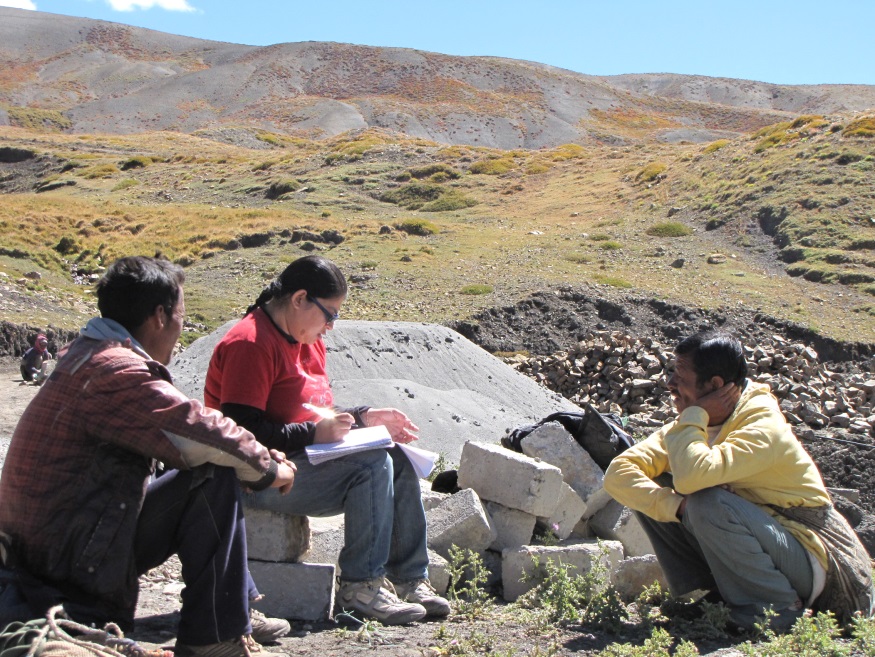
Key herder interviews by Chandrima Home (co-author) in the Upper Spiti Landscape © Kesang Chunit

Conservation interventions need to be implemented on the ground, so a range of people are required to make decisions. Decision-makers can be people like conservation practitioners, policy-makers, and stakeholders who could be affected by an intervention. This usually includes local residents, as well as people who make their living in the area, like fishers, farmers, hunters, and other businesses.

Since decision-making structures are complex and multi-layered, scientific evidence alone is not enough to guide the implementation of a conservation intervention. Researchers need to understand who’s involved in making decisions, who could be affected by the proposed intervention, and gain an appreciation of how local communities use and value their land. Often they’ll also need to find out what local communities think of particular species and habitats. Continue reading “Using Interviews in Conservation Science Research”

Exploring Coevolutionary History: Do Entire Communities Shape the Evolution of Individual Species?

Post provided by Laura Russo, Katriona Shea, and Adam Miller

Diffuse Coevolution

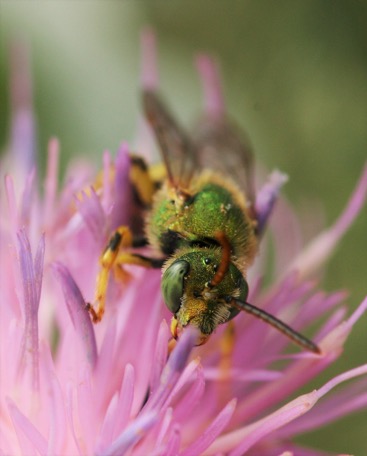
Interactions between plants and pollinators tend to be highly generalized.

In 1980, Janzen published an article titled “When is it coevolution?” where he explained the concept of diffuse coevolution: the idea that evolution of interacting species is shaped by entire communities, rather than simple paired interactions. This idea, though compelling, remains poorly understood, and strong evidence of diffuse coevolution acting on a community is lacking. Perhaps this is because there’s a lack of consensus on what would constitute evidence in support of the concept of diffuse coevolution, or, indeed, coevolution in general (Nuismer et al 2010). Continue reading “Exploring Coevolutionary History: Do Entire Communities Shape the Evolution of Individual Species?”

New Studies Aim to Boost Social Science Methods in Conservation Research

Below is a press release about the Methods Special Feature ‘Qualitative Methods for Eliciting Judgements for Decision Making‘ taken from the University of Exeter.

Scientists have produced a series of papers designed to improve research on conservation and the environment.

A group of researchers have contributed to a Special Feature of the journal Methods in Ecology and Evolution to examine commonly used social science techniques and provide a checklist for scientists to follow.

Traditional conservation biology has been dominated by quantitative data (measured in numbers) but today it frequently relies on qualitative methods such as interviews and focus group discussions. The aim of the special issue is to help researchers decide which techniques are most appropriate for their study, and improve the “methodological rigour” of these techniques. Continue reading “New Studies Aim to Boost Social Science Methods in Conservation Research”

Issue 9.1: Qualitative Methods for Eliciting Judgements for Decision Making

Issue 9.1 is now online!

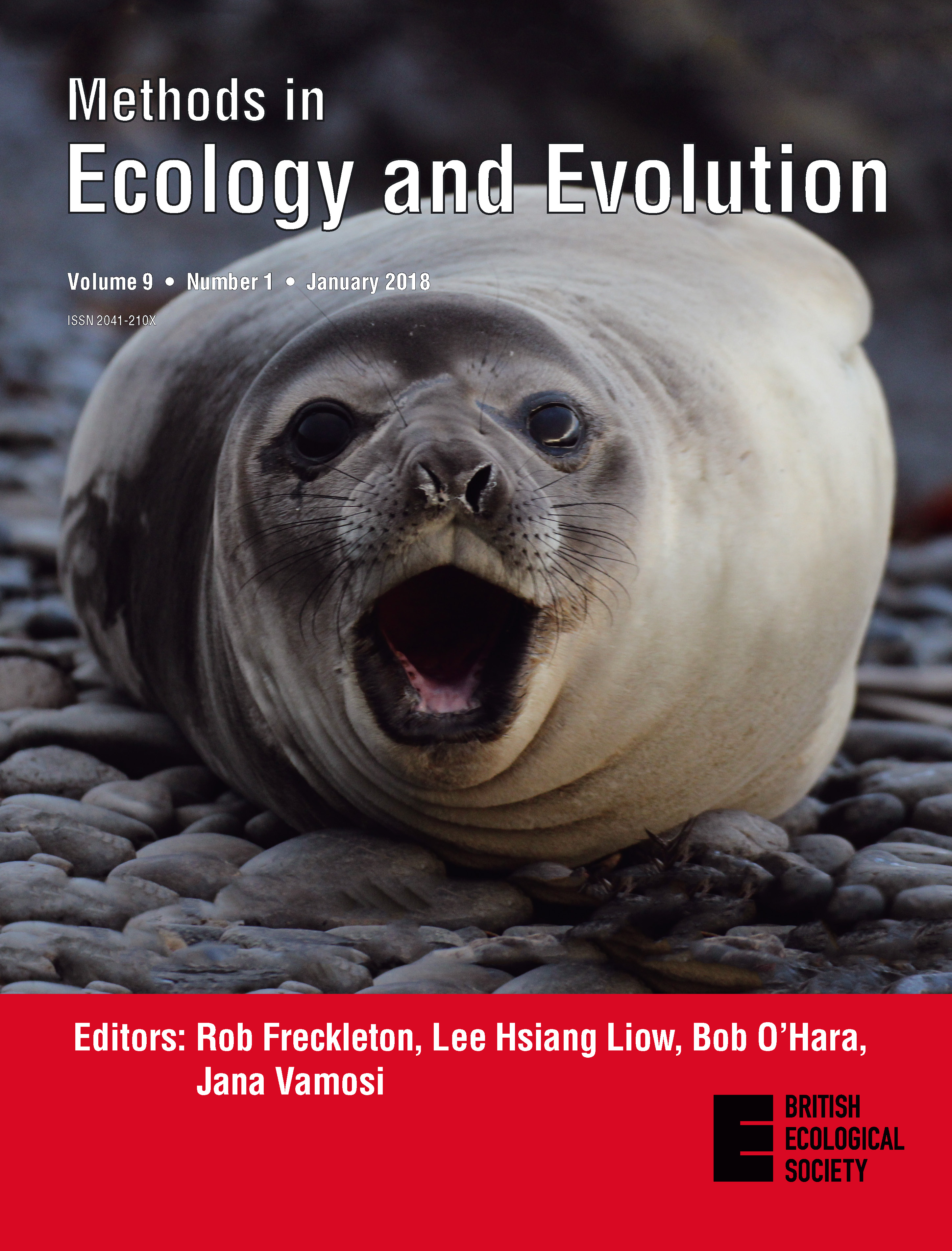
Our first issue of 2018, which includes our latest Special Feature – “Qualitative methods for eliciting judgements for decision making” – is now online!

This new Special Feature is a collection of five articles (plus an Editorial from Guest Editors Bill Sutherland, Lynn Dicks, Mark Everard and Davide Geneletti) brings together authors from a range of disciplines (including ecology, human geography, political science, land economy and management) to examine a set of qualitative techniques used in conservation research. They highlight a worrying extent of poor justification and inadequate reporting of qualitative methods in the conservation literature.

As stated by the Guest Editors in their Editorial “these articles constitute a useful resource to facilitate selection and use of some common qualitative methods in conservation science. They provide a guide for inter-disciplinary researchers to gauge the suitability of each technique to their research questions, and serve as a series of checklists for journal editors and reviewers to determine appropriate reporting.”

All of the articles in the ‘Qualitative methods for eliciting judgements for decision making‘  Special Feature are all freely available.
Continue reading “Issue 9.1: Qualitative Methods for Eliciting Judgements for Decision Making”

Satellite Data Fusion for Ecologists and Conservation Scientists

What is satellite data fusion, and how can it benefit ecologists and conservation scientists? In a new Methods in Ecology and Evolution video, Henrike Schulte-to-Bühne answers this question using whiteboards and questionable drawing skills. The availability and accessibility of multispectral and radar satellite remote sensing (SRS) imagery are at an unprecedented high. However, despite the benefits of combining multispectral and radar SRS data, data fusion techniques, including image … Continue reading Satellite Data Fusion for Ecologists and Conservation Scientists