Species association networks: a bridge between sciences

Robert May Prize Shortlisted Article

Post provided by Raphaëlle Momal

Powdery mildew on oak tree leaves is caused by the fungi Erysiphe alphitoides, which association network helps understanding the behaviour. Credit: Raphaëlle Momal.

Each year Methods in Ecology and Evolution awards the Robert May Prize to the best paper in the journal by an author at the start of their career. Raphaëlle Momal has been shortlisted for her article ‘Tree‐based inference of species interaction networks from abundance data’. In this blog, Raphaëlle discusses how her paper came to be and the applications of the R package developed in her study.

Continue reading “Species association networks: a bridge between sciences”
Robert May Prize 2020 – The Shortlist

Each year, Methods in Ecology and Evolution awards the Robert May Prize to the best article by an early career researcher. Named for the late Lord May, the award recognises an outstanding ecologist or evolutionary biologist within five years of finishing their PhD.

Today we announce the shortlisted papers for the 2020 award, based on articles published in Volume 11 – in the coming weeks we will hear from the shortlisted authors with the stories behind their articles. A big congratulations to all the authors for their impressive work!

Continue reading “Robert May Prize 2020 – The Shortlist”

Mapping Animal Movement in R: The Science and the Art

Earlier this year, the BES Movement Ecology Special Interest Group held a competition to find the best animal movement maps in four categories: ‘pretty’, ‘nerdy’, ‘dynamic’ and ‘RMap’ (for maps produced entirely using R).

The results of the vote are in, and the winner of the RMap Category is Pratik Gupte from the University of Groningen, who used R to create this beautiful map of elephant movements across thermal landscapes. Here, we asked Pratik for the story behind the elephant map.

Continue reading “Mapping Animal Movement in R: The Science and the Art”

International Day of Forests: Generation Restoration

Post provided by Chloe Robinson

Credit: Food and Agriculture Organization of the United Nations.

Forests, across all ecozones and in all shapes and sizes, are essential for life on earth. Around 80% of the world’s land-based biodiversity call forests home and over 1 billion people, including more than 2,000 Indigenous cultures, rely on forests for food, shelter, energy and income. As with many other ecosystems, forests worldwide are under increasing threat from human activities, with the current rate of deforestation estimated at 13 million hectares per year.

Continue reading “International Day of Forests: Generation Restoration”

International Women’s Day 2021: Top Women-Led Posts from 2020

Post provided by Chloe Robinson

Picture credit: Chloe Robinson.

“A challenged world is an alert world. Individually, we’re all responsible for our own thoughts and actions – all day, every day.” This is a quote from the International Women’s Day 2021 website, where this year, the campaign theme is #ChooseToChallenge.

International Women’s Day is a global day celebrating the social, economic, cultural and political achievements of women. The day also marks a call to action for accelerating women’s equality. This year, Associate Editor Chloe Robinson has selected her top four women-led Methods in Ecology and Evolution blog posts from 2020 and highlights the author’s contributions to the MEE blog.

Continue reading “International Women’s Day 2021: Top Women-Led Posts from 2020”

Blog Associate Editor Wanted!

We are looking for an engaging researcher with expertise in the fields of evolutionary biology and ecology and a passion for communicating new methods. They will work with our current Editor to continue delivering high-quality content on the blog. The Editor will gain excellent experience in commissioning, writing and editing – as well as having early access to articles on the most cutting-edge methods in … Continue reading Blog Associate Editor Wanted!

The worldwide use of wildlife detection dogs – and how they became part of our life

Post provided by Annegret Grimm-Seyfarth

Border Collie Zammy is trained to search for Eurasian otter scat and pond, alpine and great crested newts. Photo: André Künzelmann.

For those not directly working with them, using wildlife detection dogs always sound like a new fancy idea that should be tested somehow. However, this method is neither new nor rare, and people working with wildlife detection dogs often call them their best method in finding their target species. In this post, Annegret Grimm-Seyfarth discusses her paper ‘Detection dogs in nature conservation: A database on their worldwide deployment with a review on breeds used and their performance compared to other methods’, which shows the broad and worldwide applications of wildlife detection dogs.

Continue reading “The worldwide use of wildlife detection dogs – and how they became part of our life”

March Issue Out Now!

Our third issue of the year is now online!

This month we have five Applications and two Practical Tools articles, all of which are completely free to read!

Senior Editor Rob Freckleton has selected six featured articles, including methods for defining and evaluating predictions of joint species distribution models, inferring extinction date of a species and choosing cost‐effective indicators for conservation decisions. Find out all about them below.

Continue reading “March Issue Out Now!”

How to assess seed bank effect in a plant metapopulation

Post provided by Apolline Louvet

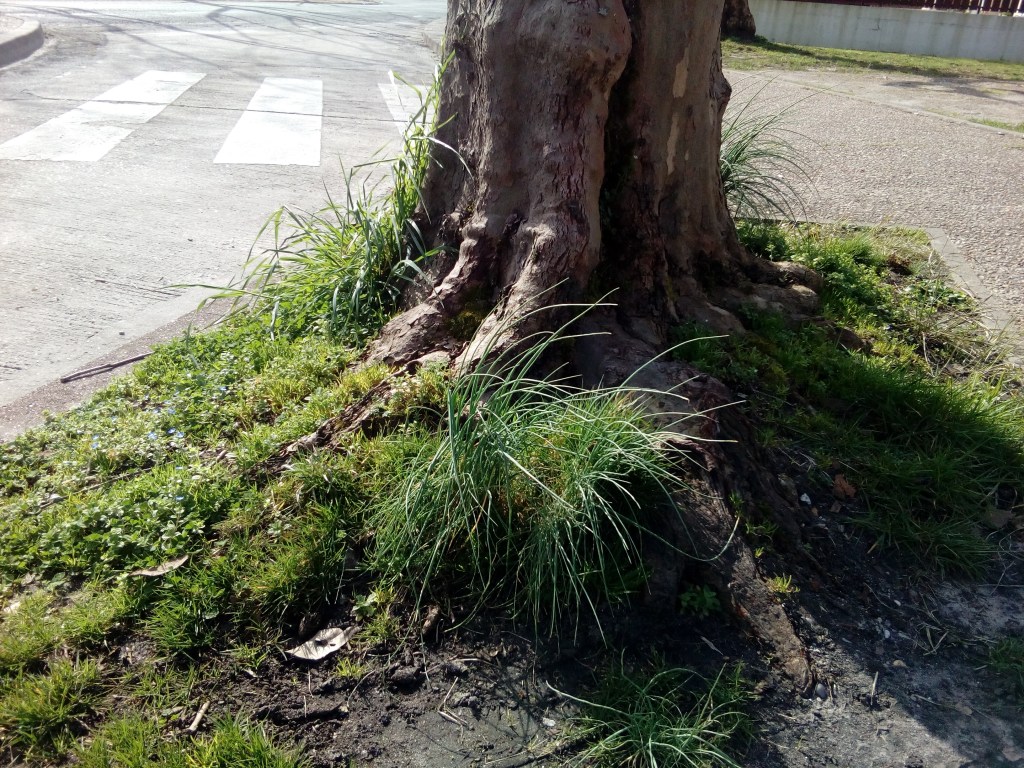
Tree base in an urban area, partly occupied by spontaneous vegetation. Picture credit: Apolline Louvet.

Seed banks play a key role in plant metapopulations, however, detecting seed banks remains challenging. The current method of assessing the effect of seed banks on plant metapopulation dynamics focuses on the presence of standing vegetation. This has direct implications for plant metapopulation models, which require data on the absence of a seed bank to understand plant dynamics.

Our paper, ‘Detecting seed bank influence on plant metapopulation dynamics’ in Methods in Ecology and Evolution, introduces a new metric on plant metapopulations, which assesses the seed bank contribution to the global observed dynamics. In this post, we recall what led us to develop this metric.

Continue reading “How to assess seed bank effect in a plant metapopulation”

What happens to our understanding of functional diversity when we ignore intraspecific trait variability?

Post provided by Mark Wong

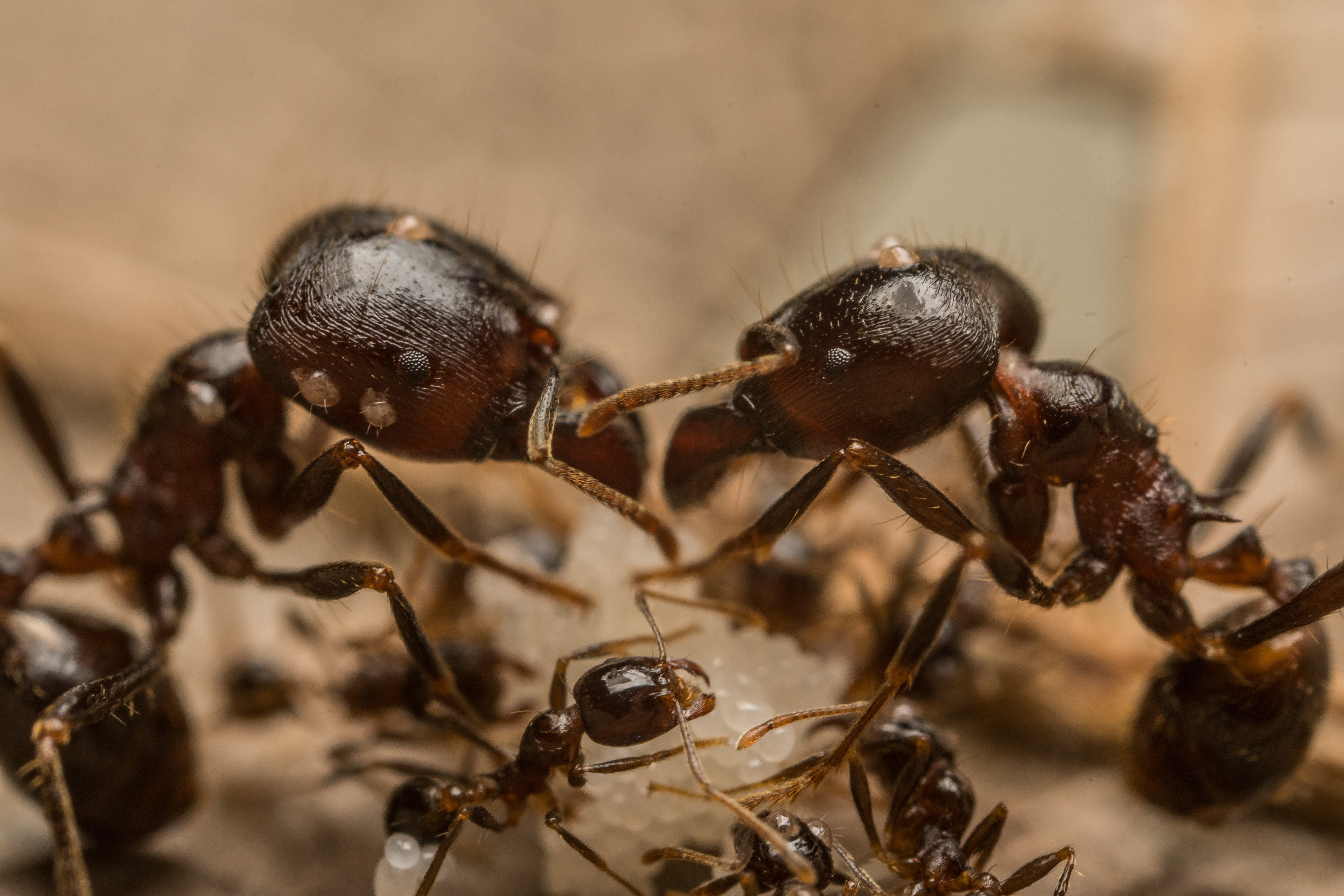
Impressive variability sometimes occurs within a species, such as between these sister ants from the same Carebara sp. colony. Credit: Francois Brassard.

Throw a rock at a conference and you’ll likely hit an ecologist who examines the variation among organisms’ functional traits for one reason or another. From understanding the assembly of communities and their responses to environmental change, to the effects of biodiversity on ecosystem functions, and – well, why not – modelling the global spectrum of ecological form and function, assessments of functional diversity have quickly become the bread and butter of community, ecosystem and macro ecology.

In this blog post, Mark Wong discusses his paper ‘Including intraspecific trait variability to avoid distortion of functional diversity and ecological inference: lessons from natural assemblages’, recently published in Methods in Ecology & Evolution.

Continue reading “What happens to our understanding of functional diversity when we ignore intraspecific trait variability?”