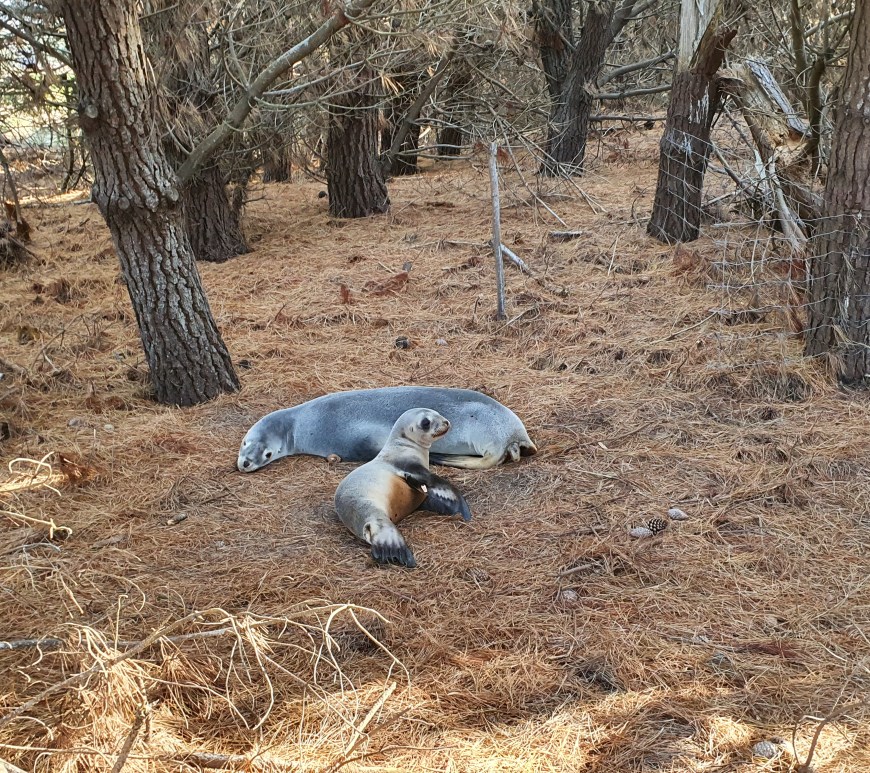
Natasha Howell of Bristol University unearths the mystery of striking colouration in mammals and what skunks and bees have in common. This blog is part of our colourful countdown to the holiday season where we’re celebrating the diversity and beauty of the natural world. Click here to read the rest of the colour countdown series. The vast majority of mammal species are not known for their striking colouration. Compared to other … Continue reading Why are some mammals black and white?
A grey seal pup next to the unoccupied aerial system (UAS) used in this study. Photo credit: Michelle Shero.
To survive and reproduce, all animals must be able to extract sufficient energy from their environment. It takes energy to forage, but animals can recover those calories if they can successfully capture enough prey – and the animal’s weight tells us about its net energetic costs versus gains.Animals that remain in positive energy-balance can then afford to devote more energy towards growth and reproduction.In this blog post, Michelle Shero of Woods Hole Oceanographic Institution guides us through a new method outlined in her team’s recent Methods in Ecology and Evolution paper ‘Tracking wildlife energy dynamics with unoccupied aircraft systems and three-dimensional photogrammetry’. The team uses drone imagery to 3-D model and ‘weigh’ large groups of free-living animals.
Almut Kelber, Professor at Lund University, takes us on a sweeping tour of the complex array of bird vision – from chickens to owls – to unravel how their ecology affects the way they see the world. This blog is part of our colourful countdown to the holiday season in which we’re celebrating the diversity and beauty of the natural world. Click here to read the rest of … Continue reading How do birds see the world?
Our December issue is online now! Our final issue of the year contains 16 fantastic articles about the latest methods in ecology and evolution. This month we have methods for fine tuning biodiversity assessments, visual analysis of wood samples, analysing environmental audio recordings and much more! Read on to find out all about them. Featured Articles Dealing with software complexity in individual‐based models *open access* Individual-based models … Continue reading December Issue Out Now!
Post provided by SEEC The Centre for Statistics in Ecology, Environment and Conservation (SEEC) invites you to ISEC2022 in Cape Town, South Africa, 27 June – 1 July 2022 – the first International Statistical Ecology Conference (ISEC) to be held in Africa! Registration is now open and we would like to welcome all of you to join this exciting event. Statistical ecology is an inherently … Continue reading Countdown to the first ISEC in Africa!
Herring is a planktivorous fish species. Credit: Atle Grimsby.
World Fisheries Day, celebrated on November 21, is dedicated to highlighting the critical importance of healthy ocean ecosystems and to ensure sustainable stocks of fisheries in the world. Pressure to find ecologically sustainable strategies for harvesting food from the sea is getting ever stronger, especially in the face of changing climate. However, the question is complex because the harvestable species live in a complex food web where everything is directly or indirectly connected to everything else. Models for carrying out scenario analyses on the impact of fisheries management options on food webs are usually the preserve of trained experts.
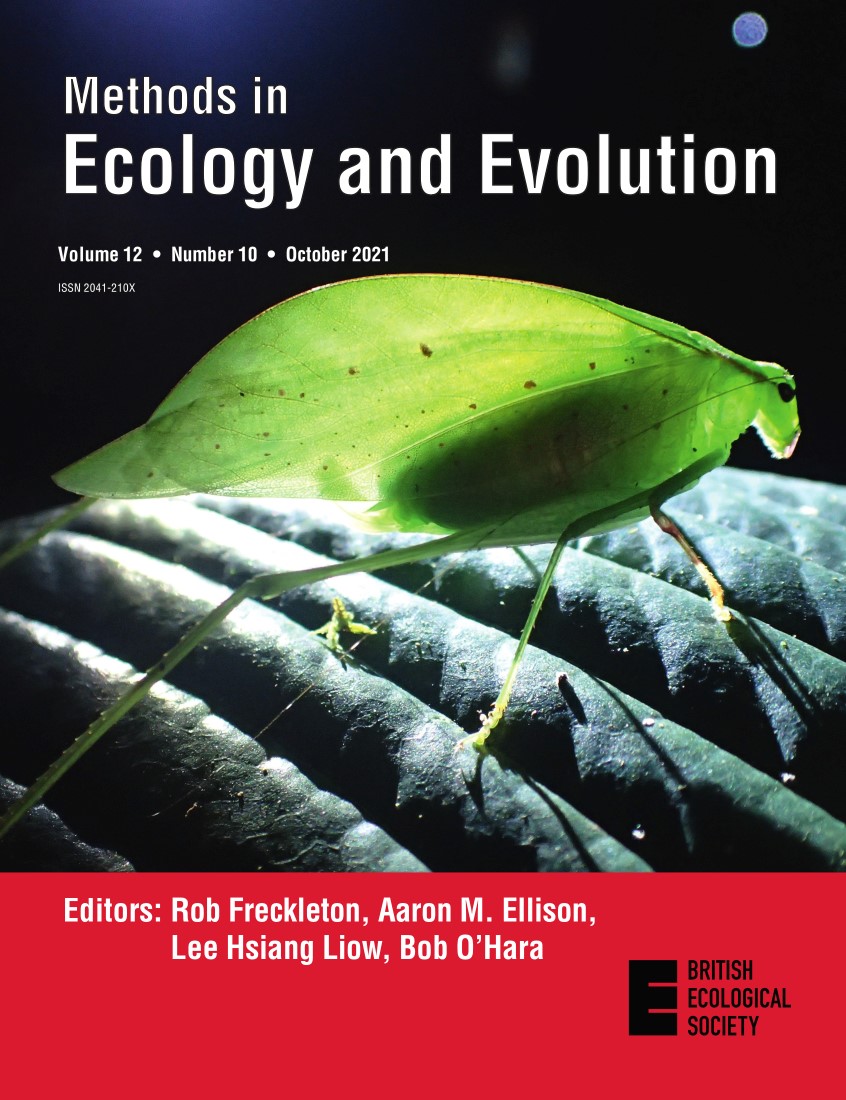
The cover of our October issue shows a katydid feeding on a leaf in the Tirimbina Rainforest National Wildlife Refuge of Costa Rica. Once digested, nitrogen from the leaf is incorporated into the katydid’s tissues in the form of amino acids, with slight modification to their stable nitrogen isotope values (δ15N). In this post the authors discuss the importance of understanding and accounting for variability in primary producer amino acid δ15N values when characterizing where consumers are positioned within food webs, detailed in their Methods in Ecology and Evolution article “Meta-analysis of primary producer amino acid δ15N values and their influence on trophic position estimation.”
Our November issue is online now! Our penultimate issue of the year contains 18 articles about the latest methods in ecology and evolution. This month we have methods for long-term acoustic monitoring, automated landmarking of 3D biological structures, assessing the movement of small mammals and more, plus two Applications and two Practical Tools articles for your reading. Find out more below! Featured Articles A primer on partially … Continue reading November Issue Out Now!
Post provided by Dr Rosie Sheward The 2021 UN Climate Change Conference (COP26) is being held Glasgow this week, and now more than ever before, the pressure is on for world leaders to agree on climate action to keep global warming below 1.5°c. In the lead up to the conference, we’re asking our editors and authors to discuss their research at the interface of climate … Continue reading Microscopic phytoplankton are storytellers of our oceans under climate change