Early Spring: Predicting Budburst with Genetics

Below is a press release about the Methods in Ecology and Evolution article ‘On the importance of accounting for intraspecific genomic relatedness in multi‐species studies‘ taken from the Université de Montréal.
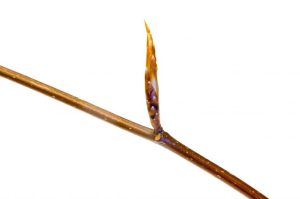
Bud of American beech (Fagus grandifolia). ©Tim Savas

Researchers from Canada and the USA found that tree and shrub genetics can be used to produce more accurate predictions of when leaves will burst bud in the spring. Their study was published in Methods in Ecology and Evolution.

Although climate sceptics might find it hard to believe with this year’s endless snow and freezing temperatures, climate change is making warm, sunny early springs increasingly common. And that affects when trees start to leaf out. But how much?

Simon Joly, biology professor at Université de Montréal and Elizabeth Wolkovich, an ecology professor at University of British Columbia, showed that a plant’s genetics can be used to produce more accurate predictions of when its leaves will burst bud in spring. Continue reading “Early Spring: Predicting Budburst with Genetics”


ViXeN: View eXtract aNnotate Multimedia Data

Post provided by KadaMbari Devarajan

At a time when data is everywhere, and data science is being talked about as the future in different fields, a method that produces huge amounts of multimedia data is camera-trapping. We need ways to manage these kinds of media data efficiently. ViXeN is an attempt to do just that.

Camera traps have been a game-changer for ecological studies, especially those involving mammals in the wild. This has resulted in an increasing amount of camera trap datasets. However, the tools to manage camera trap data tend to be very specific and customised for images. They typically come with stringent data organisation requirements. There’s a growing amount of multimedia datasets and a lack of tools that can manage several types of media data.

In ‘ViXeN: An open‐source package for managing multimedia data’ we try to fix this visible gap. Camera trap management is a very specific a use-case. We thought that the field was missing general-purpose tools, capable of handling a variety of media data and formats, that were also free and open source. ViXeN was born from this idea. It stands for View eXtract aNnotate (media data). The name is also an ode to the canids I was studying at the time which included two species of foxes.


Example camera trap video Continue reading “ViXeN: View eXtract aNnotate Multimedia Data”

Scant Amounts of DNA Reveal Conservation Clues

Below is a press release about the Methods in Ecology and Evolution article ‘Empowering conservation practice with efficient and economical genotyping from poor quality samples‘ taken from the Stanford Woods Institute for the Environment.

Wild tiger in India. ©Prasenjeet Yadav

The challenges of collecting DNA samples directly from endangered species makes understanding and protecting them harder. A new approach promises cheap, rapid analysis of genetic clues in degraded and left-behind material, such as hair and commercial food products.

The key to solving a mystery is finding the right clues. Wildlife detectives aiming to protect endangered species have long been hobbled by the near impossibility of collecting DNA samples from rare and elusive animals. Continue reading “Scant Amounts of DNA Reveal Conservation Clues”

Editor Recommendation: Quantitative Evolutionary Patterns in Bipartite Networks

Post provided by ROB FRECKLETON

The study of interactions and their impacts on communities is a fundamental part of ecology. Much work has been done on measuring the interactions between species and their impacts on relative abundances of species. Progress has been made in understanding of the interactions at the ecological level, but we know that co-evolution is important in shaping the structure of communities in terms of the species that live there and their characteristics. Continue reading “Editor Recommendation: Quantitative Evolutionary Patterns in Bipartite Networks”

Issue 10.5: Movement Ecology, Palaeobiology, Monitoring and More

The May issue of Methods is now online!

The May issue of Methods in Ecology and Evolution is absolutely packed! We’ve got a new ecoacoustics method from Metcalf et al. and a new inference and forecasting method from Cenci et al. There’s also a forum article on image analysis, and papers on physiology, palaeobiology, capture-recapture and much more. We’ve got SIX papers that are freely available to absolutely everyone this month too.

Find out a little more about the new issue of Methods in Ecology and Evolution (including details about what the diver is doing to the coral in the cover image) below. Continue reading “Issue 10.5: Movement Ecology, Palaeobiology, Monitoring and More”

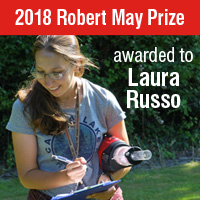
2018 Robert May Prize Winner: Laura Russo

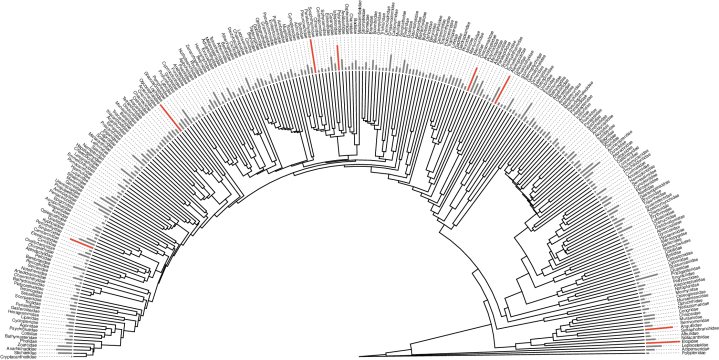
The Robert May Prize is awarded annually for the best paper published in Methods in Ecology and Evolution by an Early Career Researcher. We’re delighted to announce that the 2018 winner is Laura Russo, for her article ‘Quantitative evolutionary patterns in bipartite networks: Vicariance, phylogenetic tracking or diffuse co‐evolution?‘.

Plant-pollinator interactions are often considered to be the textbook example of co-evolution. But specialised interactions between plants and pollinators are the exception, not the rule. Plants tend to be visited by many different putative pollinator species, and pollinating insects tend to visit many plant hosts. This means that diffuse co-evolution is a much more likely driver of speciation in these communities. So, the standard phylogenetic methods for evaluating co-evolution aren’t applicable in most plant-pollinator interactions. Also, many plant-pollinator communities involve insect species for which we do not yet have fully resolved phylogenies. Continue reading “2018 Robert May Prize Winner: Laura Russo”

Volunteer Ornithological Survey Shows Effects of Temperatures on Eurasian Jay Population

Below is a press release about the Methods in Ecology and Evolution article ‘Incorporating fine‐scale environmental heterogeneity into broad‐extent models‘ taken from the University of Southampton.

A study led by researchers at the University of Southampton has used data collected by volunteer bird watchers to study how the importance of wildlife habitat management depends on changing temperatures for British birds.

The team studied data from the British Trust for Ornithology’s Bird Atlas 2007 – 11 on the abundance of the Eurasian jay over the whole of Great Britain. The University of Southampton researchers focused on jays for this trial as they are a species of bird known to frequent a mixture of different natural environments. Continue reading “Volunteer Ornithological Survey Shows Effects of Temperatures on Eurasian Jay Population”

Introducing fishtree and fishtreeoflife.org

This post was originally published on Jonathan Chang’s blog.

In our recent publication (Rabosky et al. 2018) we assembled a huge phylogeny of ray-finned fishes: the most comprehensive to date! While all of our data are accessible via Dryad, we felt like we could go the extra mile to make it easy to repurpose and reuse our work. I’m pleased to report that this effort has resulted in two resources for the community: the Fish Tree of Life website, and the fishtree R package. The package is available on CRAN now, and you can install it with:

install.packages("fishtree")

The source is on GitHub in the repository jonchang/fishtree. The manuscript describing these resources has been published in Methods in Ecology and Evolution (Chang et al. 2019).

Continue reading “Introducing fishtree and fishtreeoflife.org”

When Standards Go Wild: Software Review for a Manuscript

Post provided by STEFANIE BUTLAND, NICK GOLDING, CHRIS GRIEVES, HUGO GRUSON, THOMAS WHITE, HAO YE

This post is published on the rOpenSci and Methods in Ecology and Evolution blogs

Stefanie Butland, rOpenSci Community Manager
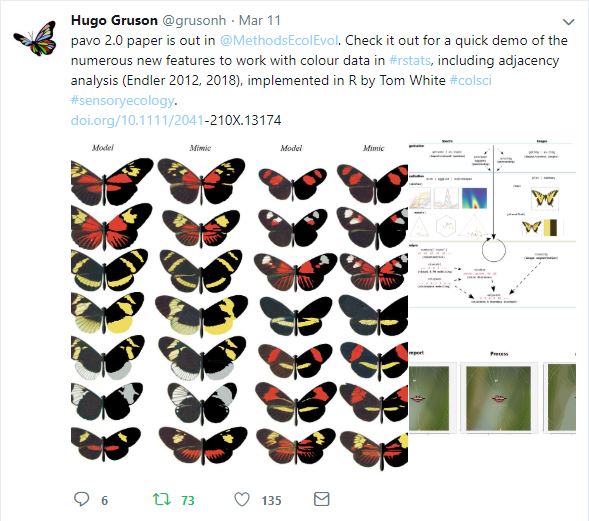

Some things are just irresistible to a community manager – PhD student Hugo Gruson’s recent tweets definitely fall into that category.

I was surprised and intrigued to see an example of our software peer review guidelines being used in a manuscript review, independent of our formal collaboration with the journal Methods in Ecology and Evolution (MEE). This is exactly the kind of thing rOpenSci is working to enable by developing a good set of practices that broadly apply to research software.

But who was this reviewer and what was their motivation? What role did the editors handling the manuscript play? I contacted the authors and then the journal and, in less than a week we had everyone on board to talk about their perspectives on the process. Continue reading “When Standards Go Wild: Software Review for a Manuscript”

Studying Wild Bats with Small On-Board Sound and Movement Recorders

Post provided by LAURA STIDSHOLT

Releasing a female Greater mouse-eared bat with the tag in collaboration with Holger Goerlitz, Stefan Greif and Yossi Yovel. ©Stefan Greif

The way that bats acrobatically navigate and forage in complete darkness has grasped the interest of scientists since the 18th century. These seemingly exotic animals make up one in four mammalian species and play important roles in many ecosystems across the globe from rainforests to deserts. Yet, their elusive ways continue to fascinate and frighten people even today. Over the last 200 years, dedicated scientists have worked to uncover how bats hunt and navigate using only their voice and ears while flying at high speed in complete darkness. Still, the inaccessible lifestyle of these small, nocturnal fliers continues to challenge what we know about their activities in the wild.

Understanding the impact bats have on their ecosystems – for example how many insects a bat catches per night – has still not been directly measured. Most of our knowledge on the natural behaviour and foraging ecology is based on elaborate, but ground-based experiments carried out in the wild. These experiments generally track their behaviour using radio-telemetry, record snapshots of their emitted echolocation calls with microphones, or involve extensive observations. Continue reading “Studying Wild Bats with Small On-Board Sound and Movement Recorders”