Charting the Unheard: A Primer for Analysing Toothed Whale Vocal Repertoires

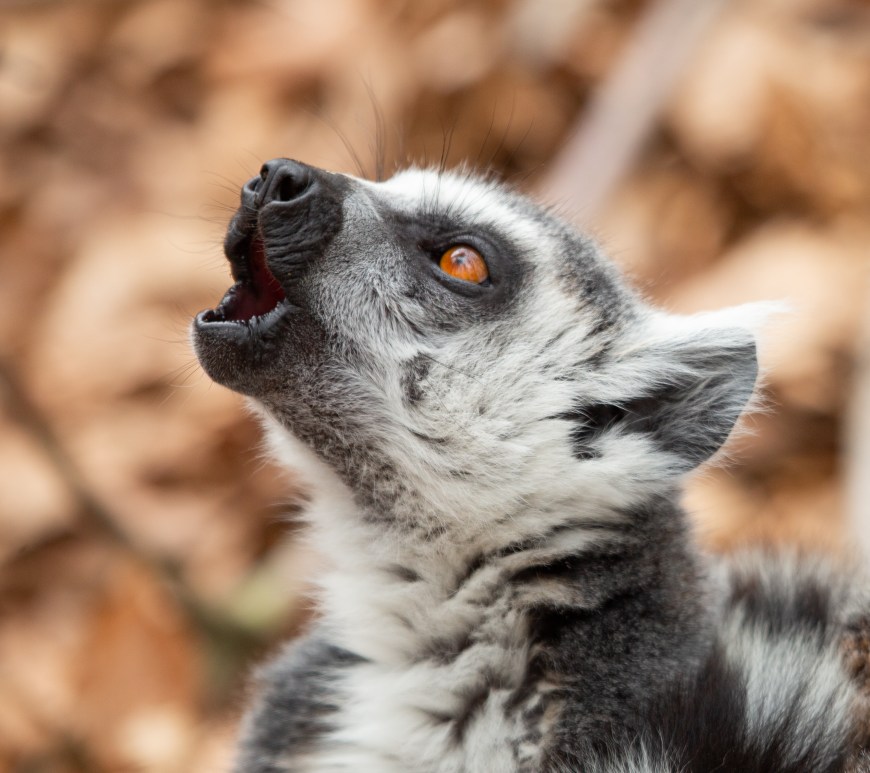
Post provided by Maia Austen Introduction: Why toothed whale voices matter I’m a PhD candidate in the ONDAS Lab at the University of Vermont, advised by Dr. Laura May-Collado. My PhD looks to utilize machine learning analysis to better understand how and why dolphins communicate with each other. Toothed whales – like dolphins and belugas – are among the most acoustically sophisticated animals on Earth. … Continue reading Charting the Unheard: A Primer for Analysing Toothed Whale Vocal Repertoires

Predictability or pondering prediction

Post provided by Marieke Wesselkamp At the beginning of this project, we often found ourselves contemplating on the evolution of various environmental systems – some vast and global, others local. These were, for example, the trajectory of elephant populations in the Southern African Kruger national park over the next decades, the change in plant species composition on the roof the neighbour’s garage over the months, … Continue reading Predictability or pondering prediction

Our June Issue is out now!

This issue contains the latest methods in ecology and evolution, including papers from the special feature Innovation in Practice. Read to find out about this month’s featured articles and the article behind our cover! Featured ECKOchain: A FAIR blockchain‐based database for long‐term ecological data Open data practices in ecology are increasingly accepted, yet primary long-term ecological data remain hard to find. To incentivise open primary ecological … Continue reading Our June Issue is out now!

Simple, intuitive tool for population management decision-making

Post provided by Izzy McCabe Predictions of insect populations from phenology models and sampling can help growers manage pests and beneficial insects on their farms. Phenology models relate accumulated heat units after winter to pest development and thereby inform timing of control actions, while sampling relies on regular on-site data collection (daily, weekly, etc.) to measure pest population densities and estimate potential damage. A drawback … Continue reading Simple, intuitive tool for population management decision-making

Improved order selection method for hidden Markov models: a case study with movement data.

Post provided by Fanny Dupont. About the first author My PhD focuses on animal movement and the impact of vessels on Arctic marine mammals (lab website). Specifically, I develop statistical tools to analyse narwhal (Monodon monoceros) behaviour and assess the effects of increased shipping on marine ecosystems. I am co-supervised by Dr. Marie Auger-Méthé (University of British Columbia) and Dr. Marianne Marcoux (Fisheries and Oceans … Continue reading Improved order selection method for hidden Markov models: a case study with movement data.

Capturing diversity below the species level using HyRAD : a nuclear-DNA enrichment-based capture method (HyRAD) applied to environmental DNA.

Post provided by Stéphanie Manel. Why use HyRAD for eDNA capture? Traditional population genetics approaches require sampling tissue from individuals, which is problematic in aquatic environments where specimen collection is often challenging. Filtering water allows researchers to collect environmental DNA (eDNA), genetic material shed by organisms into their surroundings. Unlike approaches targeting a single DNA barcode, HyRAD allows for the capture of multiple nuclear DNA … Continue reading Capturing diversity below the species level using HyRAD : a nuclear-DNA enrichment-based capture method (HyRAD) applied to environmental DNA.

The Ground Beneath Their Feet: Listening in on Africa’s wildlife using seismic sensors

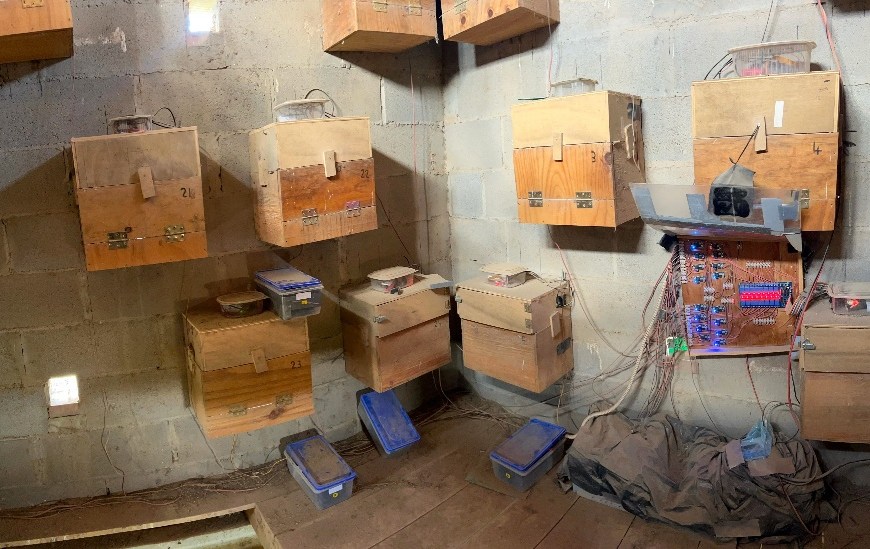
Post provided by René Steinmann Hi, I’m a geophysicist by training, but I’ve recently shifted my focus from studying the solid Earth to some of its living inhabitants. I now work at the intersection of geophysics, wildlife biology, and machine learning. My recent research brings together these seemingly distant worlds in a project that’s all about listening—not to singing birds, but to the subtle vibrations … Continue reading The Ground Beneath Their Feet: Listening in on Africa’s wildlife using seismic sensors

Tracking animals with particles

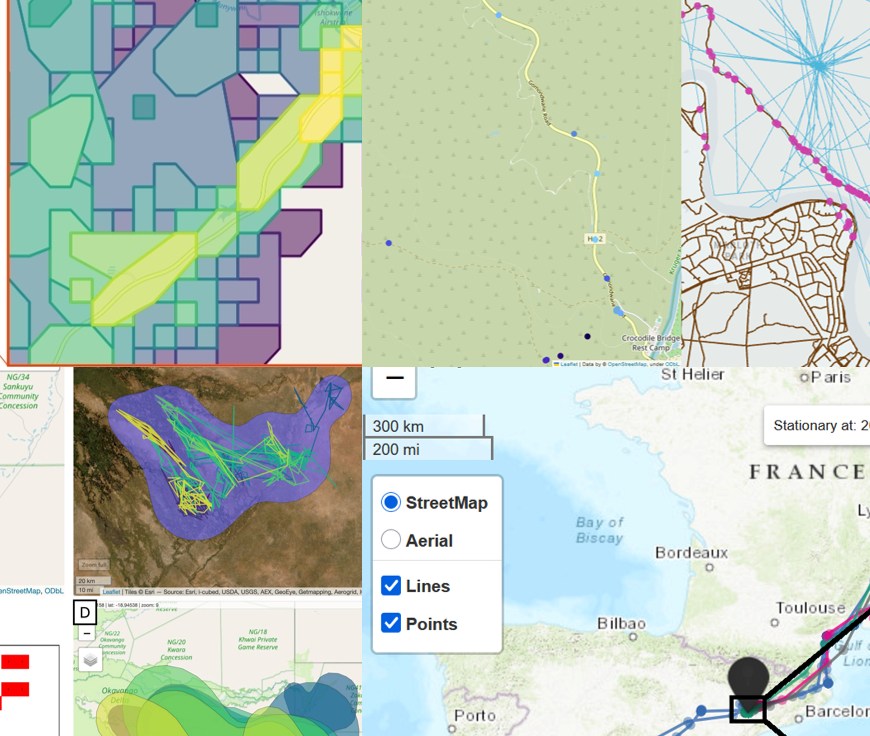
Post provided by Edward Lavender, Andreas Scheidegger, Carlo Albert, Stanisław W. Biber, Janine Illian, James Thorburn, Sophie Smout, Helen Moor. It’s morning on Scotland’s west coast. In the Firth of Lorn, the deep-blue water sparkles in the early sunlight. Heading south, I glance back across the sea, taking in the snow-speckled mountains beyond. Two hundred metres below, I know the seascape is just as rugged. … Continue reading Tracking animals with particles

Our May Issue is out now!

This issue contains the latest methods in ecology and evolution. Read to find out about this month’s featured articles and the article behind our cover! Featured Impact of acoustic index parameters on soundscape comparisons Ecoacoustic indices are often used to characterise specific aspects of the acoustic environment. For several commonly used indices, the impacts of the parameter settings and sampling regimes on output values have … Continue reading Our May Issue is out now!

The best of both worlds: a predictive home range model for colonial animals combining biological realism with minimal data requirements.

Post provided by Holly Niven. I’m Holly, an ecology PhD student at the University of Glasgow, with a background in mathematics and physics. My research is in quantitative ecology, with a current focus on investigating the exposure of animals to disturbances in their environment and understanding the drivers of their population dynamics.  What are home ranges and why are they useful? Home ranges (HRs) describe … Continue reading The best of both worlds: a predictive home range model for colonial animals combining biological realism with minimal data requirements.