New Studies Aim to Boost Social Science Methods in Conservation Research

Below is a press release about the Methods Special Feature ‘Qualitative Methods for Eliciting Judgements for Decision Making‘ taken from the University of Exeter.

Scientists have produced a series of papers designed to improve research on conservation and the environment.

A group of researchers have contributed to a Special Feature of the journal Methods in Ecology and Evolution to examine commonly used social science techniques and provide a checklist for scientists to follow.

Traditional conservation biology has been dominated by quantitative data (measured in numbers) but today it frequently relies on qualitative methods such as interviews and focus group discussions. The aim of the special issue is to help researchers decide which techniques are most appropriate for their study, and improve the “methodological rigour” of these techniques. Continue reading “New Studies Aim to Boost Social Science Methods in Conservation Research”

Issue 9.1: Qualitative Methods for Eliciting Judgements for Decision Making

Issue 9.1 is now online!

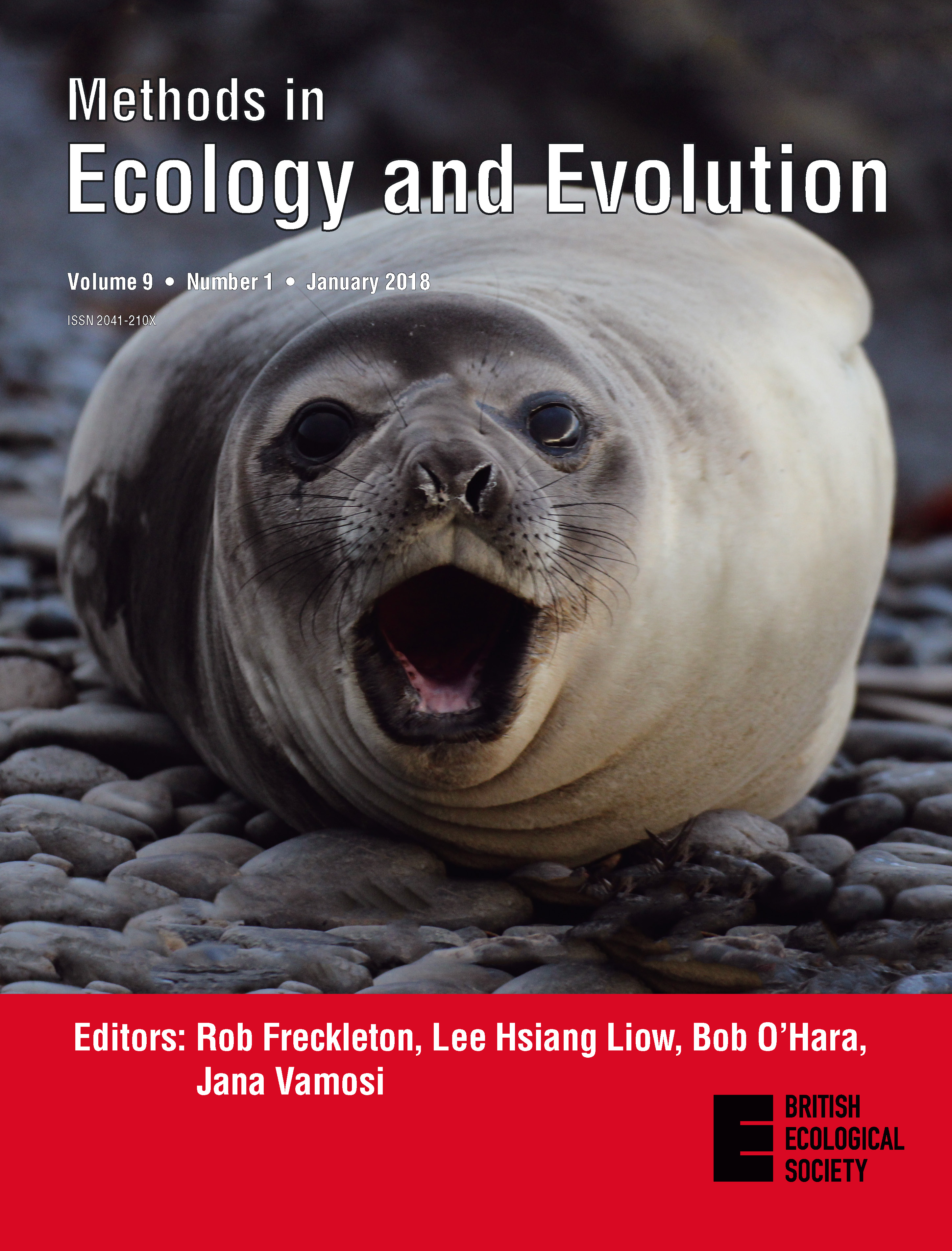
Our first issue of 2018, which includes our latest Special Feature – “Qualitative methods for eliciting judgements for decision making” – is now online!

This new Special Feature is a collection of five articles (plus an Editorial from Guest Editors Bill Sutherland, Lynn Dicks, Mark Everard and Davide Geneletti) brings together authors from a range of disciplines (including ecology, human geography, political science, land economy and management) to examine a set of qualitative techniques used in conservation research. They highlight a worrying extent of poor justification and inadequate reporting of qualitative methods in the conservation literature.

As stated by the Guest Editors in their Editorial “these articles constitute a useful resource to facilitate selection and use of some common qualitative methods in conservation science. They provide a guide for inter-disciplinary researchers to gauge the suitability of each technique to their research questions, and serve as a series of checklists for journal editors and reviewers to determine appropriate reporting.”

All of the articles in the ‘Qualitative methods for eliciting judgements for decision making‘  Special Feature are all freely available.
Continue reading “Issue 9.1: Qualitative Methods for Eliciting Judgements for Decision Making”

Satellite Data Fusion for Ecologists and Conservation Scientists

What is satellite data fusion, and how can it benefit ecologists and conservation scientists? In a new Methods in Ecology and Evolution video, Henrike Schulte-to-Bühne answers this question using whiteboards and questionable drawing skills. The availability and accessibility of multispectral and radar satellite remote sensing (SRS) imagery are at an unprecedented high. However, despite the benefits of combining multispectral and radar SRS data, data fusion techniques, including image … Continue reading Satellite Data Fusion for Ecologists and Conservation Scientists

Methods in Ecology and Evolution 2017: The Year in Review

Happy New Year! We hope that you all had a wonderful Winter Break and that you’re ready to start 2018. We’re beginning the year with a look back at some of our highlights of 2017. Here’s how last year looked at Methods in Ecology and Evolution.

The Articles

We published some amazing articles in 2017, too many to mention them all here. However, we would like to take a moment to thank all of the Authors, Reviewers and Editors who contributed to the journal last year. Your time and effort make the journal what it is and we are incredibly grateful. THANK YOU for all of your hard work!

Technological Advances at the Interface between Ecology and Statistics

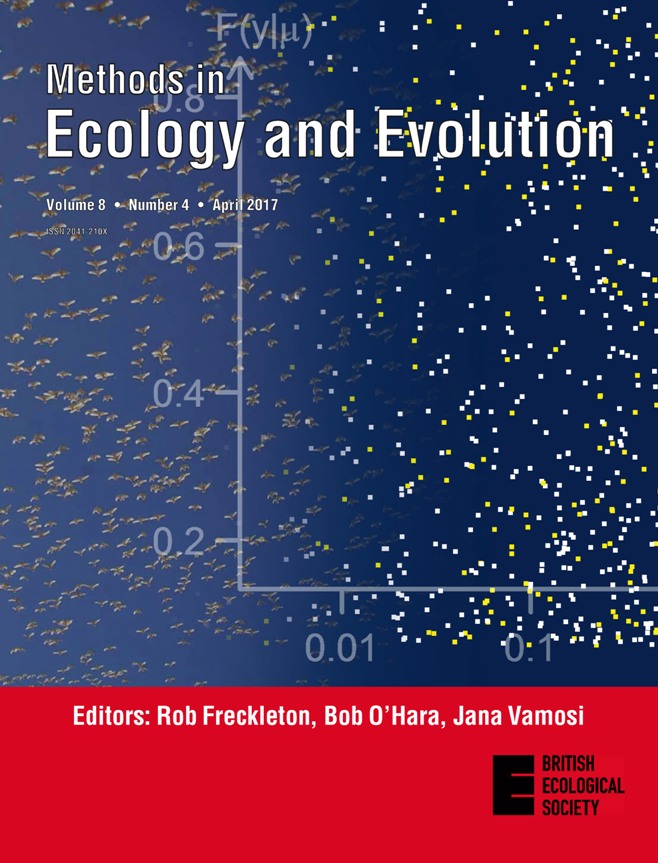
Our first Special Feature of the year came in the April issue of the journal. The idea for Technological Advances at the Interface between Ecology and Statistics  came from the 2015 Eco-Stats Symposium at the University of New South Wales and the feature was guest edited by Associate Editor David Warton. It consists of five articles based on talks from that conference and shows how interdisciplinary collaboration help to solve problems around estimating biodiversity and how it changes over space and time.

Continue reading “Methods in Ecology and Evolution 2017: The Year in Review”

Ecology, do we have a problem?

Last week many of us were at the Ecology Across Borders meeting in Ghent, catching up with friends, making new friends, and listening to talks about the latest ecological science. Many of us, of course, were also following social media. On the statistics social media scene a lot of attention was being paid to a post on Medium by Kristian Lum: Statistics, we have a … Continue reading Ecology, do we have a problem?

What About Winter? Accounting for the Snow Season When We Simulate Climate Warming

Post provided by Rebecca Sanders-DeMott and Pamela Templer

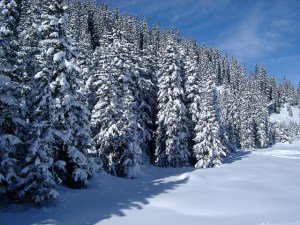
Processes that occur in winter are a significant component of annual carbon and nutrient cycles. ©Travel Stock Photos

The climate is changing throughout the globe with consequences for the biogeochemical processes and ecological relationships that drive ecosystems. Scientists have been conducting manipulative experiments to determine the effect of climate warming on ecosystems for several decades. These experiments allow us to observe ecosystem responses before the climate changes occur and have yielded invaluable insight that has expanded our understanding of the natural world.

There is a wide range of creative approaches to mimicking climate warming that have been used, for example open-topped chambers which passively heat small areas of soil and small stature plants (like the ITEX global network), burying heating cables in the soil to directly increase soil temperatures (e.g. Harvard Forest experiments), infrared heating lamps (like Jasper Ridge), or even large scale chambers that can encompass taller stature plants like trees and actively warm the air (like the SPRUCE experiment). The focus of much of these inquiries has been on changes that occur during the growing season, when biological activity is at its peak. Continue reading “What About Winter? Accounting for the Snow Season When We Simulate Climate Warming”

The BES Quantitative Ecology SIG: Who We Are, What We Do and What to Look Out for at #EAB2017

Post provided by Susan Jarvis and Laura Graham

Ecologists are increasingly in need of quantitative skills and the British Ecological Society Quantitative Ecology Special Interest Group (QE SIG) aims to support skills development, sharing of good practice and highlighting novel methods development within quantitative ecology. We run events throughout the year, as well as contributing to the Annual Meeting and providing a mailing list to share events, jobs and quantitative news.

Ecology Hackathon

The run up to the Ecology Across Borders joint Annual Meeting in Ghent this month is an exciting time for the SIG as we look forward to catching up with existing members as well as hopefully meeting some new recruits! Several of our SIG committee members will be in attendance and if you’ve been lucky enough to get a place at the Hackathon on the Monday you’ll meet most of us there. The Hackathon has been jointly developed by us and two of our allied groups; the GfÖ Computational Ecology Working Group and the NecoV Ecological Informatics SIG and is being sponsored by Methods in Ecology and Evolution. We’ll be challenging participants to work together to produce R packages suggested by the ecological community. You can see the list of package suggestions here. If you weren’t able to book a place at the Hackathon, but are interested in writing your own packages, you may be interested in the new Guide to Reproducible Code from the BES. Continue reading “The BES Quantitative Ecology SIG: Who We Are, What We Do and What to Look Out for at #EAB2017”

Making YOUR Code Reproducible: Tips and Tricks

When we were putting together the British Ecological Society’s Guide to Reproducible Code we asked the community to send us their advice on how to make code reproducible. We got a lot of excellent responses and we tried to fit as many as we could into the Guide. Unfortunately, we ran out of space and there were a few that we couldn’t include.

Luckily, we have a blog where we can post all of those tips and tricks so that you don’t miss out. A massive thanks to everyone who contributed their tips and tricks for making code reproducible – we really appreciate it. Without further ado, here’s the advice that we were sent about making code reproducible that we couldn’t squeeze into the Guide:

Organising Code

©Leejiah Dorward

“Don’t overwrite data files. If data files change, create a new file. At the top of an analysis file define paths to all data files (even if they are not read in until later in the script).” – Tim Lucas, University of Oxford

“Keep one copy of all code files, and keep this copy under revision management.” – April Wright, Iowa State University

“Learn how to write simple functions – they save your ctrl c & v keys from getting worn out.” – Bob O’Hara, NTNU

For complex figures, it can make sense to pre-compute the items to be plotted as its own intermediate output data structure. The code to do the calculation then only needs to be adjusted if an analysis changes, while the things to be plotted can be reused any number of times while you tweak how the figure looks.” – Hao Ye, UC San Diego Continue reading “Making YOUR Code Reproducible: Tips and Tricks”

A Guide to Reproducible Code in Ecology and Evolution

Post provided by Natalie Cooper and Pen-Yuan Hsing

Cover image by David J. Bird

The way we do science is changing — data are getting bigger, analyses are getting more complex, and governments, funding agencies and the scientific method itself demand more transparency and accountability in research. One way to deal with these changes is to make our research more reproducible, especially our code.

Although most of us now write code to perform our analyses, it’s often not very reproducible. We’ve all come back to a piece of work we haven’t looked at for a while and had no idea what our code was doing or which of the many “final_analysis” scripts truly was the final analysis! Unfortunately, the number of tools for reproducibility and all the jargon can leave new users feeling overwhelmed, with no idea how to start making their code more reproducible. So, we’ve put together the Guide to Reproducible Code in Ecology and Evolution to help. Continue reading “A Guide to Reproducible Code in Ecology and Evolution”

Scales, Slime and Dragon(fly) Wings? Investigating the Surfaces of Organisms

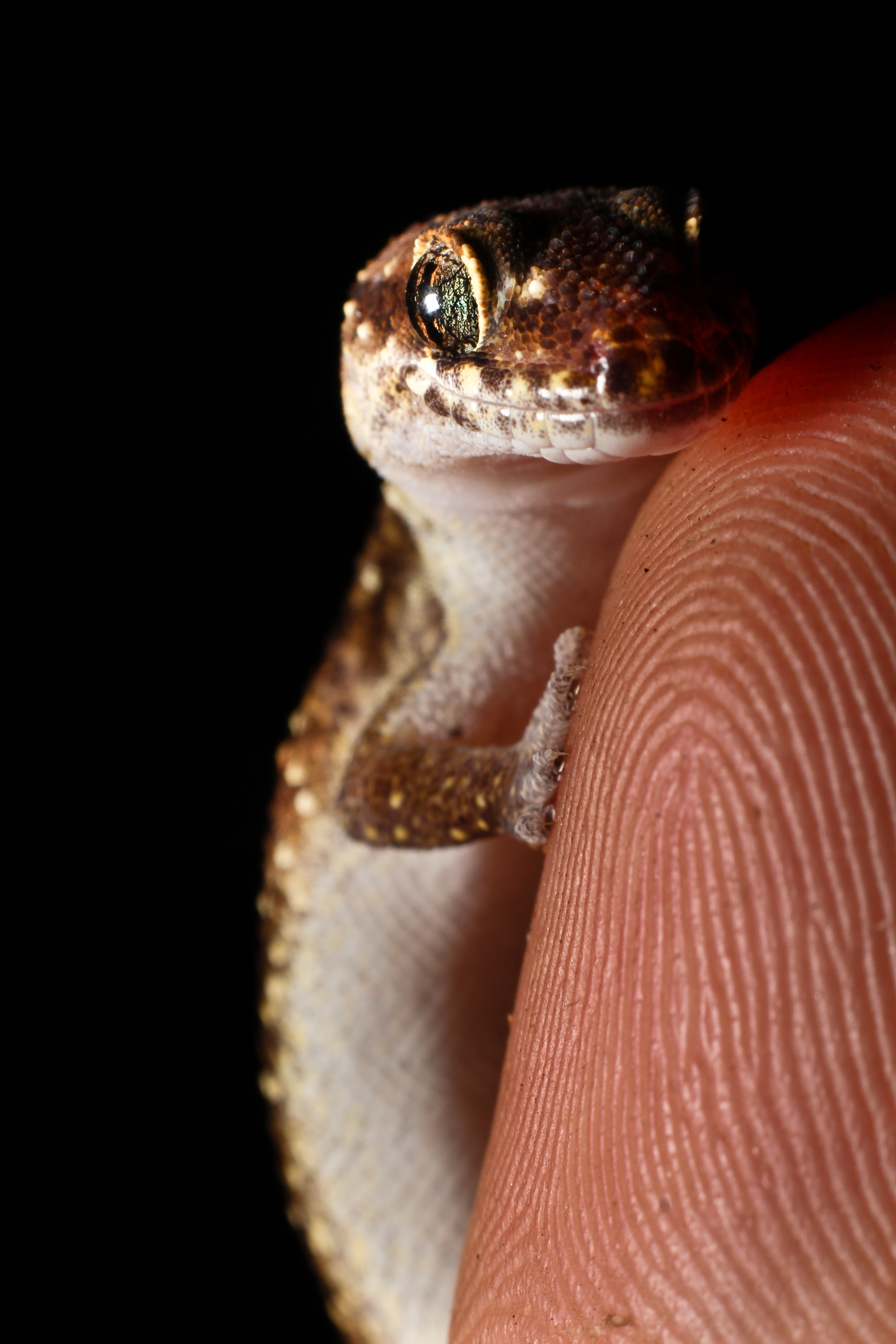
Post provided by Dylan Wainwright Our recent Methods in Ecology and Evolution paper – ‘Imaging biological surface topography in situ and in vivo‘ – shows how to use gel-based profilometry to image various biological surfaces. To start you need to press a gel into a surface of interest. The bottom surface of the gel is coated in a paint to create an impression of the surface that has standard optical … Continue reading Scales, Slime and Dragon(fly) Wings? Investigating the Surfaces of Organisms