Many species produce sound as a means of communication, emitting calls or songs to broadcast information to others in the surrounding area. In this blog post, Diego Llusia, Camille Desjonquères, and Sara Víllen-Peréz discuss their research on recording animal calls and how these soundtracks can be used to help monitor the impacts of climate change.
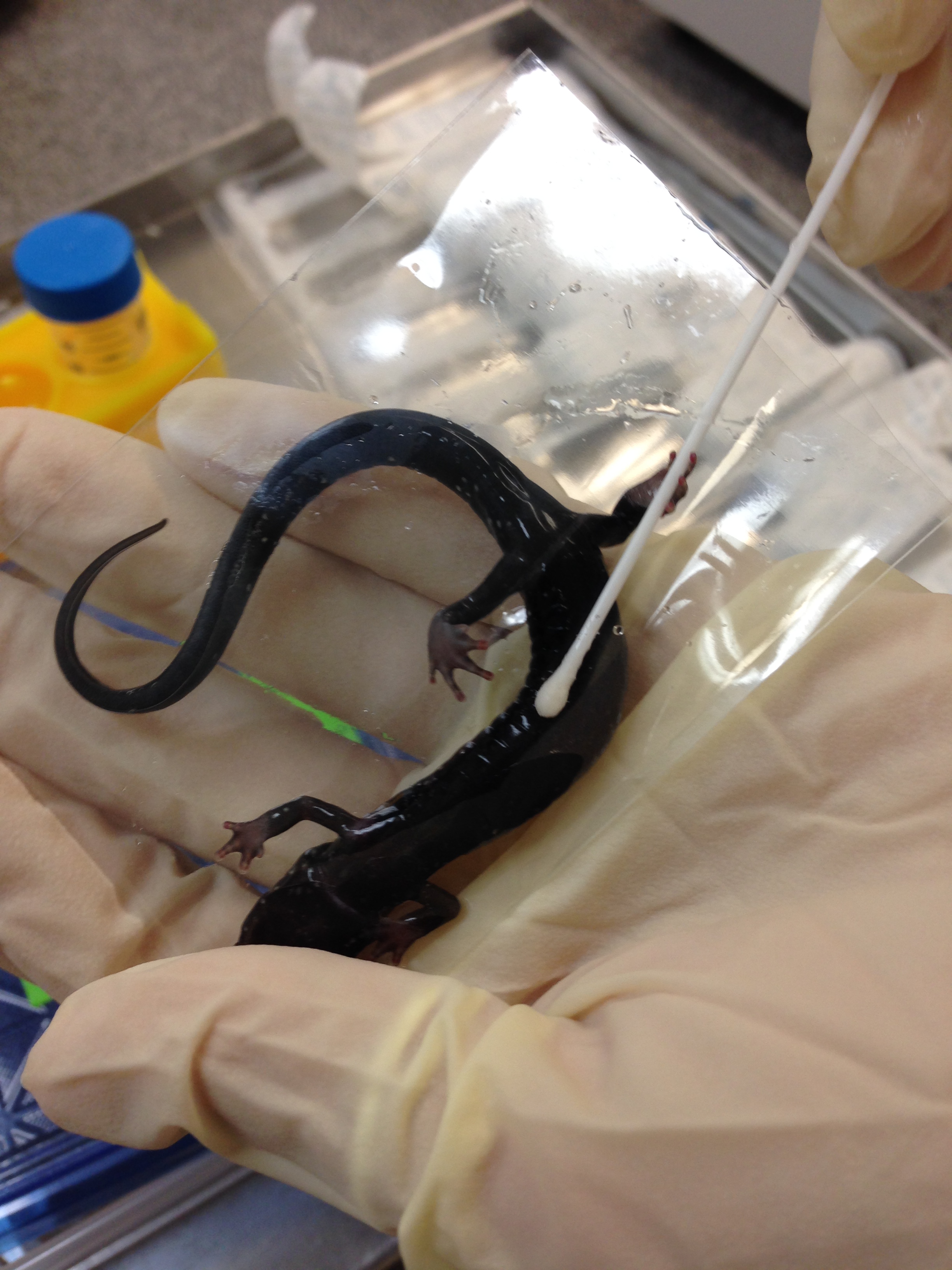
A salamander having its skin swabbed to test for Bsal infection.
Imagine you’re at the doctor’s office. You’re waiting to hear back on a critical test result. With recent emerging infectious diseases in human populations, you are worried you may be infected after a sampling trip to a remote field site. The doctor walks in. You sit nervously, sensing a slight tremble in your left leg. The doctor confidently declares, “Well, your tests results came back negative.” In that moment, you let out a sigh of relief, the kind you feel throughout your body. Then, thoughts start flooding your mind. You wonder– what are the rates of false negatives associated with the test? How sensitive is the diagnostic test to low levels of infection? The doctor didn’t sample all of your blood, so how can they be sure I’m not infected? Is the doctor’s conclusion right?
Now, let’s say I’m the doctor and my patient is an amphibian. I don’t have an office where the amphibian can come in and listen to me explain the diagnosis or the progression of disease − BUT I do regularly test amphibians in the wild for a fatal fungal pathogen, known as Batrachochytrium dendrobatidis (commonly known as Bd). Diseases like Bd are among the leading causes of the approximately one-third of amphibian species that are threatened, near threatened, or vulnerable to extinction. To test for Bd, and the recently emerged sister taxonBatrachochytrium salamandrivorans (hereafter referred to as: Bsal), disease ecologists rely on non-invasive skin swabs. Continue reading “Imperfect Pathogen Detection: What to Do When Sampling and Diagnostic Tests Produce Inaccurate Results”


 Methods Blog