Revealing the hidden lives of cryptic mountain lions using GPS data and a Moving-Resting Motion model

Post provided by Mark Elbroch, Chaoran Hu, Tom Meyer, Vladimir Pozdnyakov & Jun Yan

Female mountain lion collared in Washington USA in late December 2021.

Information on how and even why terrestrial mammals move through their habitat landscapes is important for forming the foundation of how to manage and conserve species. For elusive mountain lions, GPS data is particularly vital for monitoring these important apex predators in relation to their ecosystems and the people they share the land with. In this blog post, the team discusses their novel motion model, published in Methods in Ecology and Evolution, which helps us understand the movement of mountain lions from GPS location data.

Continue reading “Revealing the hidden lives of cryptic mountain lions using GPS data and a Moving-Resting Motion model”
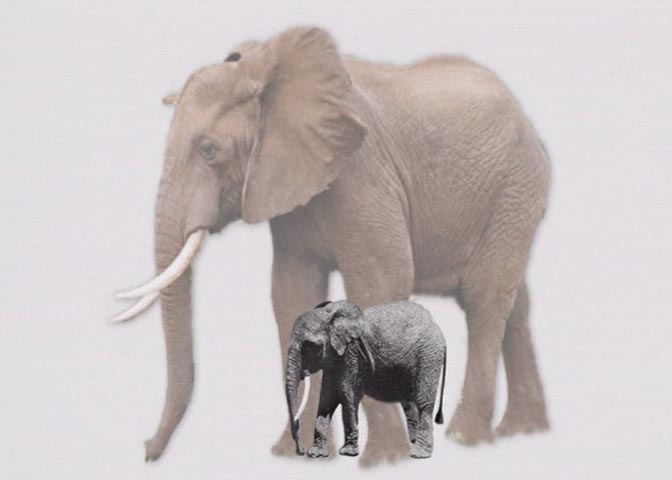
A New Method for Computing Evolutionary Rates and Rate Shifts

Post provided by Pasquale Raia

Phylogenetic Effects

Today, everyone knows about the importance of accounting for phylogenetic effects when it comes to understanding trait evolution. How to account for phylogenetic effects is another matter though.

A couple of years ago, I was having a discussion on the R-sig-phylo blog and dared to define the Brownian Motion (BM) as kind of a null hypothesis that more realistic scenarios should be compared to. Maybe I crossed a line or made too simplistic a statement (see Adams and Collyer’s article in Systematic Biology for an explanation of why this matter is far trickier and more complicated than my reply suggested). The point is, my comment was hotly contested and a colleague ‘put the onus on me’ to do something better than the almighty (emphasis mine) BM.

The RRphylo method was my attempt to do just that. It may not be better than BM, but it is different. Often, that can be exactly what you need. Continue reading “A New Method for Computing Evolutionary Rates and Rate Shifts”