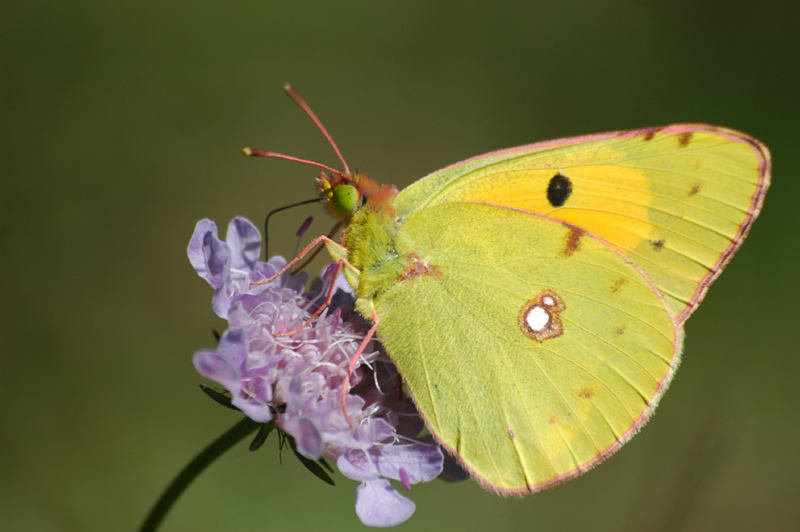
Exploring Coevolutionary History: Do Entire Communities Shape the Evolution of Individual Species?

Post provided by Laura Russo, Katriona Shea, and Adam Miller

Diffuse Coevolution
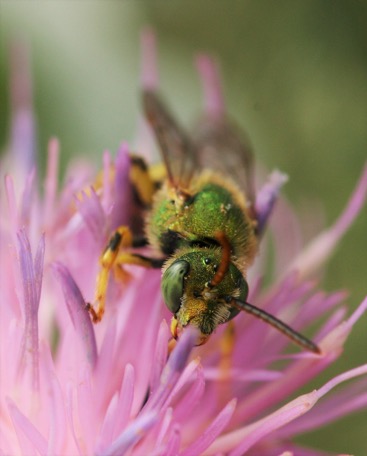
Interactions between plants and pollinators tend to be highly generalized.

In 1980, Janzen published an article titled “When is it coevolution?” where he explained the concept of diffuse coevolution: the idea that evolution of interacting species is shaped by entire communities, rather than simple paired interactions. This idea, though compelling, remains poorly understood, and strong evidence of diffuse coevolution acting on a community is lacking. Perhaps this is because there’s a lack of consensus on what would constitute evidence in support of the concept of diffuse coevolution, or, indeed, coevolution in general (Nuismer et al 2010). Continue reading “Exploring Coevolutionary History: Do Entire Communities Shape the Evolution of Individual Species?”

Improved and Harmless Demethylation Method for Ecological Epigenetic Experiments

In a new Methods in Ecology and Evolution video, Javier Puy outlines a new method of experimental plant DNA demethylation for ecological epigenetic experiments. While the traditionally-used approach causes underdeveloped root systems and high mortality of treated plants, this new one overcomes the unwanted effects while maintaining the demethylation efficiency. The authors demonstrate its application for ecological epigenetic experiments: testing transgenerational effects of plant–plant competition. … Continue reading Improved and Harmless Demethylation Method for Ecological Epigenetic Experiments

Issue 8.11

Issue 8.11 is now online!

The November issue of Methods is now online!

This extra large issue contains seven Applications articles and three Open Access articles. These five papers are freely available to everyone, no subscription required.

 LSCorridors: LandScape Corridors considers stochastic variation, species perception and landscape influence on organisms in the design of ecological corridors. It lets you simulate corridors for species with different requirements and considers that species perceive the surrounding landscape in different ways.

 HistMapR: HistMapR contains a number of functions that can be used to semi-automatically digitize historical land use according to a map’s colours. Digitization is fast, and agreement with manually digitized maps of around 80–90% meets common targets for image classification. This manuscript has a companion video and was recommended by Associate Editor Sarah Goslee.

 vortexR: An R package to automate the analysis and visualisation of outputs from the population viability modelling software Vortex. vortexR facilitates collating Vortex output files, data visualisation and basic analyses (e.g. pairwise comparisons of scenarios), as well as providing more advanced statistics.

Continue reading “Issue 8.11”

Mark-Recapture and Metapopulation Structure: Using Study Design to Minimize Heterogeneity

Post provided by Delphine Chabanne

Pod of bottlenose dolphins observed in Cockburn Sound, Perth, Western Australia.

Wildlife isn’t usually uniformly or randomly distributed across land- or sea-scapes. It’s typically distributed across a series of subpopulations (or communities). The subpopulations combined constitute a metapopulation. Identifying the size, demography and connectivity between the subpopulations gives us information that is vital to local-species conservation efforts.

What is a Metapopulation?

Richard Levins developed the concept of a metapopulation to describe “a population of populations”. More specifically, the term metapopulation has been used to describe a spatially structured population that persists over time as a set of local populations (or subpopulations; or communities).  Emigration and immigration between subpopulations can happen permanently (through additions or subtractions) or temporarily (through the short-term presence or absence of individuals).

How individuals could distribute themselves within an area.

Continue reading “Mark-Recapture and Metapopulation Structure: Using Study Design to Minimize Heterogeneity”

Issue 8.8

Issue 8.8 is now online!

The August issue of Methods is now online!

This issue contains two Applications articles and two Open Access articles. These four papers are freely available to everyone, no subscription required.

 Paco: An R package that assesses the phylogenetic congruence, or evolutionary dependence, of two groups of interacting species using both ecological interaction networks and their phylogenetic history.

 Open MEE: Open Meta-analyst for Ecology and Evolution (Open MEE) addresses the need for advanced, easy-to-use software for meta-analysis and meta-regression.It offers a suite of advanced meta-analysis and meta-regression methods for synthesizing continuous and categorical data, including meta-regression with multiple covariates and their interactions, phylogenetic analyses, and simple missing data imputation.

Continue reading “Issue 8.8”

At Last, a Paleobiologist is a Senior Editor for Methods in Ecology and Evolution!

Post provided by Lee Hsiang Liow

An Asian, female Senior Editor under 45? Progressive! I have loved Methods in Ecology and Evolution since it appeared in 2010 and am thrilled to have been selected to join Rob, Bob and Jana to help with the journal’s continued development.

OK, so you want to know who the new Senior Editor on the MEE block is.  I’m just another scientist, I guess. On the outside, we look different but on the inside, we’re all the same. (OK, perhaps we are a little different, even on the inside, but that makes life and research interesting, right?)

Here’s my academic life history: I did my Bachelors thesis on the systematics/phylogenetics of an obscure group of marine pulmonate slugs with one of the greatest Icelandic biologists I know, Jon Sigurdsson, at the National University of Singapore. I followed this up with an almost-half-year stint at the Museum of Natural Science in Berlin as a “nobody”, digitizing data. Then I won the academic lottery and headed up to Uppsala to do my masters in conservation biology on tropical pollinator diversity, (un)supervised by two amazing supervisors that never met each other, the late Navjot Sodhi (National University of Singapore) and Thomas Elmqvist, now at Stockholm University. Continue reading “At Last, a Paleobiologist is a Senior Editor for Methods in Ecology and Evolution!”

Fast-Moving Biodiversity Assessment: Are We Already in the Future?

Post provided by Carola Gómez-Rodríguez & Alfried P. Vogler

Time flies… in the blink of an eye! And even more so in science. The molecular lab work we were used to two decades ago seems like ancient history to today’s PhD students. The speed of change in sequencing technology is so overwhelming that imagination usually fails to foresee how our daily work will be in 10 years’ time. But in the field of biodiversity assessment, we have very good clues. Next Generation Sequencing is quickly becoming our workhorse for ambitious projects of species and genetic inventories.

One by One Approach to Studying Biodiversity

For decades, most initiatives measured biodiversity in the same way: collect a sample of many individuals in the field, sort the specimens, identify them to a Linnaean species one at a time (if there was a good taxonomist in the group which, unfortunately, it is kind of lucky these days!), and count them. Or, if identification was based on molecular data, the specimen was subject to DNA extraction, to sequence one (or several) short DNA markers. This involved countless hours of work that could be saved if, instead of inventorying biodiversity specimen-by-specimen, we followed a sample-by-sample approach. To do this now, we just have to make a “biodiversity soup”.

Biodiversity assessment based on morphological identification and/or Sanger sequencing (“The one-by-one approach”)

Continue reading “Fast-Moving Biodiversity Assessment: Are We Already in the Future?”

Building Universal PCR Primers for Aquatic Ecosystem Assessments

Post provided by Vasco Elbrecht Many things can negatively affect stream ecosystems – water abstraction, eutrophication and fine sediment influx are just a few. However, only intact freshwater ecosystems can sustainably deliver the ecosystem services – such as particle filtration, food biomass production and the supply of drinking water – that we rely on. Because of this, stream management and restoration has often been in the … Continue reading Building Universal PCR Primers for Aquatic Ecosystem Assessments

When Measuring Biodiversity, Do Individuals Matter?

Post provided by Samuel RP-J Ross

Close up of a black-capped babbler (Pellorneum capistratum), one of the species included in our study.
Close up of a black-capped babbler (Pellorneum capistratum), one of the species in our study.

Our newly-developed method simulates intraspecific trait variation when measuring biodiversity. This gives us an understanding of how individual variation affects ecosystem processes and functioning. We were able to show that accounting for within-species variation when measuring functional diversity can reveal details about ecological communities which would otherwise remain unseen. Namely, we found a negative impact of selective-logging on birds in Borneo when accounting for intraspecific variation which we could not detect when ignoring intraspecific variation.

Why Biodiversity Matters

Biodiversity is important for many reasons. One of the main reasons is its contribution to the range of goods and services provided by ecosystems (i.e. ecosystem services) that we can take advantage of, such as natural food resources or climatic regulation. It’s generally believed that biodiversity contributes to these services by increasing and maintaining ‘ecosystem functioning’ – often defined as the rate at which ecosystems are turning input energy (e.g. sunlight) into outputs (e.g. plant biomass). Continue reading “When Measuring Biodiversity, Do Individuals Matter?”

Influential Women in Ecological Network Research

Post provided by Katherine Baldock and Luísa G. Carvalheiro

luisa-carvalheiro-butterfly
©Luísa G. Carvalheiro

Ecological networks represent interactions between different biotic units in an ecosystem and are becoming an increasingly popular tool for describing and illustrating a range of different types of ecological interactions. Food webs – which provide a way to track and quantify the flow of energy and resources in ecosystems – are among the most studied type of ecological networks. These networks usually represent species (nodes) which are connected by pairwise interactions (links) and they play a central role in improving our understanding of ecological and evolutionary dynamics.

Historically, food webs described antagonistic relationships (e.g. plant-herbivore or host-parasitoid networks) but the approach has been developed in recent years to include mutualistic networks (e.g. plant-pollinator networks, phorophyte-epiphyte networks). The development of network ecology, including ever more sophisticated methods to analyse ecological communities, has been driven forward by an enthusiastic community of ecologists, theoreticians and modellers working together to enhance our understanding of how communities interact.

In this blog post, we’ll describe the important role played by female scientists in the development of network ecology, focusing on the contributions by two ground-breaking ecologists and also highlighting contributions from a range of other scientists working in this field. Continue reading “Influential Women in Ecological Network Research”