Teaching Models to Listen to Bats: The Story Behind BSG-BATS

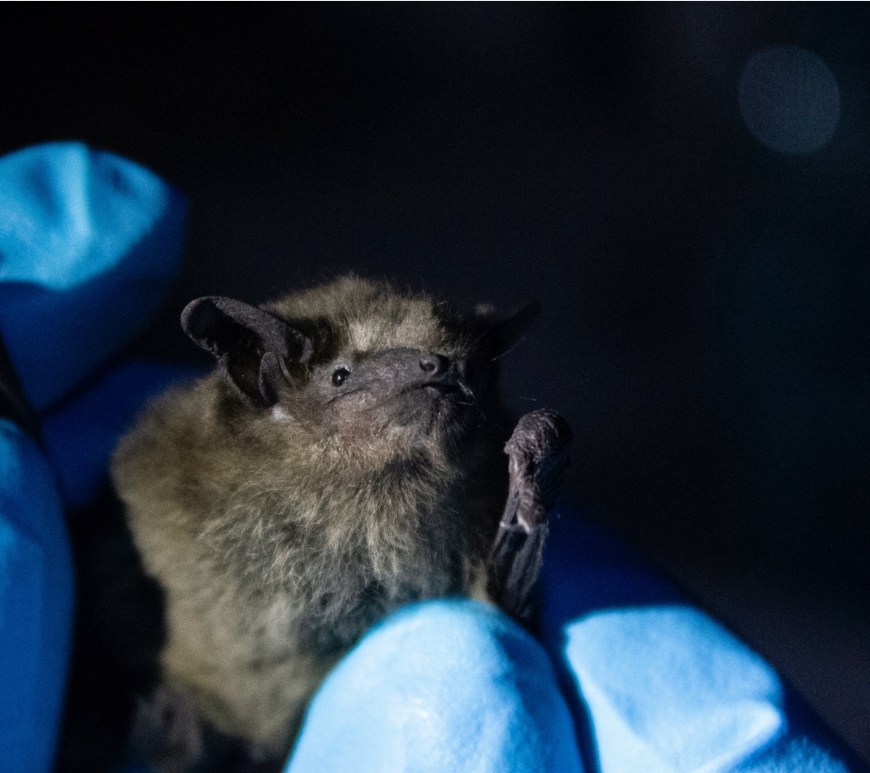
Post provided by Katarina Meramo Bats are extraordinary animals. They fly, echolocate, and navigate in absolute darkness, and produce some of the most complex acoustic signals in the mammalian world. They pollinate, disperse seeds, control insect populations, and quietly hold ecosystems together. Yet, despite their importance, monitoring bats – particularly across large spatial and temporal scales – remains remarkably challenging. Over the past decade, bioacoustic … Continue reading Teaching Models to Listen to Bats: The Story Behind BSG-BATS

All I Want for Christmas is Data: Thoughts on Holidays in the Bush

In this series, we explore the unique experiences of field ecologists conducting research in remote field stations during the holiday season. Through personal stories and reflections, our contributors share what it’s like to conduct scientific work in remote, biodiverse environments, where the challenges of research intersect with the spirit of the holidays. From the solitude of secluded field stations to unexpected festive moments in the … Continue reading All I Want for Christmas is Data: Thoughts on Holidays in the Bush

Our December issue is out now!

This issue contains the latest methods in ecology and evolution. Read the last issue of the year to find out about this month’s featured articles and the article behind our cover! Featured Fast‐tracking ecological interpretation using bespoke quantitative large language models There is untapped potential to apply large language models (LLMs) to quantitative ecological and environmental datasets. Here, authors present a roadmap for designing and … Continue reading Our December issue is out now!

Our November issue is out now!

This issue contains the latest methods in ecology and evolution. Read to find out about this month’s featured articles and the article behind our cover! Featured Current frontiers in the passive acoustic monitoring of bats Passive acoustic monitoring of bats is used in a growing number of studies in applied and basic research. Despite the publication of good-practice recommendations, several unsettled debates persist about the … Continue reading Our November issue is out now!

Our September issue is out now!

This issue contains the latest methods in ecology and evolution. Read to find out about this month’s featured articles and the article behind our cover! Featured DeepDiveR—A software for deep learning estimation of palaeodiversity from fossil occurrences The incompleteness of the fossil record presents a barrier to estimating changes in biodiversity which standard statistical methods struggle to account for. Here authors present DeepDiveR, an R package … Continue reading Our September issue is out now!

Smart cameras in the wild: A centralised solar-powered Raspberry Pi system for automated animal observation and environmental monitoring

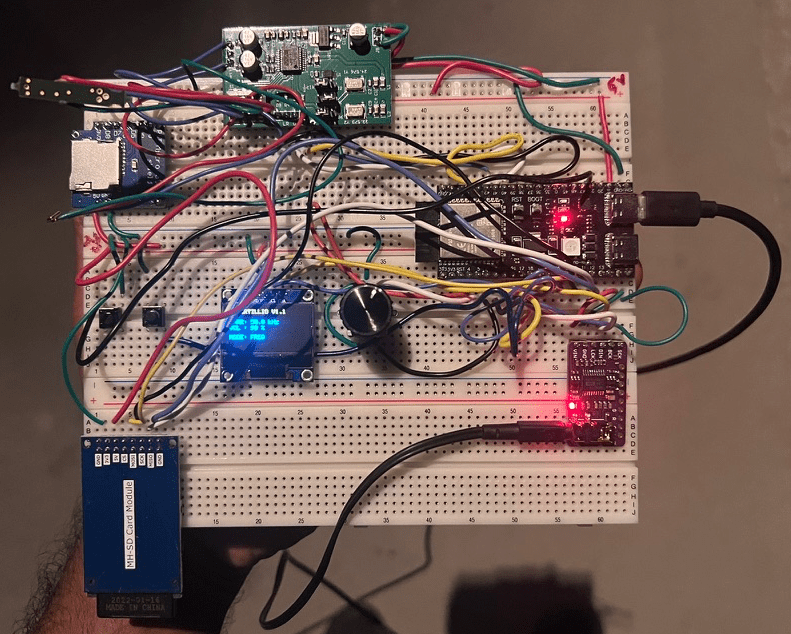
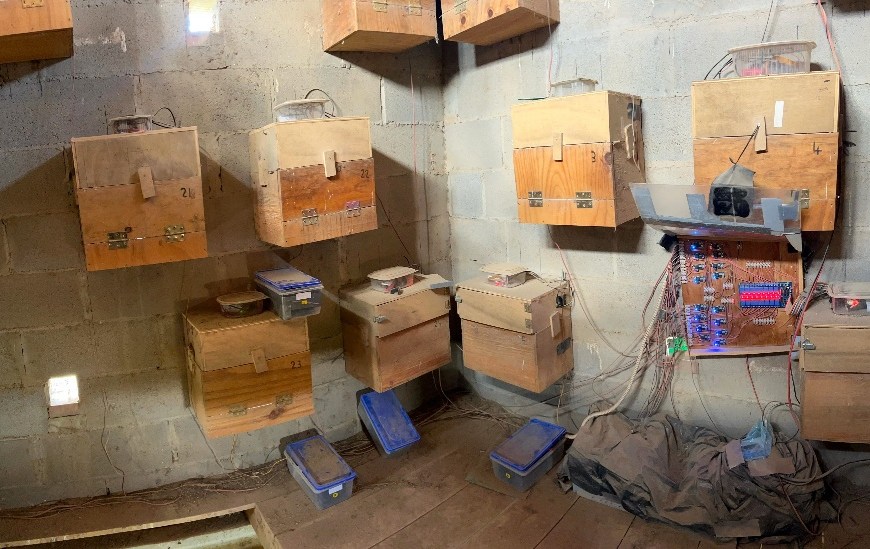
Post provided by Marçal Pou-Rossell Many studies of animal behaviour – especially parental care – rely on short, fragmented observations. Whether due to battery limitations, human resources, or remote field conditions, collecting continuous data throughout an entire reproductive cycle is often just not feasible. As a result, key behaviours can go undocumented, and our understanding of how animals make decisions across time remains incomplete. We … Continue reading Smart cameras in the wild: A centralised solar-powered Raspberry Pi system for automated animal observation and environmental monitoring

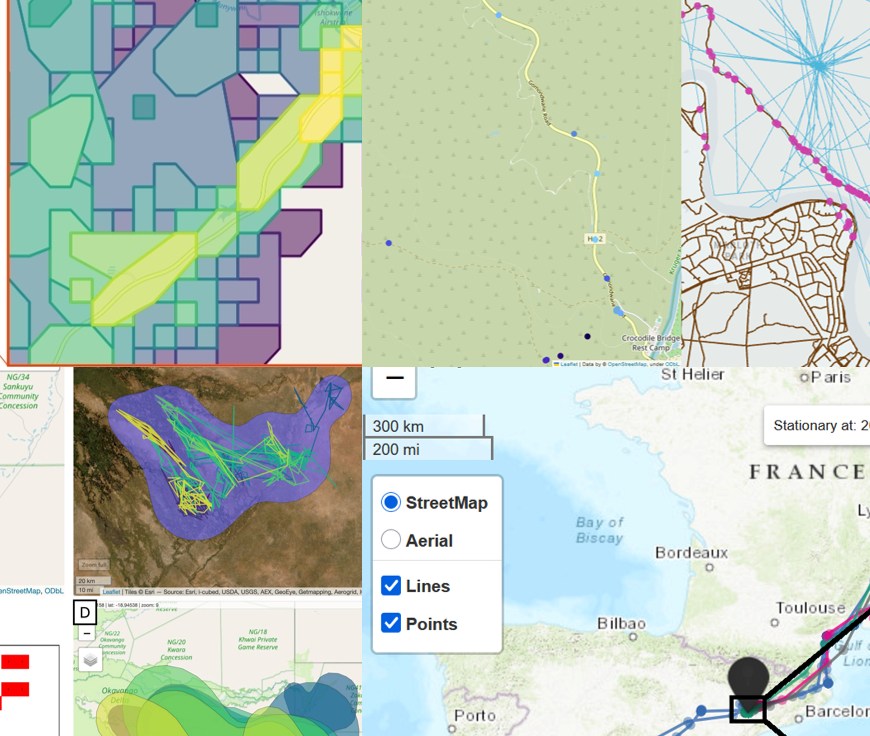
Citizen scientist coders for wildlife conservation – a MoveApps story

Post provided by Andrea Kölzsch. I am a movement ecologist and have until recently worked as a PostDoc at the Max Planck Institute of Animal Behavior in Radolfzell, Germany. My research focusses, on the one hand, on the tracking of waterbird movement, but in a more general capacity on the empowering of ecologists to gain knowledge from complex data. The background story of our presently … Continue reading Citizen scientist coders for wildlife conservation – a MoveApps story

Our August issue is out now!

This issue contains the latest methods in ecology and evolution. Read to find out about this month’s featured articles and the article behind our cover! Featured Empirical ecology to support mechanistic modelling: Different objectives, better approaches and unique benefits Making mechanistic models credible requires empirical studies, but traditional study topics and designs often do not support them well. The models we use for modern problems need … Continue reading Our August issue is out now!

Our July Issue is out now!

This issue contains the latest methods in ecology and evolution. Read to find out about this month’s featured articles and the article behind our cover! Featured MicroEcoTools: An R package for comprehensive theoretical microbial ecology analysis Authors introduce MicroEcoTools, an R package designed to test ecological framework predictions using microbial community data. It assesses microbial diversity and evaluates the relative impacts of stochastic and deterministic … Continue reading Our July Issue is out now!

Practical tools to advance Image-Based bio-logging in marine ecosystems

Post provided by Marianna Chimienti My name is Dr Marianna Chimienti, and I am a lecturer in Marine Top Predator Ecology at the School of Ocean Sciences at Bangor University (UK). I’m fascinated by animal movements. My main research focuses on understanding how, where, when, and why animals move, using bio-logging technology (devices attached to animals that can record location, depth, acceleration, orientation, environmental conditions, … Continue reading Practical tools to advance Image-Based bio-logging in marine ecosystems