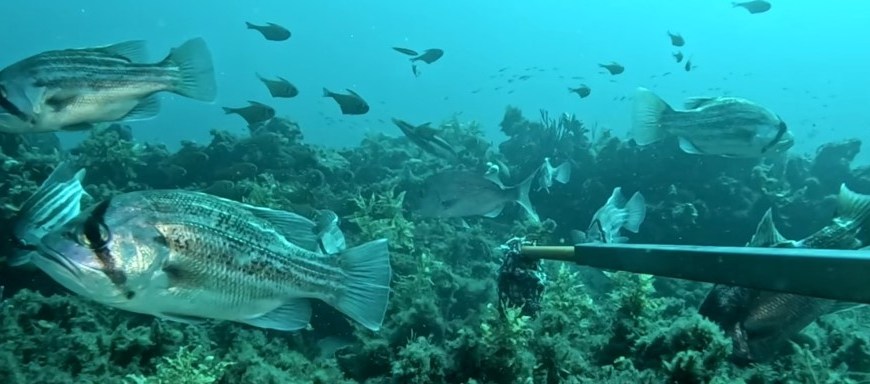
What a national marine dataset taught us about the power of quality control and collaboration

Post provided by Brooke Bond (Gibbons) Ecologists often dream about big datasets—Combining observations from multiple studies across space and time could reveal patterns that would otherwise be impossible to detect. But anyone who has tried to merge datasets from different sources knows the reality is often less glamorous. My first job involved synthesising Baited Remote Underwater Video (BRUV) datasets from across Australia. BRUV systems use … Continue reading What a national marine dataset taught us about the power of quality control and collaboration

Sharing is Caring: Working With Other People’s Data

Post provided by Mariana García Criado, Isla Myers-Smith, Lander Baeten, Andrew Cunliffe, Gergana Daskalova, Elise Gallois and Jeffrey Kerby


The Team Shrub research group in 2017 on Qikiqtaruk – Herschel Island in the Canadian Arctic. Not only do Team Shrub work with other people’s data, we collect our own to share publicly following open science best practice. (Photo credit: Sandra Angers-Blondin, www.teamshrub.com).

Team Shrub (www.teamshrub.com), are ecologists working to understand how global change alters plant communities and ecosystem processes. In May 2020, Team Shrub held a lab meeting to discuss working with other people’s data. Inspired by the conversation, they decided to put a blog post together to explore the importance of careful data cleaning in open science, provide 10 best practice suggestions for working with other people’s data, and discuss ways forward towards more reproducible science. 

Continue reading “Sharing is Caring: Working With Other People’s Data”