Credit: Food and Agriculture Organization of the United Nations.
Forests, across all ecozones and in all shapes and sizes, are essential for life on earth. Around 80% of the world’s land-based biodiversity call forests home and over 1 billion people, including more than 2,000 Indigenous cultures, rely on forests for food, shelter, energy and income. As with many other ecosystems, forests worldwide are under increasing threat from human activities, with the current rate of deforestation estimated at 13 million hectares per year.
“A challenged world is an alert world. Individually, we’re all responsible for our own thoughts and actions – all day, every day.” This is a quote from the International Women’s Day 2021 website, where this year, the campaign theme is #ChooseToChallenge.
International Women’s Day is a global day celebrating the social, economic, cultural and political achievements of women. The day also marks a call to action for accelerating women’s equality. This year, Associate Editor Chloe Robinson has selected her top four women-led Methods in Ecology and Evolution blog posts from 2020 and highlights the author’s contributions to the MEE blog.
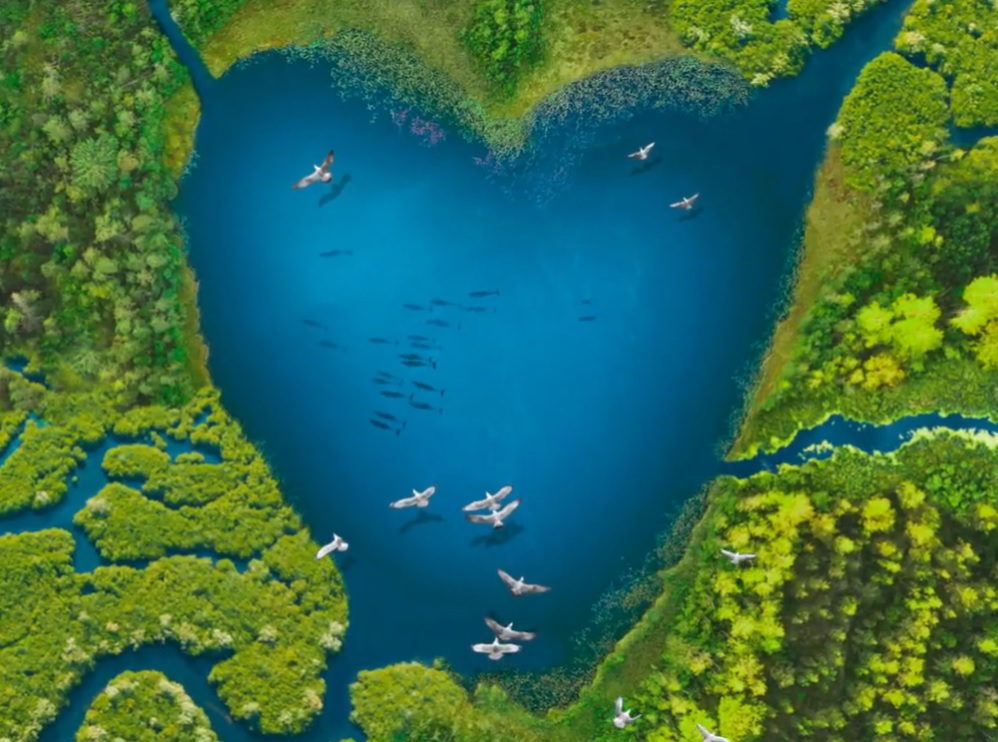
World Wetlands Day 2021 shines a spotlight on wetlands as a source of freshwater and encourages actions to restore them and stop their loss. Credit: Ramsar.org.
It doesn’t come as a surprise that healthy wetland systems are linked with freshwater quality. Wetlands form vital habitats for global biodiversity, help combat climate change through storage of carbon and offer defenses against flooding. Freshwater resources, including wetlands, are under increasing pressure from over-abstraction, pollution and habitat destruction among other threats, which is directly contributing to the current global freshwater crisis that threatens people and our planet.
February 2nd each year is World Wetlands Day, which aims to raise global awareness about the vital role of wetlands. This year, the 2021 campaign highlights the contribution of wetlands to the quantity and quality of freshwater on our planet. Water and wetlands are connected in an inseparable co-existence that is vital to life, our well-being, and the health of our planet. In this blog post, Associate Editor Chloe Robinson, will explore why wetlands are so important and the new DNA-based methods being used to monitor wetland health.
Diatoms may be the only organisms to live in houses made of glass, but some species of diatom are far from fragile. Certain groups of diatoms are highly tolerant of poorer water quality and therefore their presence can be diagnostic for freshwater health estimates. A recent study, featuring MEE Associate Editor, Chloe Robinson, investigated whether communities of freshwater diatoms can be collected via kick-net methodology, which is an approach currently used for collecting benthic macroinvertebrates. In this post, Chloe highlights how applying previously optimised freshwater methods can result in a more holistic understanding of freshwater health.
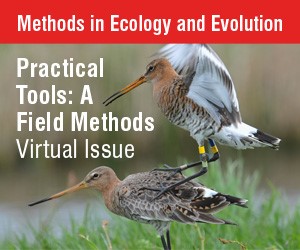
Today, we’re pleased to announce that we’re launching a new article type for Methods in Ecology and Evolution: Practical Tools. Like our Applications articles, Practical Tools will be short papers(up to 3000 words). They’ll focus on new field techniques, equipment or lab protocols. From this point forward, our Applications papers will solely focus on software and code.
Practical tools need to clearly demonstrate how tools designed for specific systems or problems can be adapted for more general use. Online supporting information can include specific instructions, especially for building equipment. You can find some examples of Applications that would now fit into this article type here and here.




 Methods Blog