An Ecologist and a Programmer Walk Into a Bar…

Post provided by Daniel Vedder, Markus Ankenbrand, and Juliano Sarmento Cabral

Five years ago, a new institute opened its doors at the University of Würzburg: the Center for Computational and Theoretical Biology (CCTB). The idea was simple. Take six computational research groups, covering topics from image analysis to genomics and ecological modelling, put them in a building together, and see what happens.

Despite our disparate areas of expertise, this “experiment” has worked really well. It soon turned out that one of our greatest strengths as an institute lay in the cumulative computer know-how we have, or have acquired together. In our experience, many biologists are still somewhat wary of computational techniques, and struggle with them even when they use them. Part of the reason for this unease, we believe, is that few biologists are thoroughly trained in computer science.

Continue reading “An Ecologist and a Programmer Walk Into a Bar…”

Data manipulation and statistical analysis in palaeoecology: an unexpected journey

Post provided by Midori Yajima

Picture credit: Midori Yajima

Midori Yajima graduated from an MSc in Ecology with a project on palaeoecology and decided to join the online workshop Data Manipulation and Statistical Analysis in Palaeoecology: A Masterclass in R, set up by the Palaeoecology Special Interest Group (PalaeoSIG). In this post, Midori discusses some highlights from the workshop and emphasises the importance of a research community when navigating the programming realm.

Continue reading “Data manipulation and statistical analysis in palaeoecology: an unexpected journey”

Creating a package to infer species coexistence

Post provided by Ignasi Bartomeus, David García-Callejas, and Oscar Godoy

Ignasi Bartomeus and colleagues share the story behind their recent Methods article ‘cxr: A toolbox for modelling species coexistence in R’.

This post recalls the journey on how we ended up developing cxr (acronym for CoeXistence relationships in R), an R package for quantifying interactions among species and their coexistence relationships. In other words, it provides tools for telling apart the situations in which different species can persist together in a community from the cases in which one species completely overcomes another.

Continue reading “Creating a package to infer species coexistence”

Issue 8.8

Issue 8.8 is now online!

The August issue of Methods is now online!

This issue contains two Applications articles and two Open Access articles. These four papers are freely available to everyone, no subscription required.

 Paco: An R package that assesses the phylogenetic congruence, or evolutionary dependence, of two groups of interacting species using both ecological interaction networks and their phylogenetic history.

 Open MEE: Open Meta-analyst for Ecology and Evolution (Open MEE) addresses the need for advanced, easy-to-use software for meta-analysis and meta-regression.It offers a suite of advanced meta-analysis and meta-regression methods for synthesizing continuous and categorical data, including meta-regression with multiple covariates and their interactions, phylogenetic analyses, and simple missing data imputation.

Continue reading “Issue 8.8”

The Right Tool for the Job: Using Zeta Diversity to Communicate Uncertainty in Ecological Modelling

Post provided by Mariona Roigé

The Need for Modelling

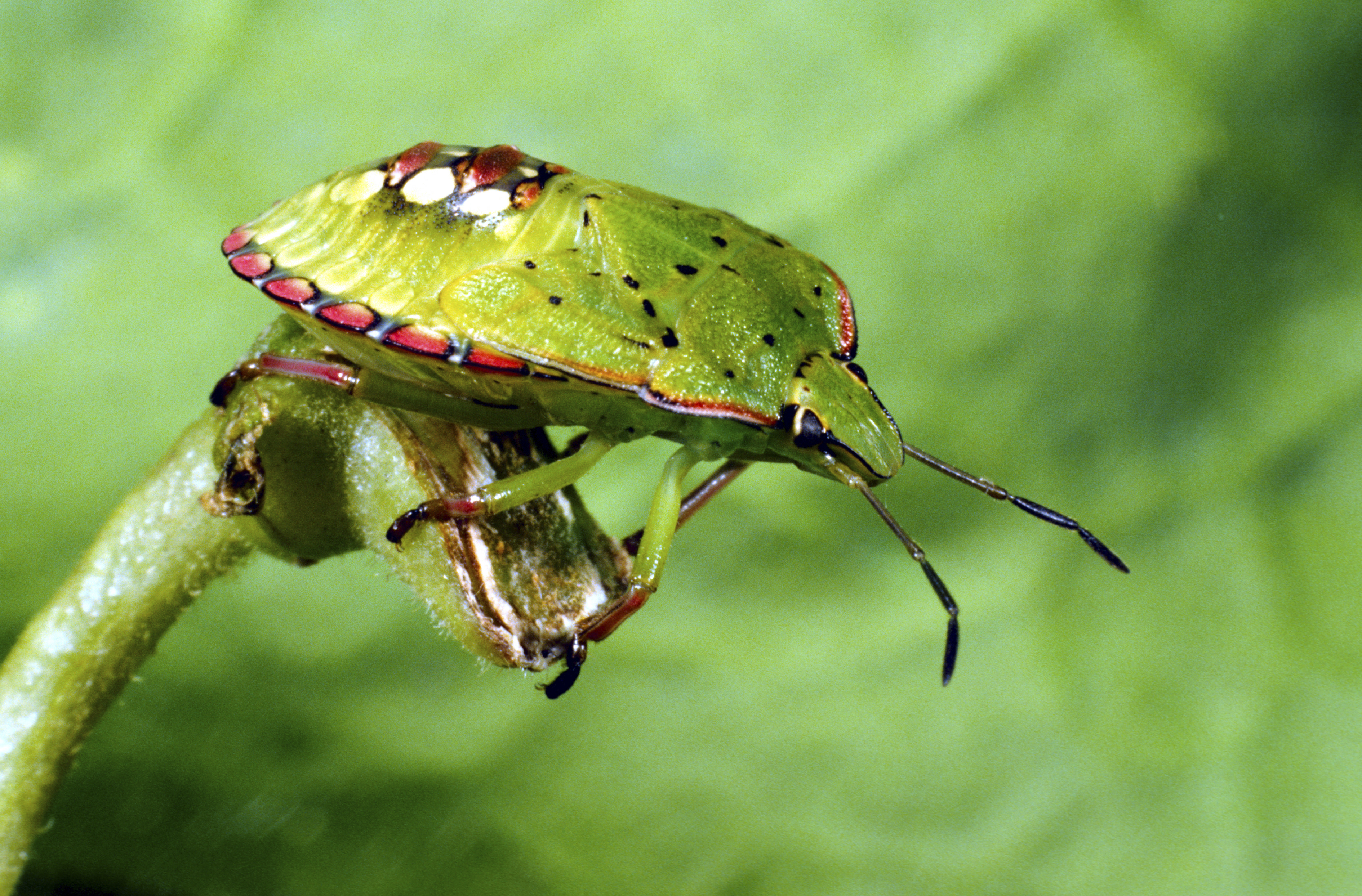
Green vegetable bug nymph (Nezara viridula). ©John Marris. Lincoln University.

Despite how far modelling has taken us in science, the use of models remains controversial. Modelling covers a huge range of common practices, from scaled models of ships to determine the shape that will have the least resistance to water to complex, comprehensive ‘models of everything’. A great example of the latter is the Earth System Model. This model aims to understand the changes in global climate by taking into account the interaction between physical climate, biosphere, the atmosphere and the oceans. Basically, a model of how the Earth works.

The controversy in the use of modelling resides in how accurately the model describes reality and the level of confidence we have in its outputs. The first argument can be a bit counter-intuitive: sometimes, a very simple model can be a great predictor. Actually, the conventional view in ecology is that simple models are more generalisable than complex models, although this view is being challenged. However, the level of confidence, or the level of uncertainty, that we have in the outputs of the model is a crucial point. We need to be able to accurately determine our levels of uncertainty if we want people to trust our models. Continue reading “The Right Tool for the Job: Using Zeta Diversity to Communicate Uncertainty in Ecological Modelling”