Addressing observational biases in data-driven approaches of zoonotic hazard prediction

Post provided by Andrea Tonelli Over the past five decades, more than half of emerging infectious diseases in humans originated from animals, with zoonotic pathogens posing a growing threat to global health. Shifts in land use, climate change, direct use of wildlife and biodiversity loss all influence human exposure to pathogens of wild animals, shaping the likelihood of zoonotic spillover events. In the wake of … Continue reading Addressing observational biases in data-driven approaches of zoonotic hazard prediction

Into the Swarm-Verse: quantifying collective motion across species and contexts

Post provided by Marina Papadopoulou Authors We are three researchers interested in collective animal behaviour. Marina Papadopoulou is a postdoctoral researcher at Tuscia University in Italy, Simon Garnier is a Professor at the New Jersey Institute of Technology (USA), and Andrew King is an Associate Professor at Swansea University (UK). As a Greek-French-Welsh team with empirical, mathematical, and computational backgrounds in different study systems, we … Continue reading Into the Swarm-Verse: quantifying collective motion across species and contexts

Avoiding Confusion: Modelling Image Identification Surveys with Classification Errors

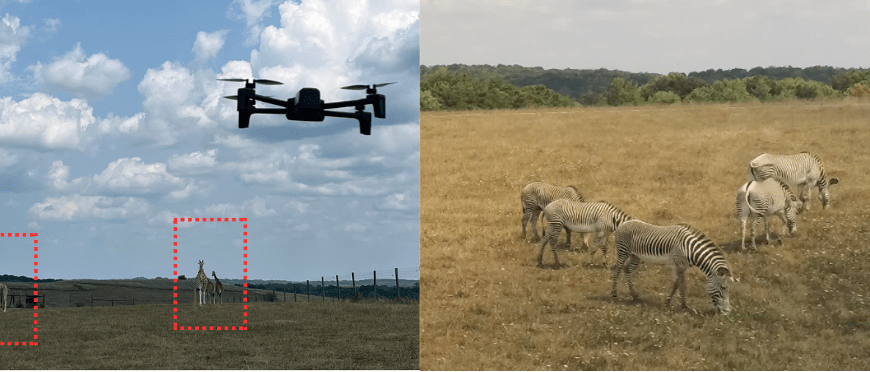
Post provided by Jon Barry We are a group comprised of statisticians, ecologists and a computer scientist. Back in 2021 when this work started, we were all employed at the Centre for Environment, Fisheries and Aquacultural Science (Cefas) at Lowestoft, U.K. Since then, Robert, our computer scientist, has ‘jumped ship’ (no pun intended) to the Alan Turing Institute. We were aware that AI image recognition … Continue reading Avoiding Confusion: Modelling Image Identification Surveys with Classification Errors

It is only by understanding what causes sampling bias that we can correct it

Post provided by Rob J. Boyd Colleagues and I recently published a paper in MEE, and its title might induce a bit of head scratching: “Using causal diagrams … to correct geographic sampling biases in biodiversity monitoring data” (Boyd et al., 2025). If you’re familiar with causal inference, you might be wondering, “What have causal diagrams got to do with sampling biases?” And if you’re … Continue reading It is only by understanding what causes sampling bias that we can correct it

Ten practical guidelines for microclimate research in terrestrial ecosystems

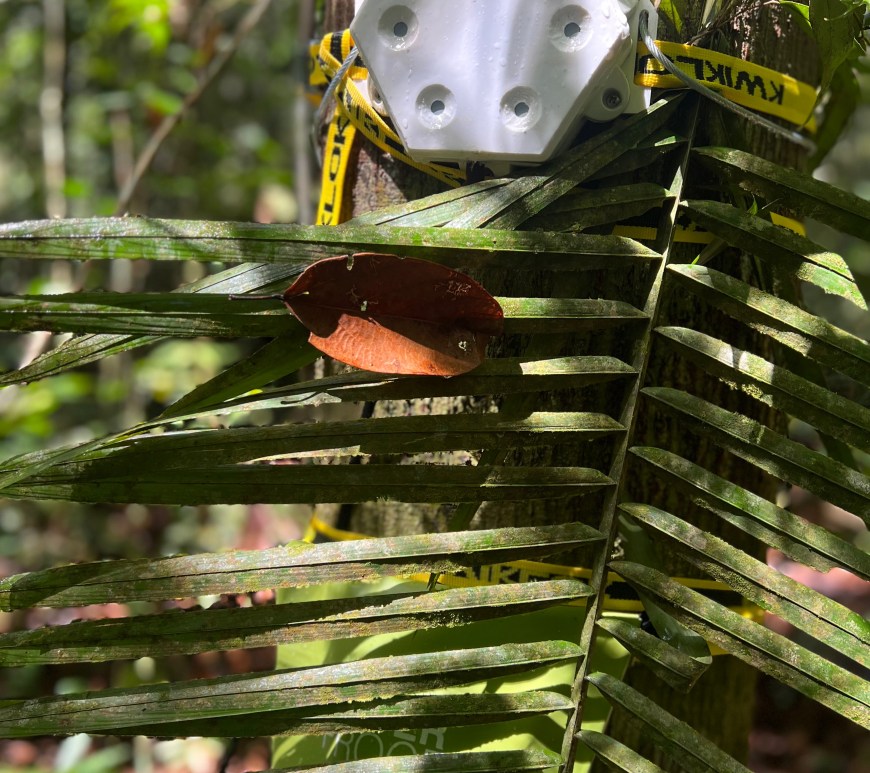
Post provided by  Jonas Lembrechts. Blogpost adapted from: http://www.the3dlab.org: Ten practical guidelines | The 3D lab Ecologists and biogeographers are increasingly recognizing the critical role of microclimate in addressing a wide range of research questions. Consequently, many researchers are incorporating microclimate sensors into their studies. While deploying these sensors might seem straightforward—simply plugging them in and collecting data—there are numerous important factors to consider. Until … Continue reading Ten practical guidelines for microclimate research in terrestrial ecosystems

From the Field to Museums: Uncovering the Hidden Insect World of the Galápagos Islands.

In this series, we explore the unique experiences of field ecologists conducting research in remote field stations during the holiday season. Through personal stories and reflections, our contributors share what it’s like to conduct scientific work in remote, biodiverse environments, where the challenges of research intersect with the spirit of the holidays. From the solitude of secluded field stations to unexpected festive moments in the … Continue reading From the Field to Museums: Uncovering the Hidden Insect World of the Galápagos Islands.

A Remote Holiday Season: Research and Reflections at the Succulent Karoo Station.

In this series, we explore the unique experiences of field ecologists conducting research in remote field stations during the holiday season. Through personal stories and reflections, our contributors share what it’s like to conduct scientific work in remote, biodiverse environments, where the challenges of research intersect with the spirit of the holidays. From the solitude of secluded field stations to unexpected festive moments in the … Continue reading A Remote Holiday Season: Research and Reflections at the Succulent Karoo Station.

Look inside: a handy tool for casting the enclosed nest structure of birds

Post provided by Jing-Chia Guo. To understand something, we often describe its appearance and shape: The ball is round, the can is cylinder, and the pillow is kind of rectangle. However, most natural creatures are irregular in shape, so it’s difficult for people to quantify or define them. Sometimes, scientists are even unable to get their hands on the objects they need, and that is … Continue reading Look inside: a handy tool for casting the enclosed nest structure of birds

Discovering population dynamics and community interactions of migratory birds by individual-based model

It has been a few weeks since the 15th Chinese Symposium on Biodiversity Science and Conservation, where the first “Seminar on Methods in Ecology and Evolution in China” was held. In these blog posts, we hear from some of the winners of the “Outstanding Young Scholar Award in Ecological and Evolutionary Methodology in China”. Here, winner Jin Liu discusses the background behind their research. Post … Continue reading Discovering population dynamics and community interactions of migratory birds by individual-based model

For worse and for better: the complicated marriage between biologging and wild animal welfare

Post provided by Michaël Beaulieu A cold Encounter in the Wild When talking about animal welfare to scientists who commonly use biologging tools to monitor the behaviour or physiology of wild animals in an ecological or conservation context, I have noticed that the first thing that usually comes to mind for them is the unwanted impact that biologging may have on animal welfare. Much has … Continue reading For worse and for better: the complicated marriage between biologging and wild animal welfare