The Overlooked Commotion of Particle Motion in the Ocean

Below is a press release about the Open Access Methods paper ‘Particle motion: the missing link in underwater acoustic ecology‘ taken from the University of Bristol, the University of Exeter and the Centre for Environment, Fisheries  & Aquaculture Science (CEFAS).

Fish and invertebrates predominantly or exclusively detect particle motion.

A growing number of studies on the behaviour of aquatic animals are revealing the importance of underwater sound, yet these studies typically overlook the component of sound sensed by most species: particle motion. In response, researchers from the Universities of Bristol, Exeter and Leiden and CEFAS have developed a user-friendly introduction to particle motion, explaining how and when it ought to be measured, and provide open-access analytical tools to maximise its uptake. Continue reading “The Overlooked Commotion of Particle Motion in the Ocean”

What fish ears can tell us about sex, surveillance and sustainability

Below is a press release about the Methods paper, ‘Quantifying physiological influences on otolith microchemistry, from the University of Southampton:

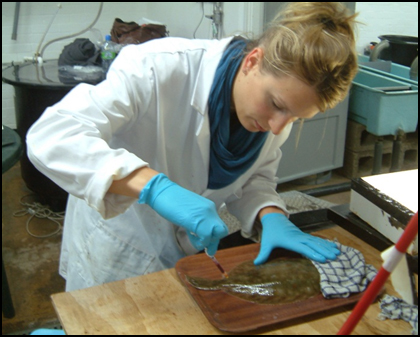
Dr Anna Sturrock blood sampling plaice ©Anna Sturrock

Scientists at the University of Southampton have found a way to pry into the private lives of fish – by looking in their ears!

By studying ear stones in fish, which act as tiny data recorders, scientists can now reveal migration patterns and even provide insights into their sex life.

Managing fish stocks in a sustainable way is a major challenge facing scientists, conservationists, policy makers and fishermen. To get the best results, accurate information about the movements of fish in the wild is needed but gathering this information is extremely difficult. Continue reading “What fish ears can tell us about sex, surveillance and sustainability”