Our December issue is out now!

This issue contains the latest methods in ecology and evolution. Read the last issue of the year to find out about this month’s featured articles and the article behind our cover! Featured Fast‐tracking ecological interpretation using bespoke quantitative large language models There is untapped potential to apply large language models (LLMs) to quantitative ecological and environmental datasets. Here, authors present a roadmap for designing and … Continue reading Our December issue is out now!

Workflows: A New Paper Type for Methods

Beginning in 2026, Methods in Ecology and Evolution will accept submissions of a new paper type – Workflows – for consideration for review and eventual publication in the journal. Up until now, we have generally considered manuscripts that describe a way to organise existing methods into a useful sequence to analyse an interesting set of data, make one’s computational life easier, or creating a package … Continue reading Workflows: A New Paper Type for Methods

Our November issue is out now!

This issue contains the latest methods in ecology and evolution. Read to find out about this month’s featured articles and the article behind our cover! Featured Current frontiers in the passive acoustic monitoring of bats Passive acoustic monitoring of bats is used in a growing number of studies in applied and basic research. Despite the publication of good-practice recommendations, several unsettled debates persist about the … Continue reading Our November issue is out now!

Our September issue is out now!

This issue contains the latest methods in ecology and evolution. Read to find out about this month’s featured articles and the article behind our cover! Featured DeepDiveR—A software for deep learning estimation of palaeodiversity from fossil occurrences The incompleteness of the fossil record presents a barrier to estimating changes in biodiversity which standard statistical methods struggle to account for. Here authors present DeepDiveR, an R package … Continue reading Our September issue is out now!

No training necessary: Shark tracking simplified

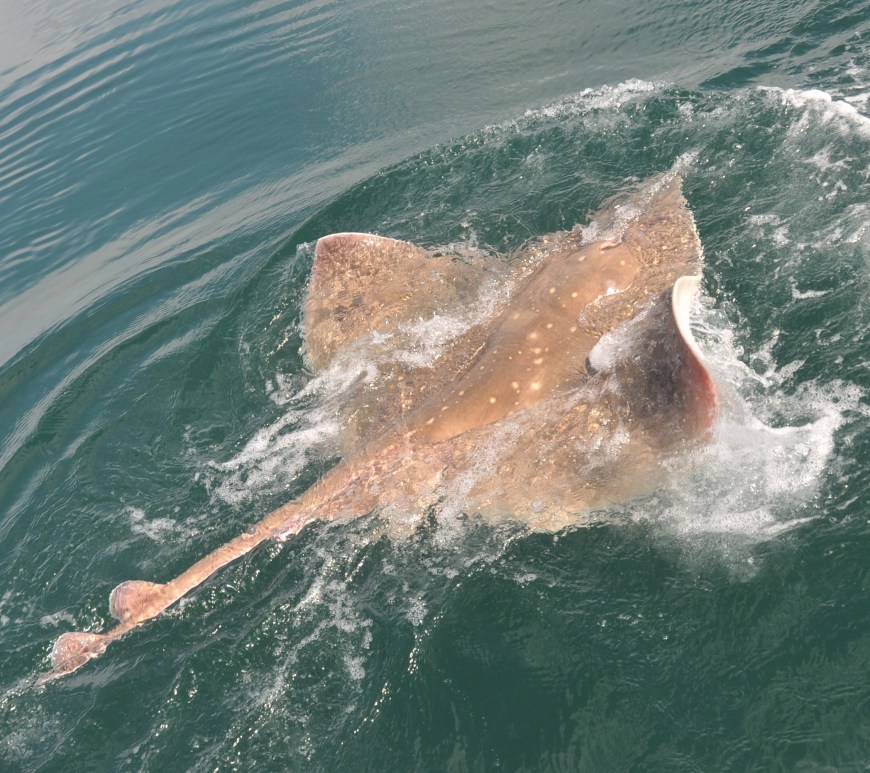
Post provide Chinmay Keshava Lalgudi. Drone imagery offers an efficient way to gather data on mobile animals. Drones are used for population surveys, creating 3D models of habitat, and even studying how animals move and behave in their environment. While collecting this data is relatively easy, manually annotating it is painstaking and slow. Analysing drone imagery can often mean spending hours in front of a … Continue reading No training necessary: Shark tracking simplified

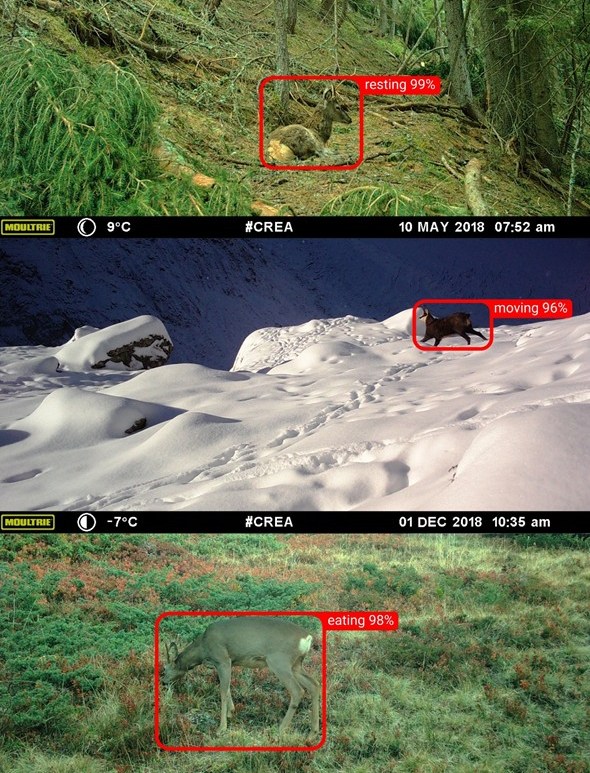
Can we identify animal behaviours from camera traps without training new AI models?

Post provided by Gaspard Dussert. My name is Gaspard Dussert, and I am a PhD student at the Université Lyon 1, working in the Laboratory of Biometry and Evolutionary Biology (LBBE). My research combines artificial intelligence (AI) with ecology, focusing on automating wildlife monitoring from camera trap images. Camera traps are motion-activated cameras placed in the wild. They are incredibly powerful tools in ecology, helping … Continue reading Can we identify animal behaviours from camera traps without training new AI models?

Our June Issue is out now!

This issue contains the latest methods in ecology and evolution, including papers from the special feature Innovation in Practice. Read to find out about this month’s featured articles and the article behind our cover! Featured ECKOchain: A FAIR blockchain‐based database for long‐term ecological data Open data practices in ecology are increasingly accepted, yet primary long-term ecological data remain hard to find. To incentivise open primary ecological … Continue reading Our June Issue is out now!

Improved order selection method for hidden Markov models: a case study with movement data.

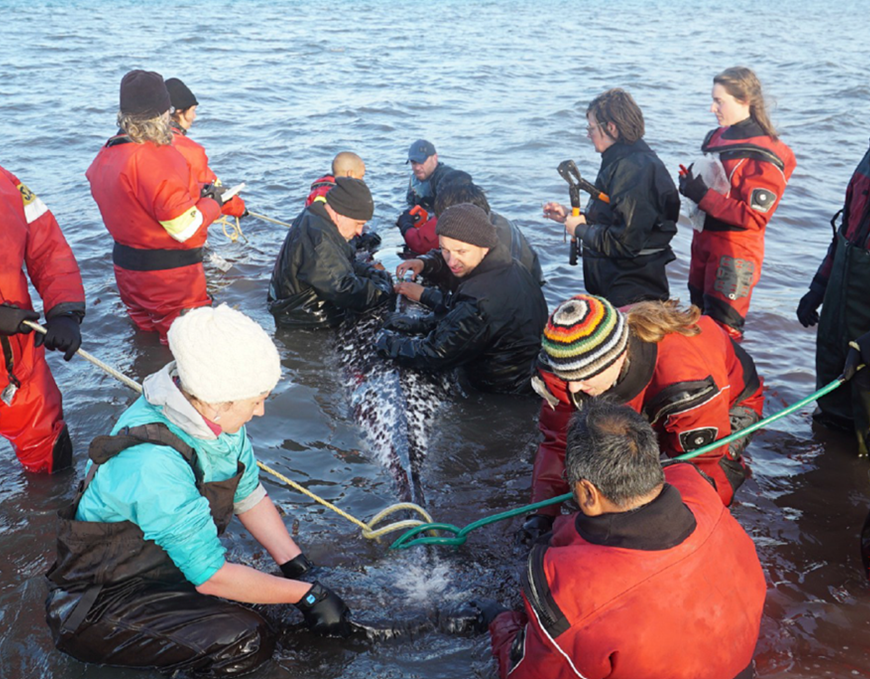
Post provided by Fanny Dupont. About the first author My PhD focuses on animal movement and the impact of vessels on Arctic marine mammals (lab website). Specifically, I develop statistical tools to analyse narwhal (Monodon monoceros) behaviour and assess the effects of increased shipping on marine ecosystems. I am co-supervised by Dr. Marie Auger-Méthé (University of British Columbia) and Dr. Marianne Marcoux (Fisheries and Oceans … Continue reading Improved order selection method for hidden Markov models: a case study with movement data.

Tracking animals with particles

Post provided by Edward Lavender, Andreas Scheidegger, Carlo Albert, Stanisław W. Biber, Janine Illian, James Thorburn, Sophie Smout, Helen Moor. It’s morning on Scotland’s west coast. In the Firth of Lorn, the deep-blue water sparkles in the early sunlight. Heading south, I glance back across the sea, taking in the snow-speckled mountains beyond. Two hundred metres below, I know the seascape is just as rugged. … Continue reading Tracking animals with particles

The best of both worlds: a predictive home range model for colonial animals combining biological realism with minimal data requirements.

Post provided by Holly Niven. I’m Holly, an ecology PhD student at the University of Glasgow, with a background in mathematics and physics. My research is in quantitative ecology, with a current focus on investigating the exposure of animals to disturbances in their environment and understanding the drivers of their population dynamics.  What are home ranges and why are they useful? Home ranges (HRs) describe … Continue reading The best of both worlds: a predictive home range model for colonial animals combining biological realism with minimal data requirements.