ANDe™: High‐Throughput eDNA Sampling in a Fully Integrated System

Current eDNA sampling technologies consist mainly of do‐it‐yourself solutions. The lack of purpose‐built sampling equipment is limiting the efficiency and standardization of eDNA studies. So, Thomas et al. (a team of molecular ecologists and engineers) designed ANDe™. In this video, the authors highlight the key features and benefits of ANDe™. This integrated system includes a backpack-portable pump that integrates sensor feedback, a pole extension with remote pump … Continue reading ANDe™: High‐Throughput eDNA Sampling in a Fully Integrated System

New Associate Editors

Today we are welcoming two new people to the Methods in Ecology and Evolution Associate Editor Board. Pierre Durand is joining us from the University of the Witwatersrand (South Africa) and Andrew Mahon joins from Central Michigan University (USA). You can find out more about Pierre and Andrew below. Pierre Durand “My research is broadly focussed on the evolution of complexity. Many of my projects are related to the evolutionary … Continue reading New Associate Editors

The Field Guide to Sequence-Based Identification of Biodiversity: An Interview with Simon Creer

In a new Methods in Ecology and Evolution podcast, Georgina Brennan (Bangor University) interviews Simon Creer (Bangor University) about his article ‘The ecologist’s field guide to sequence-based identification of biodiversity‘. They talk about about where the idea for the paper came from, what it’s aim are and who will benefit from it. We hear how new sequences can improve and enhance current biomonitoring programmes (and make them … Continue reading The Field Guide to Sequence-Based Identification of Biodiversity: An Interview with Simon Creer

Why Do We Need Digital Elevation Models to Infer the Local Adaptation of Alpine Plants?

Post provided by Kevin Leempoel

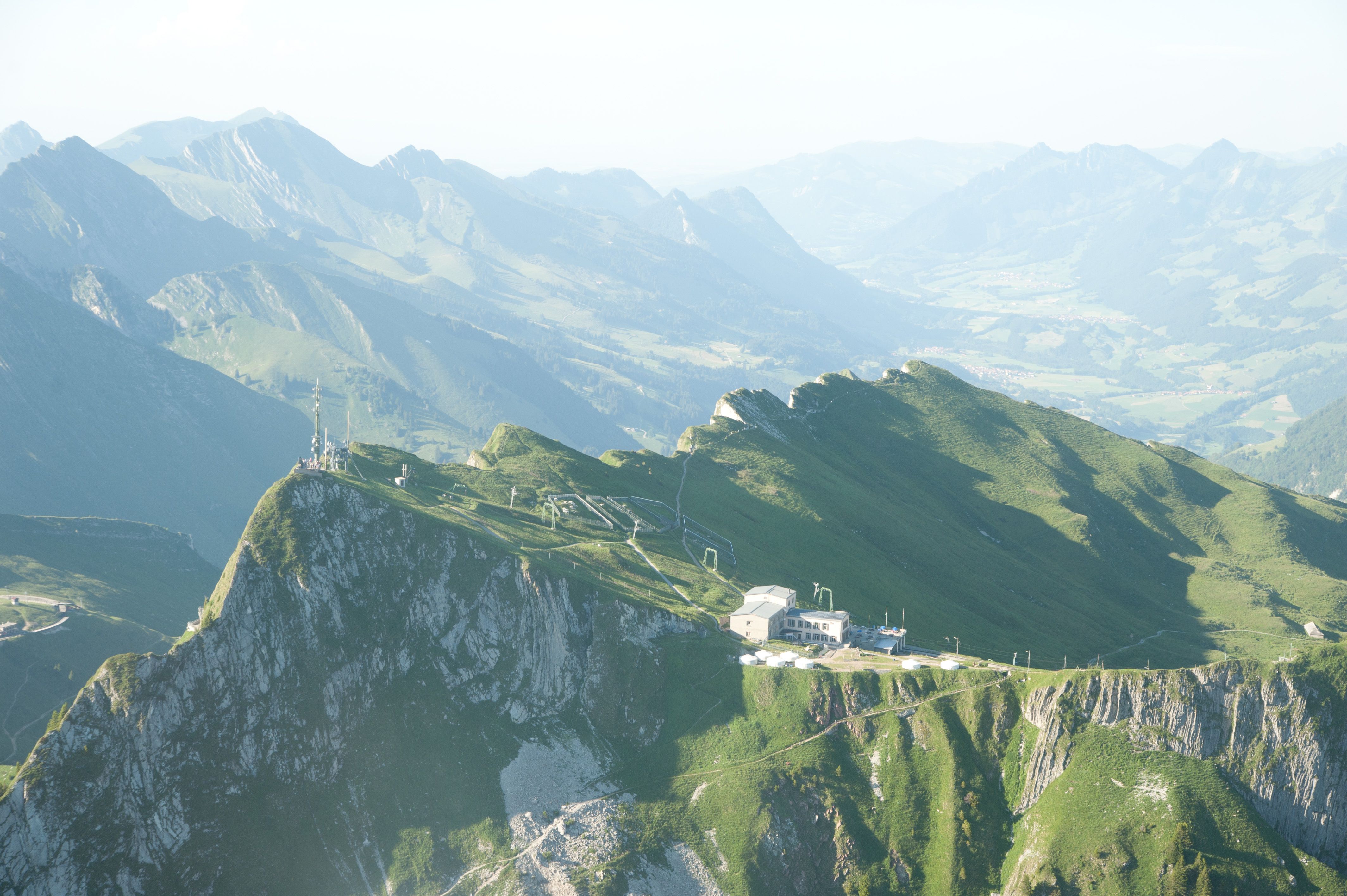
dsc_4214-crest-flight-27-06-11It’s not easy to characterise the local environment of species living in mountains because these habitats are highly heterogeneous. At a large scale, we typically assume that temperature varies with altitude, but at a local scale, we understand that exposure to wind or being in the shade has a great influence on climatic conditions. If you go from the south-facing to the north-facing side of a mountain, it can be easily 5°C colder. If we can feel that, so can the organisms that live up there. Plants in particular are submitted to tremendous climatic variations over a year. What we want to know is: how did they adapt to these climatic variations and how localised is their adaptation?

Overcoming the Challenges of Measuring Local Adaptation

We don’t know much about how organisms adapt locally because it’s so difficult to measure the environmental conditions that these plants are facing. Existing weather stations can’t capture micro-habitat conditions because they are few and far between. What we can do instead, is use topographic models of mountains to model their environment. After all, if orientation, slope or shade have an impact on climatic conditions, why couldn’t we use them to model local variations in temperature for example? Continue reading “Why Do We Need Digital Elevation Models to Infer the Local Adaptation of Alpine Plants?”

Issue 6.3

Issue 6.3 is now online!

The March issue of Methods is now online!

We have three freely available Applications articles in this issue. Anyone can access these with no subscription required and no charge to download.

TR8: This R package was built to provide plant scientists with a simple tool for retrieving plant functional traits from freely accessible online traitbases.

StereoMorph: A new R package for the rapid and accurate collection of 3D landmarks and curves using two standard digital cameras.

MotionMeerkat: A new standalone program that identifies motion events from a video stream. This tool reduces the time needed to review videos and accommodates a variety of inputs.

This month we have a total of FIVE Open Access articles. That makes eight articles in this issue of Methods in Ecology and Evolution that you can read for free!

Continue reading “Issue 6.3”