How do you measure the movement of tiny insects?

Post provided by Yash Sondhi, Hailey Dansby, Angela Nicoletti, Elina Barredo, and Samuel T. Fabian.

Studying animal behaviour or ecology can involve measuring movement patterns of small animals. Observing behaviours like foraging, pollination, circadian activity or predation is laborious because it involves long periods of waiting for the behaviour and triggering a camera or poring over hours of video footage to find the behaviour. Existing automated motion tracking tools for small animals are expensive and unsuitable for field use, or need specific conditions like bright light to work. In this blog post, Yash Sondhi and co-authors discuss their tool “Portable Locomotion Activity Monitor (pLAM)” which enables automated monitoring small animal motion tracking in a cost-effective manner, suitable for lab or field use and can track motion under any light environment.

Continue reading “How do you measure the movement of tiny insects?”
Automatic Camera Monitoring: A Window into the Daily Life of Pollinators

Post provided by Ronny Steen

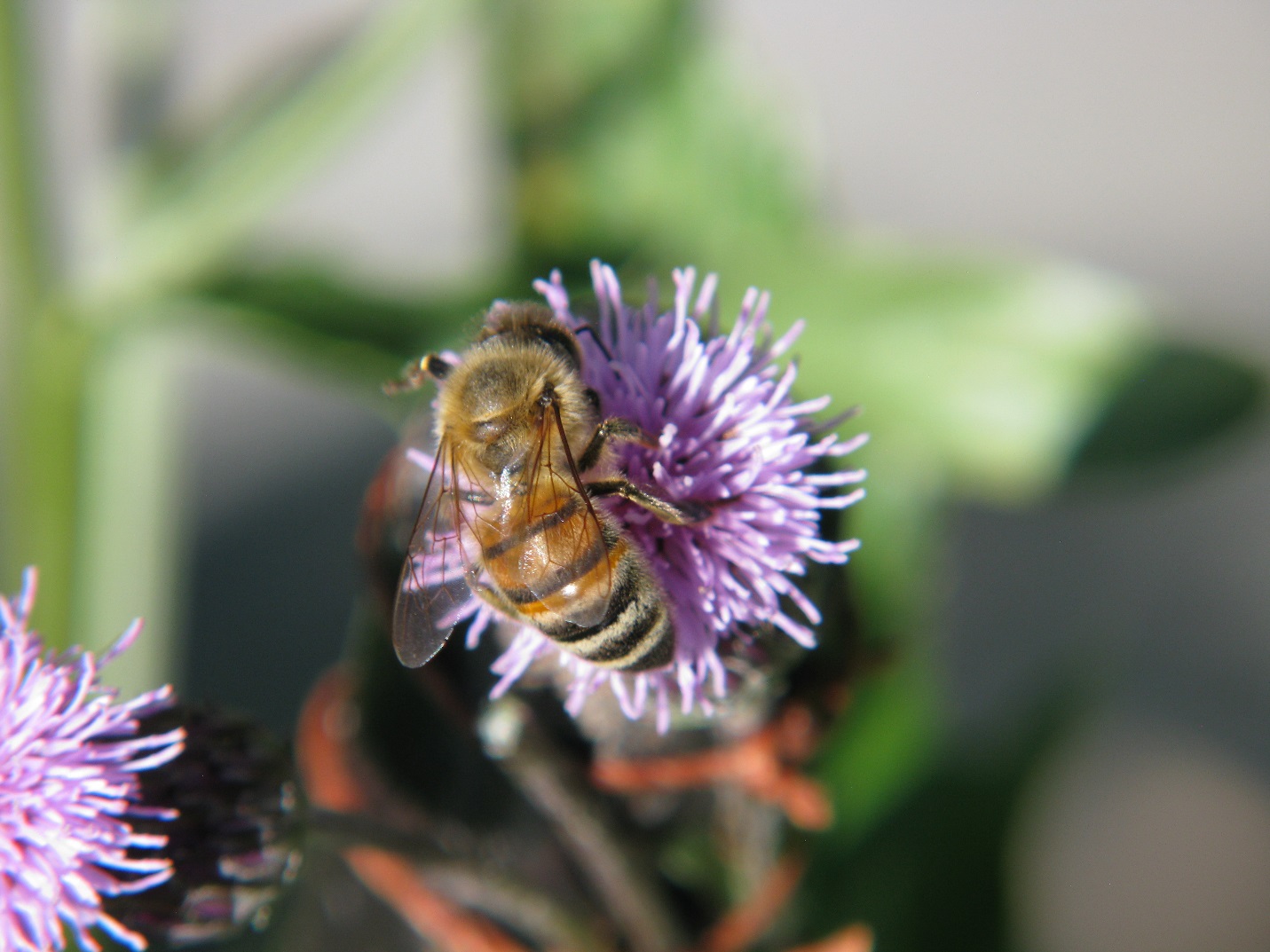
Image from the Canon PowerShot camera with CHDK script ‘Motion Detect Plus’. The thistle flower being visited by ♀ honeybee Apis mellifera L.

Pollinators have fascinated ecologists for decades, and they have traditionally been monitored by on-site human observations. This can be a time-consuming enterprise and – more importantly – species identification and recordings of behaviour have to be registered at the time of observation. This has two complications:

  1. While writing notes, or recording them electronically, the observer cannot continue focusing on the animal or behaviour in question.
  2. Such data then have to be transcribed, with the risk of making transcription errors.

Bringing Monitoring into the 21st Century

Although on-site human observations have predominated, today’s widespread availability of digital monitoring equipment has enabled unique data on flower visitors to be collected. In my research, I have used a time-efficient automated procedure for monitoring flower-visiting animals – namely foraging bumblebees visiting focal white clovers and honeybees visiting thistles.

Continue reading “Automatic Camera Monitoring: A Window into the Daily Life of Pollinators”