Non-invasive playback experiments allow for rigorous studies of wildlife interactions

Post provided by Meredith Palmer, Chris “Akiba” Wang, Jacinta Plucinski & Robert M. Pringle

The BoomBox ABR deployed with a Bushnell TrophyCam camera trap in Gorongosa National Park, Mozambique

Camera traps are a valuable tool in ecological research, especially for capturing large quantities of information on the behaviour of an array of wildlife within an ecological community. Camera traps are seldom used to experimentally testing key animal behaviour hypotheses, despite the potential offered by the non-invasive technology. In this blog post, Dr. Meredith Palmer and co-authors discuss the application of the ‘BoomBox’ camera trap module that allows researchers to conduct a unique suite of manipulative experiments on free-living species in complex environments, as published in their Methods in Ecology and Evolution article ‘BoomBox: An Automated Behavioral Response (ABR) Camera Trap Module for Wildlife Playback Experiments’.

Continue reading “Non-invasive playback experiments allow for rigorous studies of wildlife interactions”

Cover Stories: Making strides towards weighing whole wildlife populations in 3D

Post provided by Michelle Shero

A grey seal pup next to the unoccupied aerial system (UAS) used in this study. Photo credit: Michelle Shero.

To survive and reproduce, all animals must be able to extract sufficient energy from their environment. It takes energy to forage, but animals can recover those calories if they can successfully capture enough prey – and the animal’s weight tells us about its net energetic costs versus gains. Animals that remain in positive energy-balance can then afford to devote more energy towards growth and reproduction. In this blog post, Michelle Shero of Woods Hole Oceanographic Institution guides us through a new method outlined in her team’s recent Methods in Ecology and Evolution paper ‘Tracking wildlife energy dynamics with unoccupied aircraft systems and three-dimensional photogrammetry’. The team uses drone imagery to 3-D model and ‘weigh’ large groups of free-living animals.

Continue reading “Cover Stories: Making strides towards weighing whole wildlife populations in 3D”

DNA from Bite Marks: An Amplicon Sequencing Protocol for Attacker Identification

Post provided by Daniela C. Rößler 

© Daniela C. Rößler

Understanding interactions between predators and prey is of interest to a variety of research fields. These interactions not only hold valuable information about ecological dynamics and food webs but are also crucial in understanding the evolution of predatory and anti-predator traits such as vision, visual signals and behavior. Thus, the “who attacks what and why” is key to approach broad evolutionary and ecological questions.

Continue reading “DNA from Bite Marks: An Amplicon Sequencing Protocol for Attacker Identification”

Squeezing the Lemon: Getting the Most from a Simple Acoustic Recogniser

Post provided by Nick Leseberg

Night parrot (Photo credit: Nick Leseberg).

Presenting the new MEE articleUsing intrinsic and contextual information associated with automated signal detections to improve call recognizer performance: A case study using the cryptic and critically endangered Night Parrot Pezoporus occidentalis, Nick Leseberg shares the methods behind the hunt for the elusive night parrot.

Continue reading “Squeezing the Lemon: Getting the Most from a Simple Acoustic Recogniser”

Bats aren’t just for Halloween: Insectivorous Bats in North America

Post provided by CHLOE ROBINSON (@CVROBINSON92)

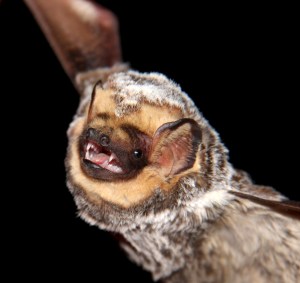
The Hoary bat (Lasiurus cinereus) is the most widespread bat in the US. ©Veronica Zamora-Gutierrez

Hello! This is my first post as Blog Editor for Methods in Ecology and Evolution and I’m thrilled to be starting with an exciting, thought-provoking topic in the wake of Halloween. But first, let me introduce myself. I currently work as a Postdoctoral Fellow and Project Manager in the Hajibabaei Lab at the Centre for Biodiversity Genomics (University of Guelph, ON, Canada) and my undergraduate and postgraduate degrees are both from Swansea University (UK). My research background is largely focused around the application of environmental DNA (i.e. free DNA found in natural environments) to detect and monitor aquatic species and answer ecological questions through both single-species detection and DNA metabarcoding.

At the moment, I’m working on the STREAM project, which combines community-based monitoring with DNA metabarcoding to gain a better understanding of freshwater health across Canada. One of my favourite parts about being in this position is the opportunity to get involved with other research being conducted in the Hajibabaei Lab. This is how I branched out into the wonderful world of bat ecology. Continue reading “Bats aren’t just for Halloween: Insectivorous Bats in North America”