Do-it-yourself fishing and climate scenario experiments with a marine ecosystem model

Post provided by Michael Heath, Tom Doherty,  Jack Laverick & Douglas Speirs

Herring is a planktivorous fish species. Credit: Atle Grimsby.

World Fisheries Day, celebrated on November 21, is dedicated to highlighting the critical importance of healthy ocean ecosystems and to ensure sustainable stocks of fisheries in the world. Pressure to find ecologically sustainable strategies for harvesting food from the sea is getting ever stronger, especially in the face of changing climate. However, the question is complex because the harvestable species live in a complex food web where everything is directly or indirectly connected to everything else. Models for carrying out scenario analyses on the impact of fisheries management options on food webs are usually the preserve of trained experts.

In this blog post, Michael Heath of the University of Strathclyde guides us through how using a new marine modelling package and online app, published in their recent Methods in Ecology and Evolution paper ‘StrathE2E2: An R package for modelling the dynamics of marine food webs and fisheries.’, makes these analyses easily accessible to anyone with just basic website skills.

Continue reading “Do-it-yourself fishing and climate scenario experiments with a marine ecosystem model”
World Fisheries Day 2020: Cleaning up the Act of Salmon Fisheries?

Post provided by Ben Whittaker and Hannah L. Harrison

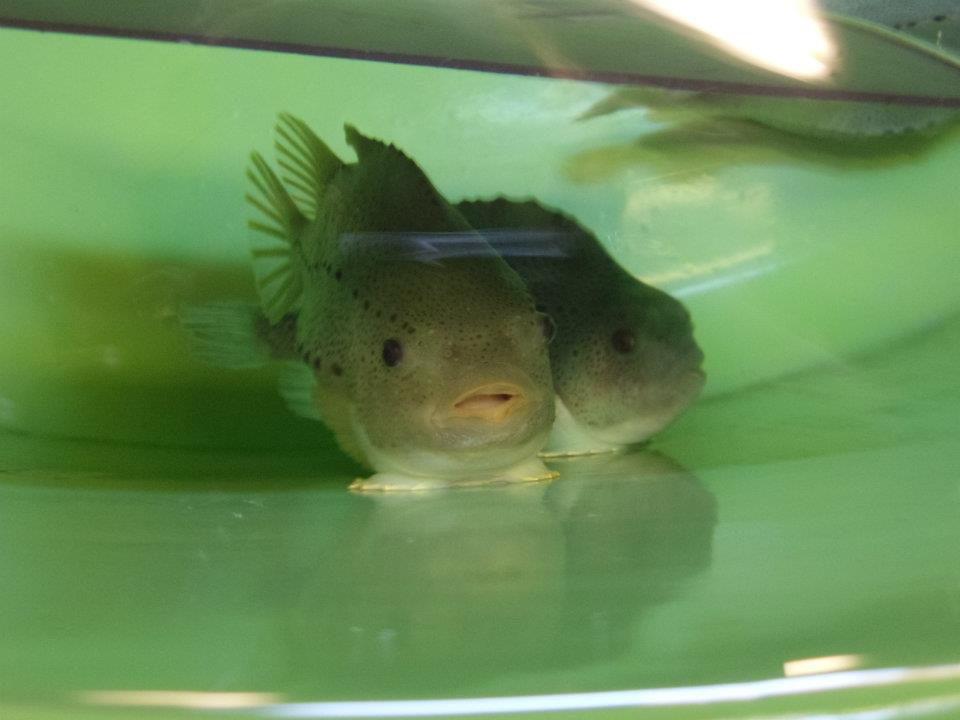
Juvenile lumpfish in hatchery facility. Credit: Emily Costello (UK).

World Fisheries Day is celebrated annually on 21st November, to reflect on the ever-increasing knowledge about fishing, fishers, coastal communities, and the status of the oceans and fish stocks. This year, the Canadian Wildlife Federation are highlighting their work towards ending the current practice of salmon aquaculture, via the gradual phasing out of open-pen finfish aquaculture (OPFA) to prevent further negative impacts of the practice on wildlife and marine habitats. One of the major impacts of salmon aquaculture on wildlife, is the transmission of sea lice to wild salmonid populations, which has resulted in mass mortalities of wild fish. The most efficient control method to reduce sea-lice in farms is arguably the deployment of cleaner fish, however, there is little information on how this widely used method impacts individual welfare and worldwide sustainability of cleaner fish stocks. In this blog post, Dr Ben Whittaker and Dr Hannah L. Harrison, discuss the current status of cleaner fish fisheries.

Continue reading “World Fisheries Day 2020: Cleaning up the Act of Salmon Fisheries?”