World Wetlands Day: Wetlands and Water

Post provided by Chloe Robinson
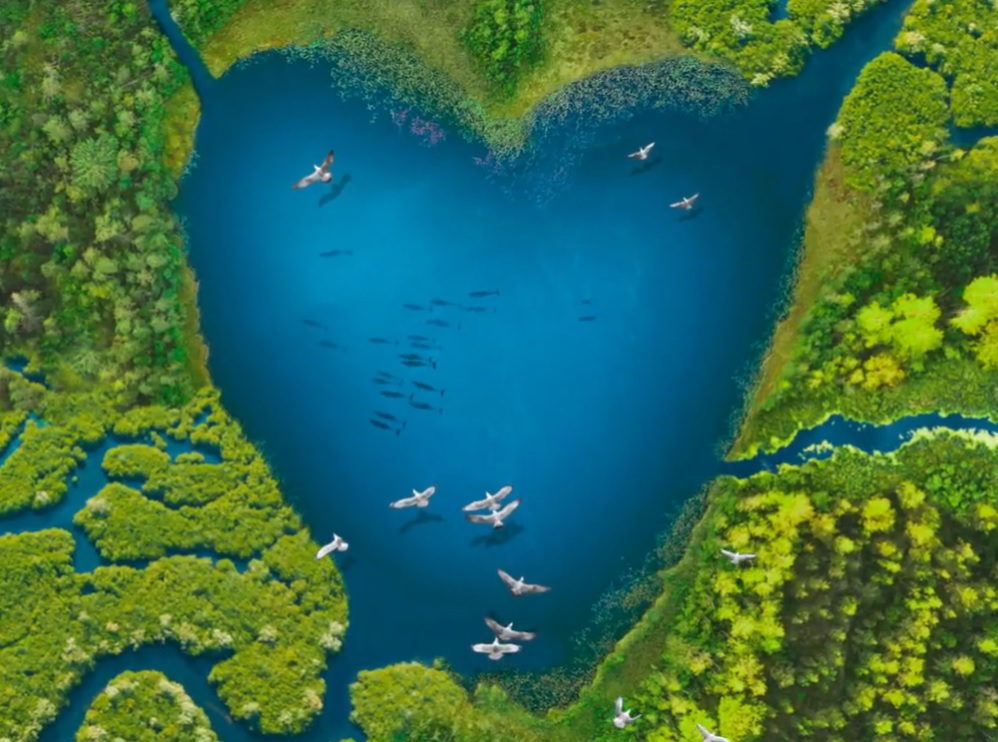
World Wetlands Day 2021 shines a spotlight on wetlands as a source of freshwater and encourages actions to restore them and stop their loss. Credit: Ramsar.org.

It doesn’t come as a surprise that healthy wetland systems are linked with freshwater quality. Wetlands form vital habitats for global biodiversity, help combat climate change through storage of carbon and offer defenses against flooding. Freshwater resources, including wetlands, are under increasing pressure from over-abstraction, pollution and habitat destruction among other threats, which is directly contributing to the current global freshwater crisis that threatens people and our planet.

February 2nd each year is World Wetlands Day, which aims to raise global awareness about the vital role of wetlands. This year, the 2021 campaign highlights the contribution of wetlands to the quantity and quality of freshwater on our planet. Water and wetlands are connected in an inseparable co-existence that is vital to life, our well-being, and the health of our planet. In this blog post, Associate Editor Chloe Robinson, will explore why wetlands are so important and the new DNA-based methods being used to monitor wetland health.

Continue reading “World Wetlands Day: Wetlands and Water”

Biomonitoring Pollution in Wetlands: A New Method for More Reliable Interpretation of Chemical Data

Post provided by Mark Gillingham and Fabrizio Borghesi

Wetlands tend to accumulate considerable anthropogenic pollution.

All living organisms are dependent on trace elements (TEs), including metals, that are acquired in very small quantities through their environment or diet. Most TEs are essential for growth, development and physiology of the organism, but excessive intake can be detrimental for animals and plants.  Some TEs – especially heavy metals such as mercury, cadmium, lead and others – are generally toxic though. This toxicity occurs because species’ natural mechanisms fail to excrete excess TEs quickly enough for their metabolism to cope. TEs are present in the environment at different concentrations, either through natural processes or anthropogenic processes (i.e. pollution).

Since the industrial revolution, pollution from human activities has dramatically increased the concentrations of TEs in the natural environment. TEs from pollution tend to persist for a long time on the top layer of soils and sediments, because they do not undergo microbial degradation. As a consequence they tend to enter the food web quicker than the same elements of natural origin.

Some natural environments are more vulnerable to toxic effects of TEs. For instance, wetlands are geochemical endpoints of large river systems that often flow near or through cities, roads, factories, industries, cultivated lands, and/or mines, so they tend to accumulate considerable anthropogenic pollution. Vulnerable habitats like wetlands need to be closely monitored in order to assess the environmental health of these ecosystems. For this kind of monitoring we need reliable methods to measure TEs exposure, intake and bioaccumulation. Continue reading “Biomonitoring Pollution in Wetlands: A New Method for More Reliable Interpretation of Chemical Data”

Celebrating Wetlands Today, Protecting Them for Tomorrow

Post Provided by JULIA CHERRY, UNIVERSITY OF ALABAMA

Today is World Wetlands Day, a day to raise awareness about wetlands and the many ecosystem services that they provide. Wetlands are broadly defined as areas saturated or inundated with water for periods long enough to generate anaerobic soils and support water-loving plants. They include bogs, swamps, floodplain forests, marshes and mangroves.

Some may wonder why these habitats deserve their own day of recognition, as wetlands can evoke images of the soggy, unpleasant wild places– the “ghast pools” of Dante’s Divine Comedy or the “waste places” of Beowulf. Unfortunately, these descriptions overshadow the true beauty and value of the world’s diverse wetland ecosystems. For those of us dedicated to researching and enjoying wetlands, these areas are worth appreciating every day of the year for numerous reasons.

In honor of World Wetlands Day, I will make the case for wetlands and highlight an example of a new research tool designed to understand how coastal wetlands may respond to sea-level rise.

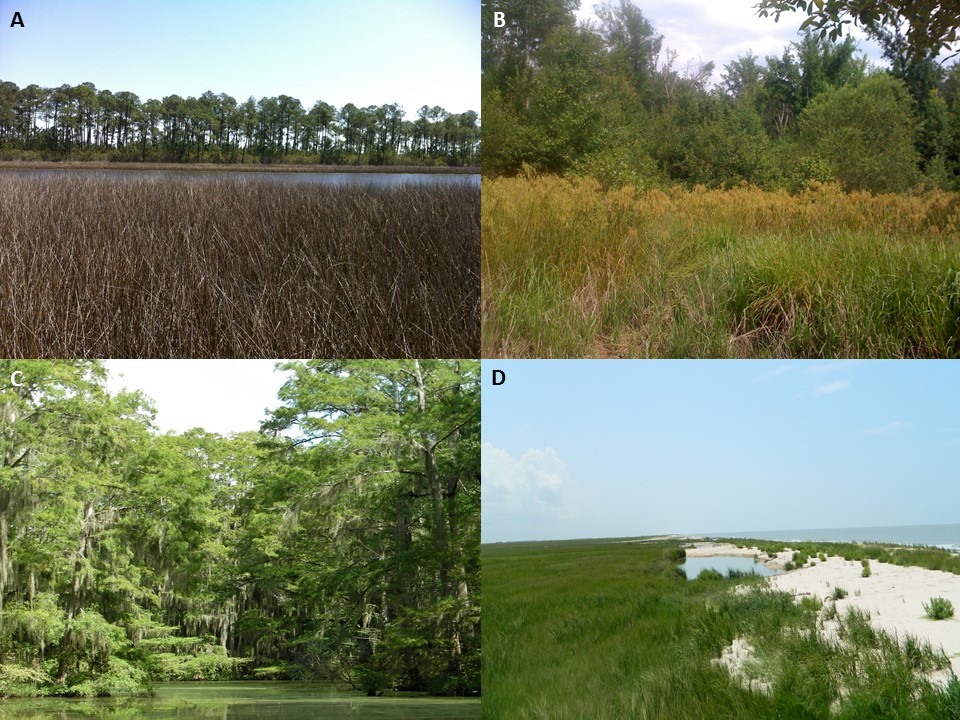
Wetland habitats, including (A) a marine-dominated coastal marsh and maritime pine island complex (Grand Bay National Estuarine Research Reserve, Mississippi, USA), (B) a freshwater floodplain marsh (Hale County, Alabama, USA), (C) a cypress-tupelo swamp (Perry Lakes, Alabama, USA), and (D) a Gulf of Mexico salt marsh (Rockefeller Wildlife Refuge, Louisiana, USA). ©Julia Cherry

Continue reading “Celebrating Wetlands Today, Protecting Them for Tomorrow”