What is Beta Diversity?

Post provided by Dr Andrés Baselga

Dr Andrés Baselga

A key property of biodiversity is that it is not evenly distributed around the world. In other words, different sites are usually  home to different biological communities. Quantifying the differences among biological communities is a major step towards understanding how and why biodiversity is distributed in the way it is.

The term beta diversity was introduced by R.H. Whittaker in 1960. He defined it as “the extent of change in community composition, or degree of community differentiation, in relation to a complex-gradient of environment, or a pattern of environments”. In his original paper, Whittaker proposed several ways to quantify beta diversity. In its simplest form (which we will call strict sense or multiplicative beta diversity), beta diversity is defined as the ratio between gamma (regional) and alpha (local) diversities (Whittaker, 1960; Jost, 2007). Therefore, it is the effective number of distinct compositional units in the region (Tuomisto, 2010). Essentially, beta diversity quantifies the number of different communities in the region. So it’s clear that beta diversity does not only account for the relationship between local and regional diversity, but also informs about the degree of differentiation among biological communities. This is because alpha and gamma diversities are different if (and only if) the biological communities within the region are different.

It’s easy to demonstrate how beta diversity varies from the minimum to the maximum differentiation of local assemblages in a region. For simplicity, we will quantify biological diversity as species richness (number of species), but it’s important to remember that alpha, beta and gamma diversities can also be defined to account for richness and relative abundances (see Jost, 2007 for a detailed explanation). When local assemblages are all identical (minimum differentiation), alpha diversity equals gamma diversity, and beta diversity equals 1 (figure below).

beta1

Continue reading “What is Beta Diversity?”

International Day for Biological Diversity 2015

Happy International Day for Biological Diversity everyone!

As you may know, today (Friday 22 May) is the United Nations Day for Biodiversity and we are celebrating by highlighting some of the best papers that have been published on biodiversity in Methods in Ecology and Evolution. This is by no means an exhaustive list and you can find many more articles on similar topics on the Wiley Online Library (remember, if you are a member of the BES, you can access all Methods articles free of charge).

If you would like to learn more about the International Day for Biological Diversity, you may wish to visit the Convention on Biological Diversity website, follow them on Twitter or check out today’s hashtag: #IBD2015.

Without further ado though, here are a few of the best Methods papers on Biological Diversity:

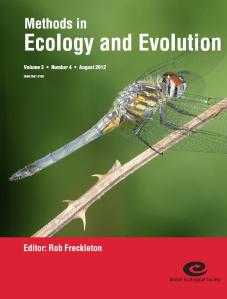
Methods Cover - August 2012Biodiversity Soup

We begin with an Open Access article from one of our Associate Editors, Douglas Yu (et al.). This article was published in the August issue of 2012 and focuses on the metabarcoding of arthropods. The authors present protocols for the extraction of ecological, taxonomic and phylogenetic information from bulk samples of arthropods. They also demonstrate that metabarcoding allows for the precise estimation of pairwise community dissimilarity (beta diversity) and within-community phylogenetic diversity (alpha diversity), despite the inevitable loss of taxonomic information.

Continue reading “International Day for Biological Diversity 2015”

Issue 6.5

Issue 6.5 is now online!

The May issue of Methods is now online!

We have two freely available articles this month: one Application and one Open Access Article.

rSPACE: An open-source R package for implementing a spatially based power analysis for designing monitoring programs. This method incorporates information on species biology and habitat to parameterize a spatially explicit population simulation.

Tim Lucas et al. provide this month’s Open Access article: A generalised random encounter model for estimating animal density with remote sensor data. The authors have developed a Generalised Random Encounter Model (gREM) to estimate absolute animal density from count data from both camera traps and acoustic detectors. They show that gREM produces accurate estimates of absolute animal density for all combinations of sensor detection widths and animal signal widths. This model is applicable for count data obtained in both marine and terrestrial environments, visually or acoustically. It could be used for big cats, sharks, birds, echolocating bats, cetaceans and much more. Continue reading “Issue 6.5”

The Delphi Technique: Unleashing the Power of Structured Collaboration in Anonymity

Post provided by Nibedita Mukherjee (author of The Delphi technique in ecology and biological conservation)

The quirky nature of decision making

Two heads are often better than one in decision making. Several heads might have an even higher probability of being better than one. However, people in a group often have different modes of thinking or problem solving, alternate reference frames, subjective biases and varying levels or domains of expertise. How do we harness these messy thought processes and channel them for effective decision-making for biodiversity management?

© Henry Martin (The New Yorker Collection/The Cartoon Bank)

Continue reading “The Delphi Technique: Unleashing the Power of Structured Collaboration in Anonymity”