Post provided by Meng Yao
Biodiversity is disappearing at an alarming rate worldwide. To protect it, we first need to monitor it—but tracking species traditionally requires significant time, expertise, and often expensive equipment. What if we could detect the presence of plants and animals just by sampling the air around us?
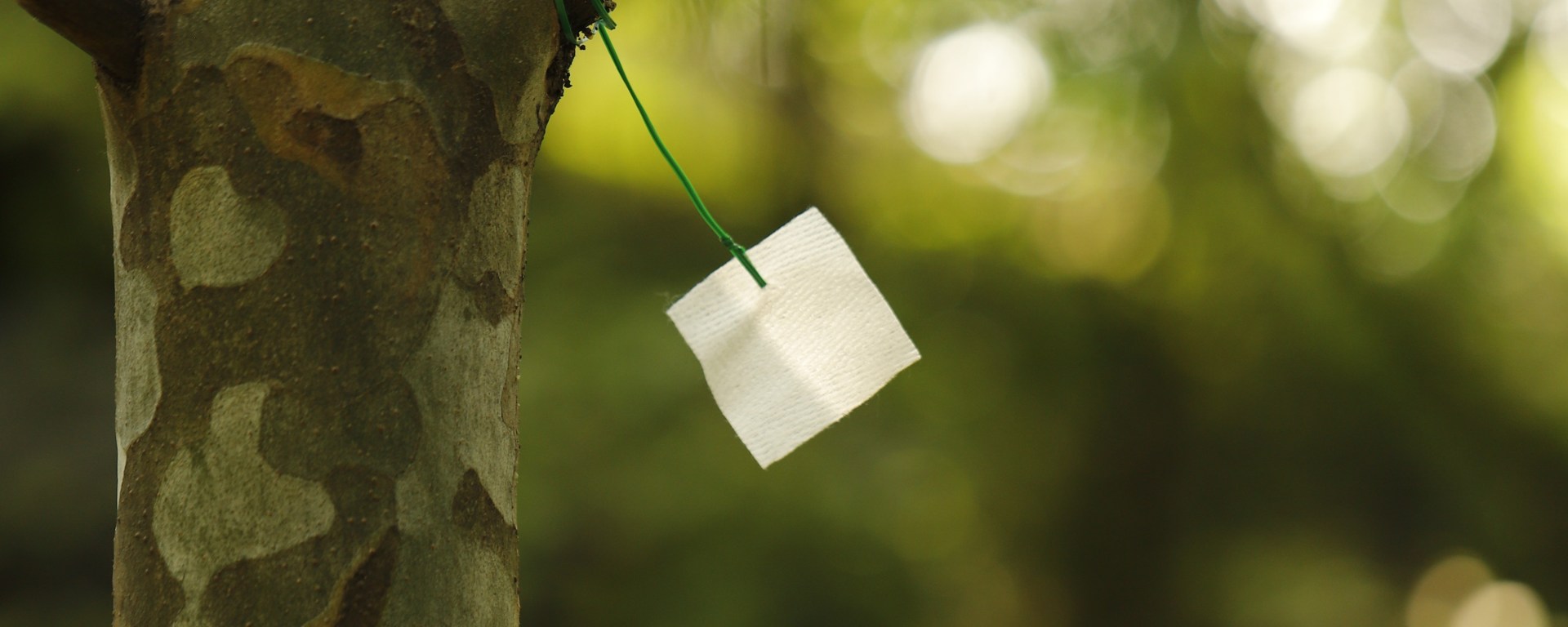
As the principal investigator of the molecular ecology and biodiversity laboratory at Peking University, my team and I are dedicated to studying biodiversity and community dynamics using environmental DNA (eDNA)—tiny genetic traces organisms leave in their surroundings. In our latest research, we discovered that airborne eDNA, floating all around us, holds valuable clues about local biodiversity. And the most effective tool to collect it? A humble electrostatic dust cloth, the kind you might use for household cleaning.
The Invisible Genetic Soup in the Air
Every living thing—plants, animals, fungi— sheds DNA into the environment. When these genetic fragments drift into the air, they become airborne eDNA, offering a powerful way to detect species without ever seeing them.
But there’s a catch: airborne eDNA is highly dilute, making collection difficult. Current methods rely on bulky, expensive equipment or powered air pumps, limiting large-scale applications. We sought a simpler, cheaper, and more versatile solution—one that doesn’t require complex setups or electricity.
The Surprising Winner: A Household Dust Cloth
We tested various materials—from lab-grade filters to sticky microscope slides—by hanging them outdoors on our university campus in Beijing and allowing them passively collect airborne eDNA over several days. After extracting the eDNA, we analysed its origins using metabarcoding PCR (a technique to amplify DNA fragments from specific biological groups) and high-throughput sequencing.

The results were remarkable:
- In just a few days, we detected 485 plant and 132 vertebrate species at a single site.
- Many insect-pollinated plants (not just wind-pollinated plants, which are expected to produce a large amount of pollen) appeared in our samples.
- The best-performing material? Electrostatic dust cloths—affordable, durable, and widely available.

Surprisingly, longer sampling times didn’t always yield more species. Instead, we found that airborne eDNA changes rapidly, with daily turnover in plant DNA. This suggests that frequent, short sampling may be key to tracking real-time biodiversity shifts.
A Future of DIY Biodiversity Monitoring?
Imagine a world where anyone could sample the air to monitor local wildlife, allergens, or even pathogens—no lab equipment needed. Our method paves the way for large-scale, citizen-powered eDNA projects. In fact, we’ve already launched a nationwide campaign in China, inviting volunteers to collect airborne DNA with the simple samplers we developed.
The next steps? Understanding how eDNA is released and degrades in the air will help us better interpret these genetic breadcrumbs. But one thing is already clear: biodiversity monitoring has never been this simple.
Want to Try It Yourself?
Curious about airborne eDNA? Our paper includes a simple protocol—grab a dust cloth, hang it outside, and discover what DNA you can catch!
Read the full paper here.

 Methods Blog