This issue contains the latest methods in ecology and evolution. Read to find out about this month’s featured articles and the article behind our cover!
Featured
Empirical ecology to support mechanistic modelling: Different objectives, better approaches and unique benefits
Making mechanistic models credible requires empirical studies, but traditional study topics and designs often do not support them well. The models we use for modern problems need empirical studies that provide understanding of life history and autecology of study species, identify general patterns useful for model design and evaluation, collect data of kinds that models show are important and develop submodels and theory for individual-level mechanisms. Ecologists can better produce such knowledge via research that: (a) is interdisciplinary and across-level, often designed to understand just enough about individuals to support individual-based models of populations and communities; (b) is designed to quantify relationships across broad ranges, instead of testing statistical hypotheses; (c) emphasizes relevance and realism over precision; and (d) includes stressful conditions relevant to modern management challenges.
Particle algorithms for animal movement modelling in receiver arrays
Particle filters and smoothers are sequential Monte Carlo algorithms used to fit non-linear, non-Gaussian state-space models. These algorithms are well placed to fit process-oriented models to animal-tracking data, especially in receiver arrays, but to date they have received limited attention in the ecological literature. Lavender et al. introduces a Bayesian filtering–smoothing algorithm that reconstructs individual movements and patterns of space use from animal-tracking data, with a focus on passive acoustic telemetry systems. This study sets a new state-of-the-art for movement modelling in receiver arrays. Particle algorithms provide a robust, flexible and intuitive modelling framework with potential applications in many ecological settings.
patter: Particle algorithms for animal tracking in R and Julia
Fitting state-space models to animal-tracking data can be difficult and computationally expensive. Here, Lavender et al. introduce patter, a package that provides particle filtering and smoothing algorithms that fit Bayesian state-space models to tracking data, with a focus on data from aquatic animals in receiver arrays. In two examples, authors demonstrate how to implement patter to reconstruct the movements of a tagged animal in an acoustic telemetry system from acoustic detections and ancillary observations. patter facilitates robust, flexible and efficient analyses of animal-tracking data. The methods are widely applicable and enable refined analyses of space use, home ranges and residency.

The Benthic Underwater Microscope imaging PAM (BUMP): A non-invasive tool for in situ assessment of microstructure and photosynthetic efficiency
Essential to life on Earth, marine photosynthesis is of paramount importance. Photosynthesis occurs in spatially discrete microscopic entities at various levels of biological organization. in situ photosynthetic efficiency mapping on appropriate scales holds great promise for learning about these processes. To achieve this goal, Ben-Zvi et al. designed, fabricated, and tested an underwater microscope that incorporates standard colour, epifluorescence, and variable chlorophyll afluorescence imaging with nearly micron spatial resolution that resolves the structure and photosynthetic efficiency of benthic organisms. The imaging system enables research never before possible on the health and physiology of benthic aquatic organisms in situ, placing it in the context of their physical and biological environment.

Toward a unified approach to modelling adaptation among demographers and evolutionary ecologists
Demographic and evolutionary modelling approaches are critical to understanding and projecting species responses to global environmental changes. Here, authors develop a new EvoDemo hyperstate matrix population model (EvoDemo-Hyper MPM) that incorporates the genetic inheritance of quantitative traits, enabling fast computation of evolutionary and demographic dynamics. They evaluate EvoDemo-Hyper MPM against individual-based simulations and provide analytical approximations for adaptation rates across six distinct scales in response to selection. Their results demonstrate that EvoDemo-Hyper MPM provides accurate, computationally efficient solutions, closely matching outcomes from individual-based simulations and analytical approximations under similar biological conditions.
Cover Image

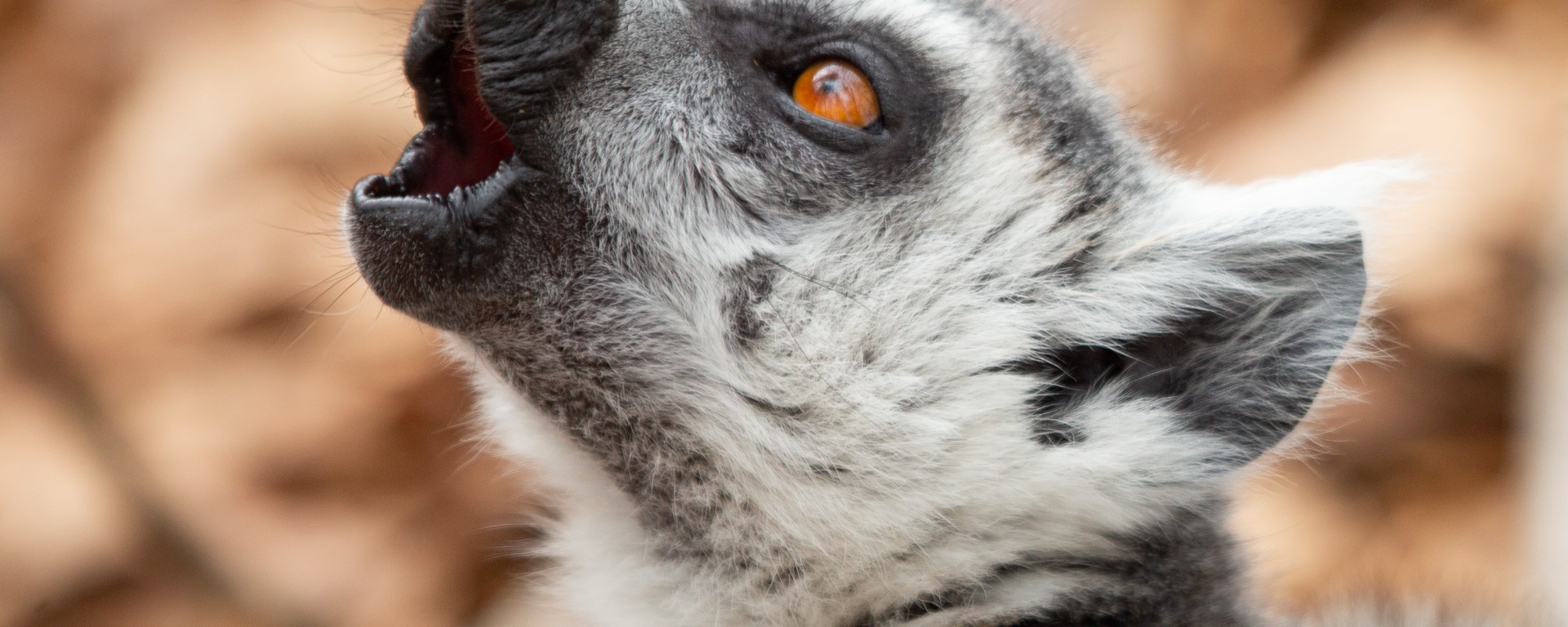
This month’s cover features a ring-tailed lemur (Lemur catta) producing a contact call to nearby conspecifics. Such vocalisations carry key information, including the identity of the caller – an essential element in many studies of animal communication.
Automated acoustic analysis, including machine learning, is increasingly used in the study of animal communication, but the diversity of methods used across studies has made cross-species comparisons difficult. In their article, Wierucka et al. systematically evaluate various feature extraction and classification techniques used for determining caller identity in vocalisations, across 16 mammalian datasets. They show that using Mel-frequency cepstral coefficients or random forest classifiers yields more consistent caller identification accuracy, regardless of species or sample size. By identifying robust, standardised approaches, this work lays the foundation for more comparable and reproducible research in bioacoustics, advancing our understanding of the evolution of mammalian vocal communication.
Read the full article here.
 Methods Blog