Post provided by Pieter Arnold, Xuemeng Mu, James King
We are a team of ecologists in Australia with keen interest in how plants and ecosystems will respond to climate change. Conducting research on the effects of forecasted climate change, and particularly extreme events like heatwaves, is extremely challenging to do in the field. We had to first convince ourselves that it would be possible to simulate heatwaves in remote locations.
Making an active heating chamber setup that could stably and effectively heat plants even in a cold alpine environment was no small feat. We spent months researching the right equipment and building prototypes during COVID with the assistance of ANU workshop technicians to ensure these chambers were both effective and safe.
Field experiments involving many moving parts and personnel are not easy to carry out. They require plenty of planning, preparation, resources, hands, and more than a bit of luck. The reason they are so difficult is also the reason they are comparatively rare when controlled environment experiments in the lab or glasshouse are so common. However, field experiments are essential to test ideas developed in more controlled environments, outside, in the real world.
The Mt Hotham experience.
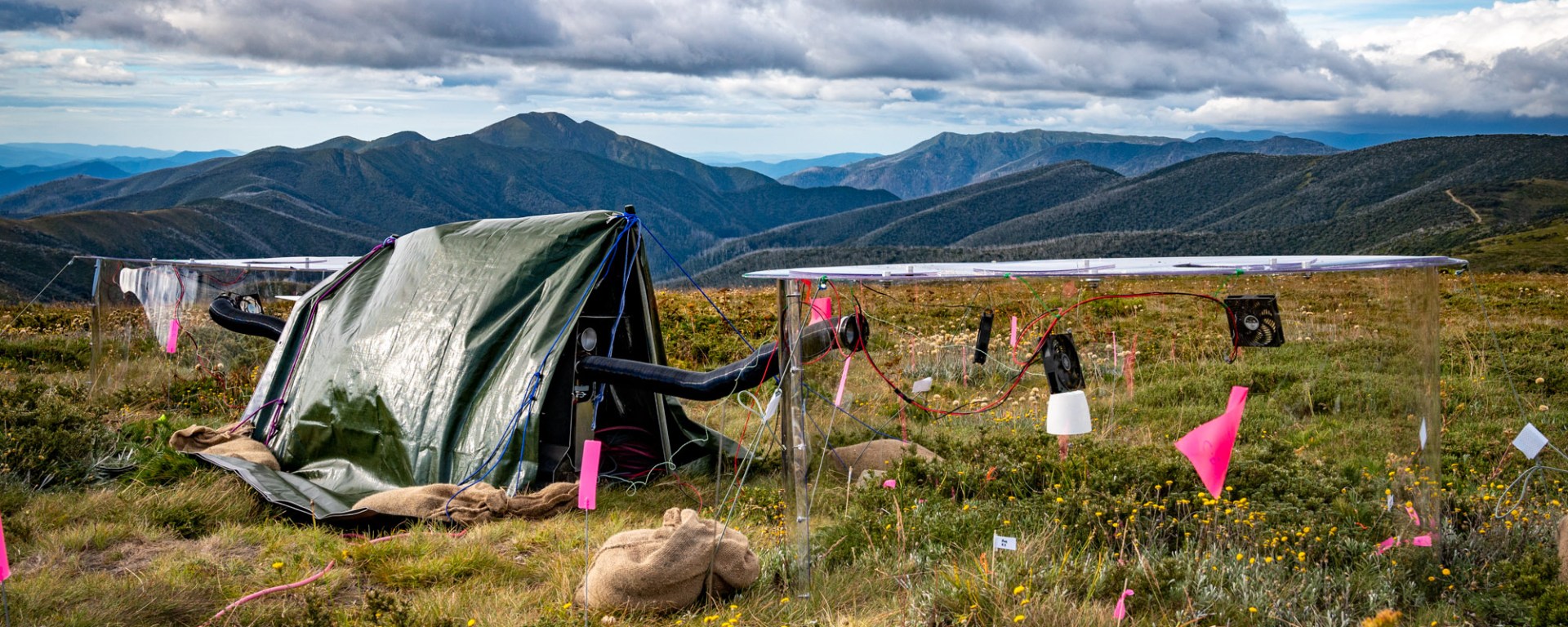
Armed with several car and trailer loads of equipment, teams of personnel from multiple institutions, and precious naïve optimism, we carried out our first ambitious experiment at Mt Hotham. We anticipated not having access to power and opted for diesel-fuelled heaters designed for heating caravans and a portable generator. Only later did we discover we had electricity access that would have made things much easier after setting it all up… built-in off-grid capability is still a nice bonus.
We wanted to heat plant communities containing multiple species, so we designed a chamber that was generally larger and more capable than those used in most previous mobile field experiments. The problem? There were many spread across a mountain side to set up and monitor closely, which was especially important during poor weather! Being an alpine site, weather forecasts are not particularly reliable… the weather changed rapidly and was inclement for a significant proportion of the experiment.

Field teams and the equipment endured strong winds, rain, fog, freezing nights, unseasonably cold days, and a serious storm. If you had been there, you would’ve seen people jumping and hopping through the fog while waiting for plant measurements – like wild things trying to stay warm. You would’ve seen people carrying diesel containers back and forth to fuel our trusty heaters – like busy bees. You would’ve seen team members checking the chambers around the clock to keep the plants warm inside – like devoted babysitters.
Yet, despite the challenges, the team held up and the equipment did too. We managed to heat up plant communities well above ambient temperature despite the prevailing conditions. Team members helped each other meet a range of scientific aims amidst maintaining the field experiment and evaluating the heating chamber performance. These included measuring plant functional traits, heat and freezing tolerance, water stress, leaf temperatures, soil respiration, and cover, abundance, and composition to tackle a range of ecological and physiological questions about effects of heat events on plants and communities. Many of these aims form parts of PhD theses and will result in other publications coming soon.
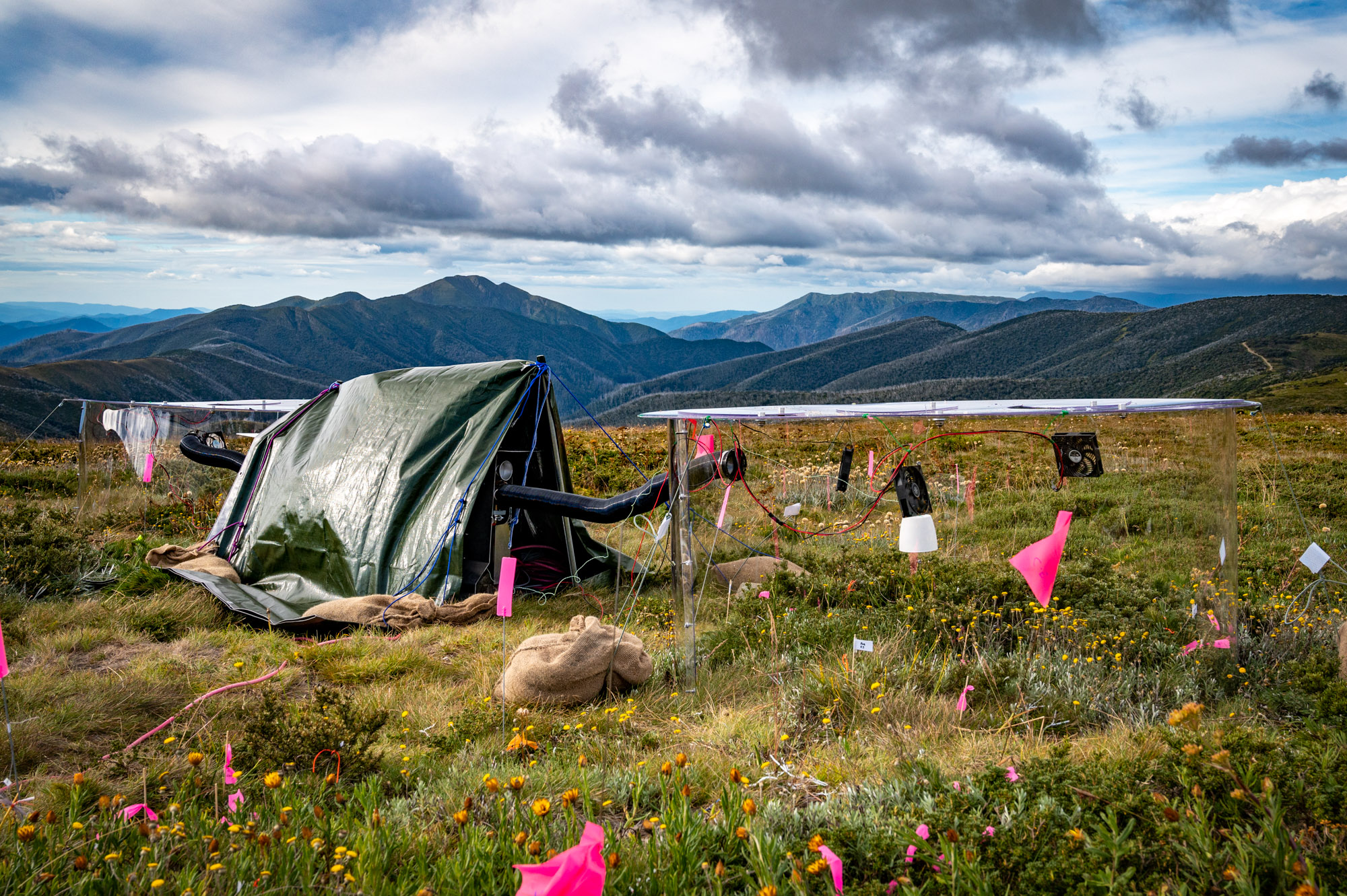
Xuemeng Mu reminisced about the Mt Hotham experiment: “I want to thank every single person on the team who guided me, encouraged me, and inspired me at the beginning of my PhD journey. Honestly, as the first project I worked on during my PhD, it pushed me hard. But it also lit up the path for what I want to do next.”
The Perisher Valley experience.
We planned for a second experiment in a different location to address a different series of questions about combinations of day and night warming. A range of practical lessons were learned from the experience at Mt Hotham. We needed to better insulate and shorten the heater ducting to the chambers, make the chambers slightly shorter to reduce the air volume, protect the heaters from the elements but with better ventilation, and find a location that could provide a fixed power source. And most importantly, conduct the experiment during more favourable weather conditions!
After a last-minute withdrawal of support from one location for a power source, we were saved by the good folks from the Perisher Cross Country Centre. Not only were they happy to be a source of power to run the equipment, but they also volunteered as a research base for us! We suddenly went from having no source of power – and therefore no experiment – to having everything we needed plus a place for the team to warm their hands around cups of tea and noodles to see out the long cold nights monitoring the heaters. What luxury.
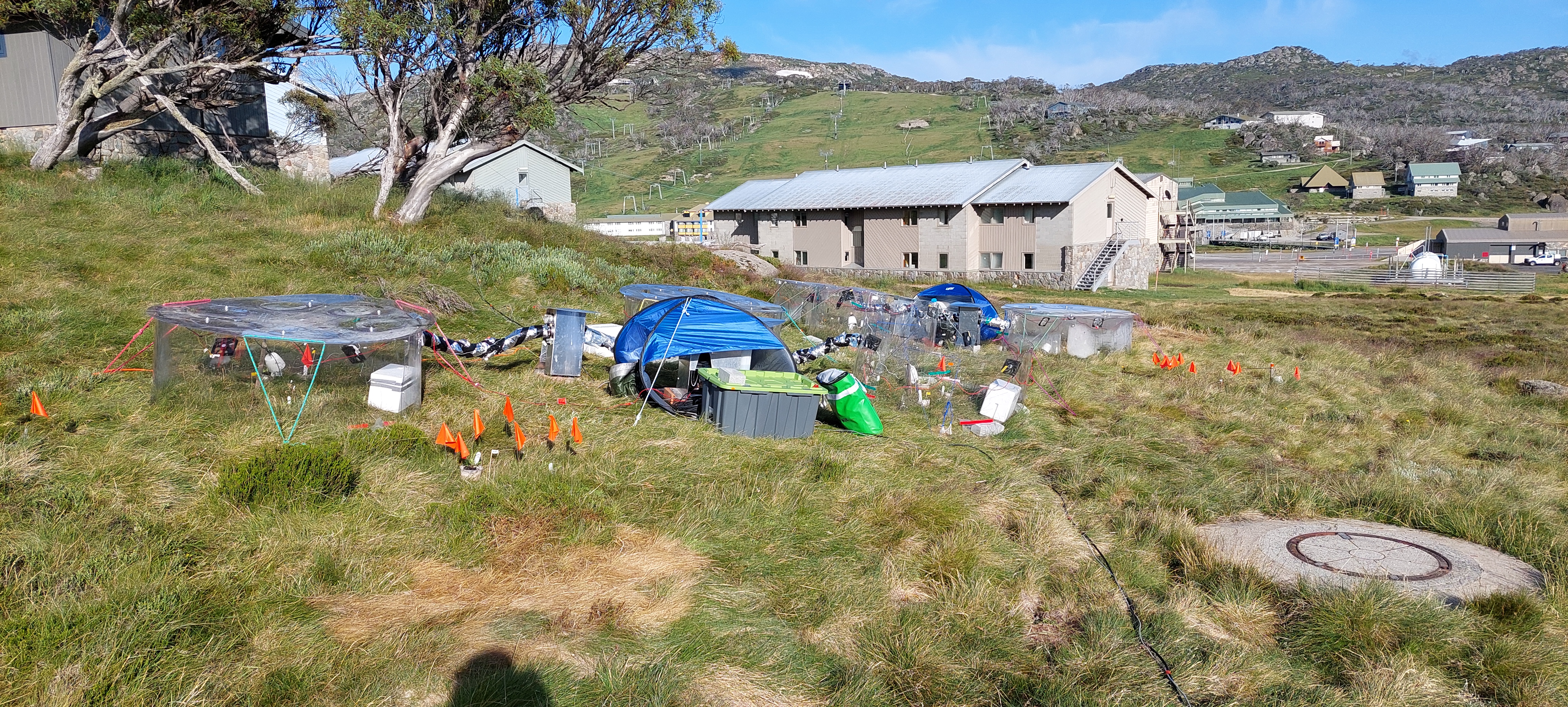
Besides a brief shutdown for an electrical storm on the final heating day (an apparent requirement of heatwave experiments in our experience) we were fortunate to have steady weather and motivated team members. The Perisher experiment itself lasted about a week, but many months went into the planning and preparation, and only a dedicated team made it possible.
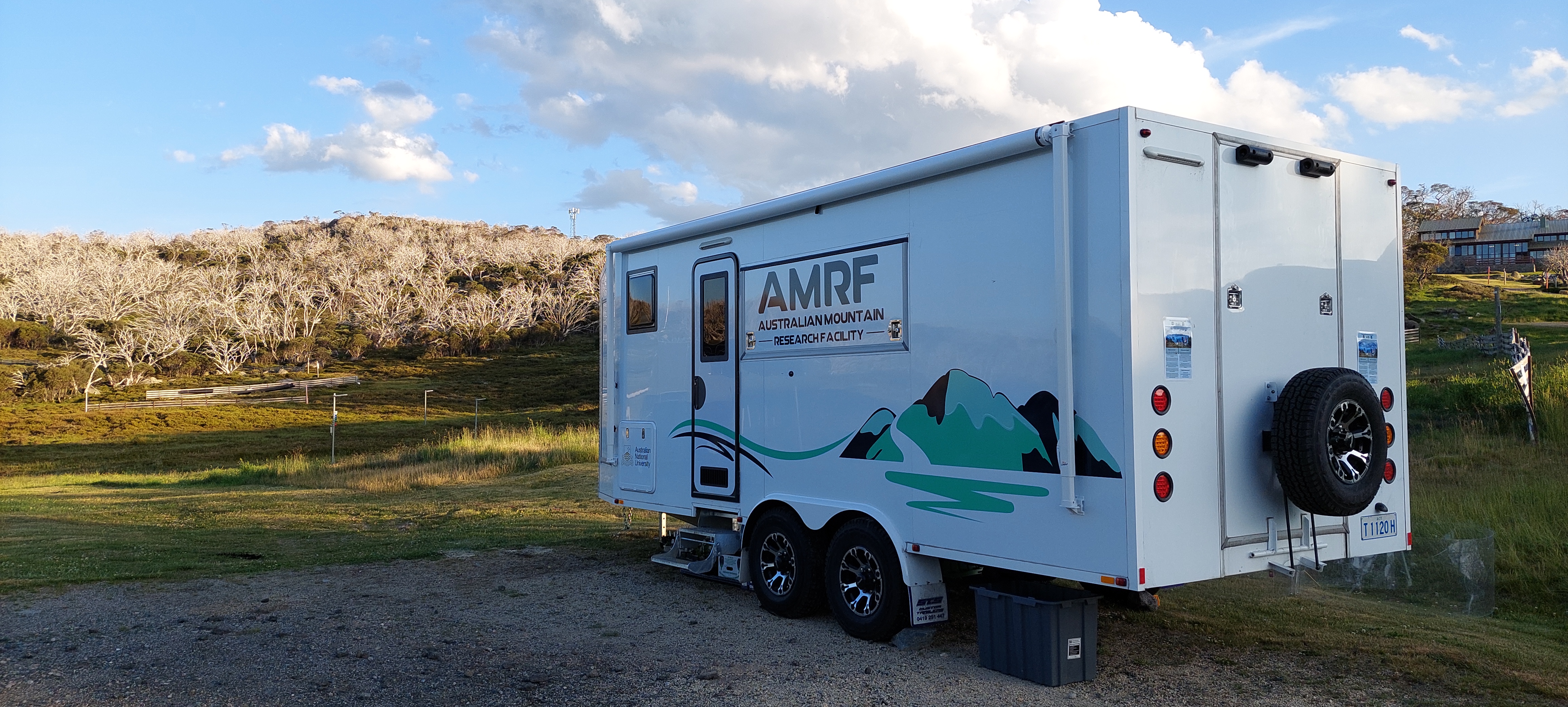
Under the factorial day and night heating conditions, James King and Lisa Danzey (PhD students) collected unique data directly in the field, working out of ‘Moby’ the mobile lab curtesy of the Australian Mountain Research Facility. Lisa investigated thermal tolerance responses in herbaceous plants morning and evening to investigate cumulative acclimation effects and recovery dynamics over time. Meanwhile, James sampled and snap-froze leaves to analyse metabolomic responses back in the lab and took measurements of stomatal conductance, chlorophyll fluorescence, and used spectral reflectance to corroborate metabolite stress responses.
James surmises that “These sorts of experiments are one of the last steps in understanding real world implications of future climate change on ecosystems. The opportunity to be involved in one was something I was extremely keen to be a part of.”
While these active heating experiments in the field are not easily done, they yield some remarkable data that is important for more realistic simulations of future heat events. We hope that our detailed supplement that outlines costs and setup, along with the lessons learned that are described in our paper helps make this a little easier for others to do further studies on climate change and extreme events in the field.
You can access and read our full article here
 Methods Blog