
This issue contains the latest methods in ecology and evolution. Read to find out about this month’s featured articles and the article behind our cover!
Featured
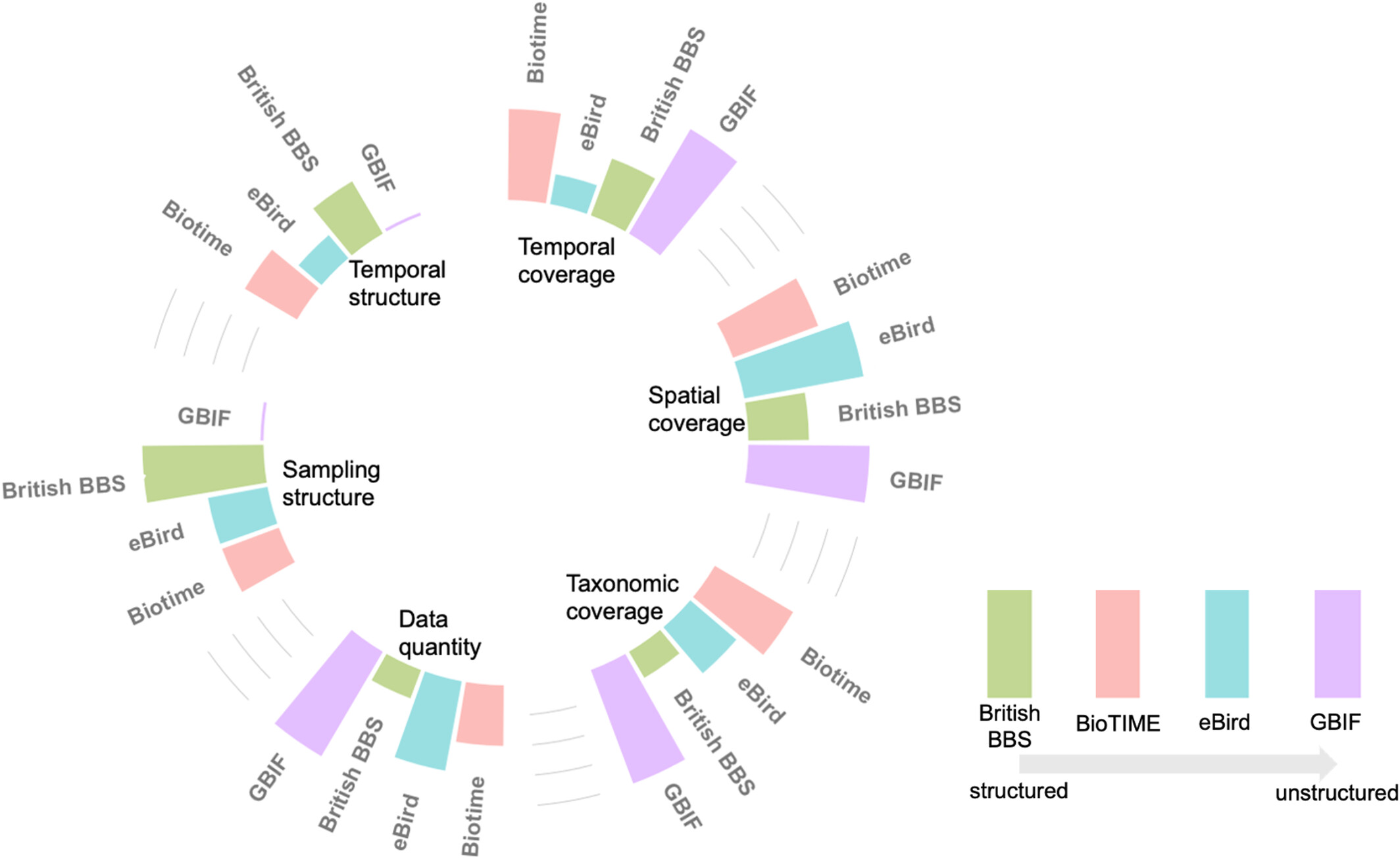
Advancing causal inference in ecology: Pathways for biodiversity change detection and attribution
Here, authors address key challenges of biodiversity change detection and conservative causal attribution and propose solutions to overcome barriers in (1) biodiversity and driver data characteristics, (2) detection of change within both data types and (3) linking driver and biodiversity data for causal inference. Specifically, authors provide guidance on the choices to be made at each step of biodiversity change detection and attribution, offering a guide for selecting suitable methods based on the available data and the research question.
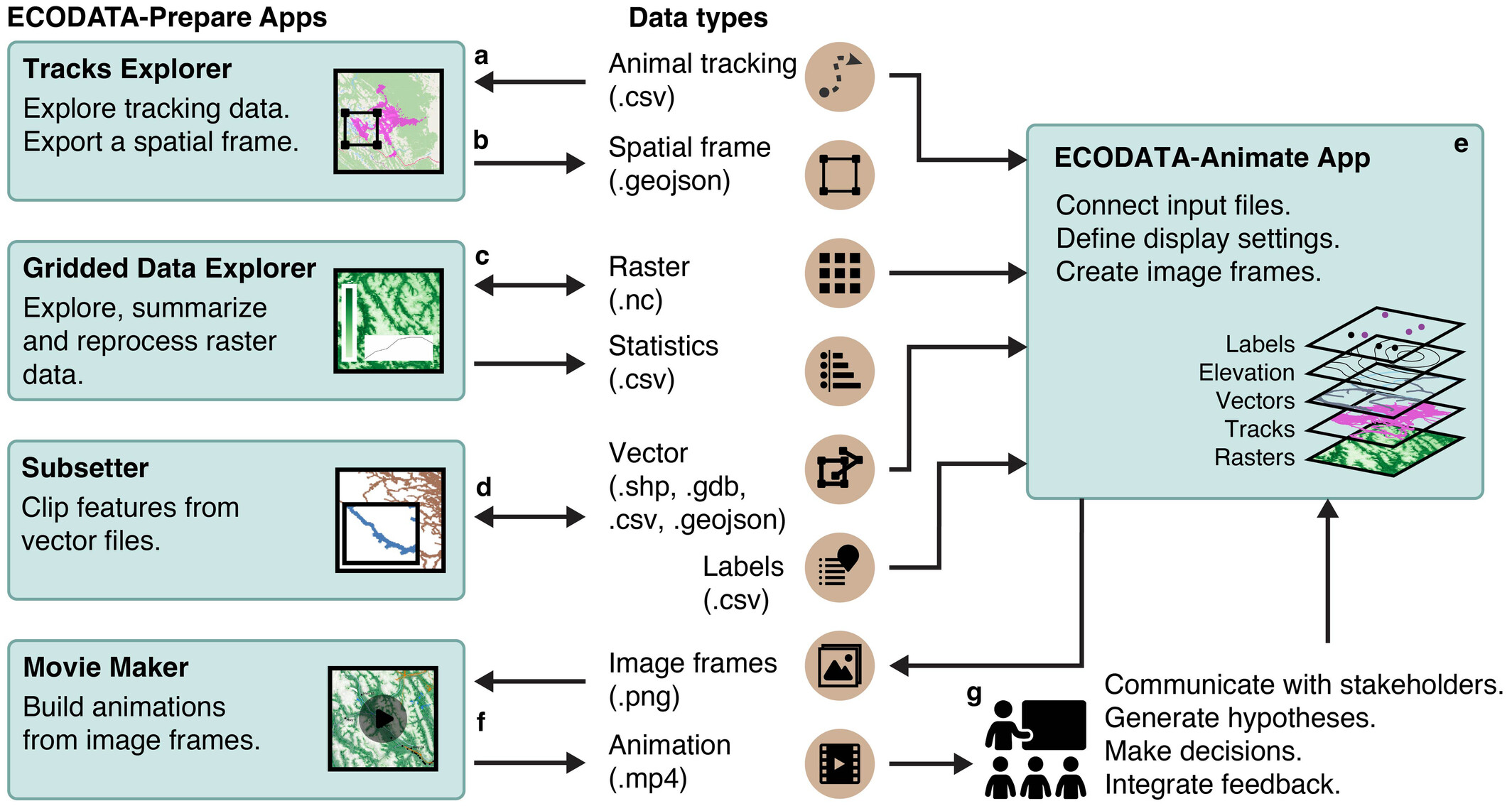
ECODATA: A toolbox to efficiently explore and communicate animal movements alongside environmental and anthropogenic context using geospatial big data
Integrating complex geospatial data into research and applications for wildlife ecology remains a challenge. Here, authors developed ECODATA, a suite of open-source tools to support exploration, analysis and visualization of animal movements and dynamic geospatial data layers, demonstrating the use of ECODATA through two examples. ECODATA offers a novel resource to explore and communicate animals’ interactions with their environment, informing management decisions and conservation strategies. The flexible tools for geospatial data manipulation can be used for data visualization, as described here, or to create predictor variables for inclusion in habitat selection or other ecological models.
Quantifying the correlation between variance components: An extension to the double‐hierarchical generalised linear model
The variational properties of biological systems are an increasing focus of current research, and statistical methods are required for drawing inferences about the processes that determine them. Double-hierarchical generalised linear models (DHGLM) are ideally suited for studying variational properties since they provide a direct way of modelling the distribution of variances. However, no multi-way DHGLM has been implemented to accurately determine the correlation between sets of variances that vary over the same groups. Here, authors extend the model of San Cristobal et al. (1993) so that the correlation between random-effect and residual variances can be estimated. Using simulated data, they assess the accuracy of the multi-way DHGLM model and compare it to alternative non-HGLM and HGLM methods.
Modelling approaches for meta‐analyses with dependent effect sizes in ecology and evolution: A simulation study
Here, authors conducted extensive simulations to evaluate modelling approaches for handling dependence in effect sizes and sampling errors in ecological and evolutionary meta-analyses. Authors assessed the performance of multilevel models, incorporating an assumed sampling error variance–covariance matrix (which account for within-study correlation), cluster robust variance estimation methods and their combination across different true within-study correlations. Finally, they showcased the applications of these models in two case studies of published meta-analyses. The results provide clear modelling recommendations for ecologists and evolutionary biologists conducting meta-analyses.
Probabilistic modelling improves relative dating from gene phylogenies
Establishing the timing of past evolutionary events is a fundamental task in the reconstruction of the history of life. Recently, a new alternative methodology for the relative dating of evolutionary events has been proposed that considers the distribution of branch lengths across sets of gene trees; the branch length ratio method. Here, authors validate this methodology by comparing the relative age estimates with a fossil-calibrated phylogeny and propose a model-based formalisation using a Bayesian framework. Authors show that distributions of normalised lengths can be modelled using gamma or lognormal distributions and demonstrate that inference of the posterior distribution of the mode allows accurate relative age estimation, as assessed by a strong correlation with the molecular clock-dated tree.

Solving three core challenges in transient dynamics analysis of matrix population models
This study presents a new framework for measuring transient dynamics that addresses three core challenges of the conventional approach: undue influence of stages that are numerous but of low value, scale dependence and conflation of transient and asymptotic population dynamics. Balancing the population projection matrix (PPM) either by its reproductive values or by its stable stage distribution solves the first two challenges. The third challenge is solved by stripping the output of a PPM of its component in the direction of its stable stage distribution. The resulting indices provide more genuine measures of transient behaviour. Authors demonstrate and compare this new framework against the conventional one using 6332 matrices from the COMPADRE Plant Matrix Database.
Cover Image

This months cover image shows a close-up of an adult male jackdaw (Corvus monedula), part of a long-term monitoring population in Lleida, Catalunya, Spain. The bird was briefly captured for ringing and biometric measurements before release. Jackdaws, members of the crow family, are easily recognised by their grey nape and pale blue eyes. Unfortunately, while common across much of Europe, jackdaw populations are declining locally in Catalunya.
The jackdaw monitoring project investigates how animals’ behavioural decisions shape their demography and evolution, aiming to integrate behaviour into life-history theory. Understanding how these birds care for their chicks throughout the different stages of the breeding season is essential, yet challenging, as parental behaviour is continuous, dynamic, and mostly occurs when humans are not present.
To address this challenge, Pou-Rossell et al. developed a solar-powered, open-electronics monitoring system that records jackdaws inside multiple nest boxes simultaneously, from sunrise to sunset across the breeding season. Combining computer vision and deep learning, the system allows parental behaviour to be quantified with unprecedented resolution. This image is a reminder of the main character behind the data, and of the complexity of a breeding jackdaw’s daily life that no single snapshot can capture. Image credit: Galdric Mossoll Clos.
Read the full article here.
 Methods Blog