
This issue contains the latest methods in ecology and evolution. Read to find out about this month’s featured articles and the article behind our cover!
Featured
Current frontiers in the passive acoustic monitoring of bats
Passive acoustic monitoring of bats is used in a growing number of studies in applied and basic research. Despite the publication of good-practice recommendations, several unsettled debates persist about the possibilities and limits offered by passive acoustic monitoring of bats. Here, authors propose a comprehensive evaluation of the limits and possibilities of the passive acoustic monitoring of bats, identifying knowledge gaps and practice barriers and highlight novel concepts and ideas susceptible to revolutionise our practices as a community.
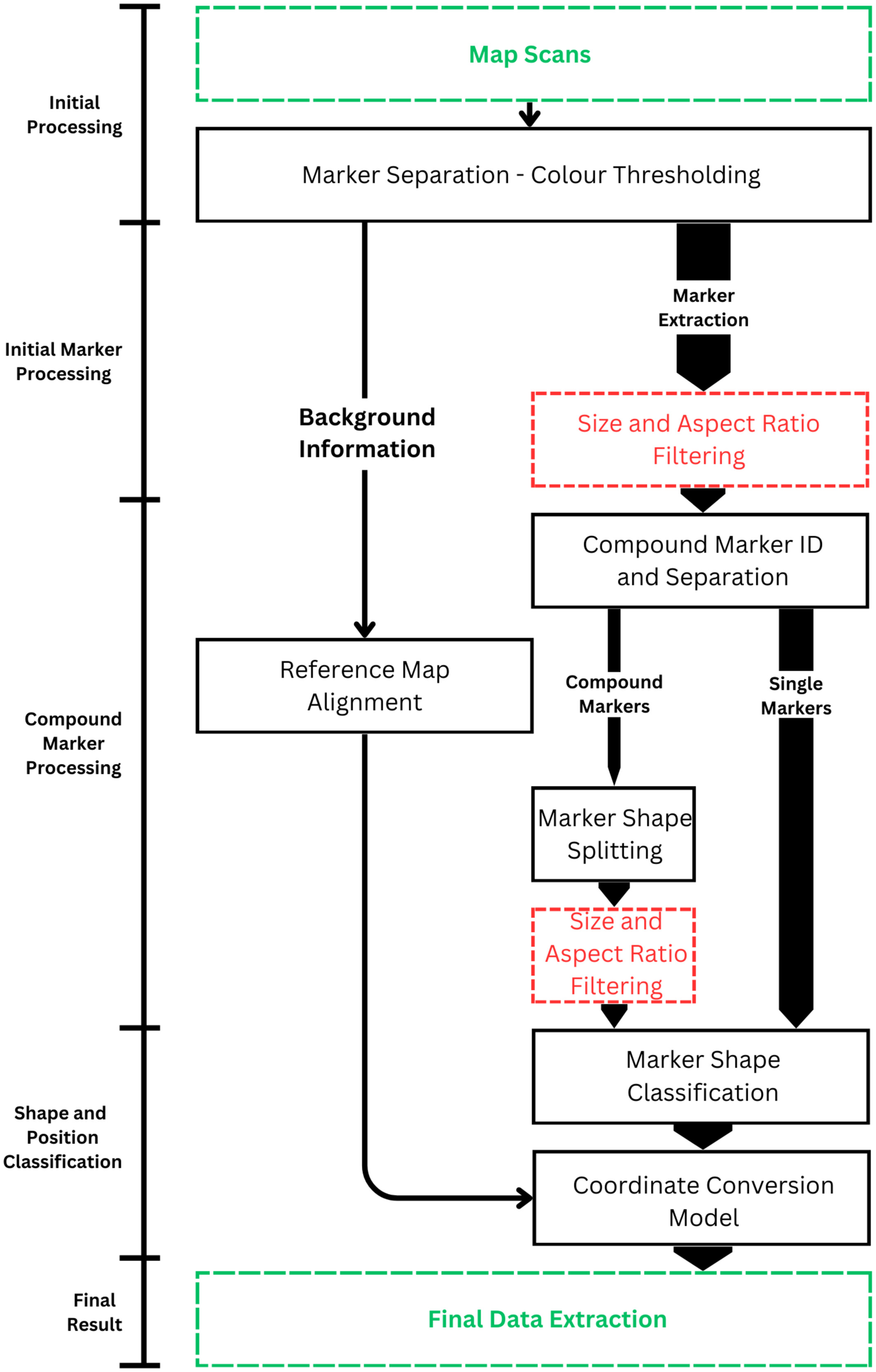
Release the HOGS: An unsupervised marker extraction, classification and georeferencing approach for biodiversity data
Large biodiversity databases provide key information on distributional patterns, but their temporal coverage can be limited. Here, authors present the Historical Occurrence Georeferencing System (HOGS), a Python protocol that isolates occurrence markers from distribution maps, assigns them to taxonomic groups and georeferences each image relative to a baseline coordinate system, producing latitude–longitude coordinates for all mapped marker occurrences. The new georeferencing protocol enables rapid generation of occurrence data from historical maps, providing reference or enhanced distribution data for species and inputs for ecological niche modelling in biogeographical, evolutionary and conservation studies.
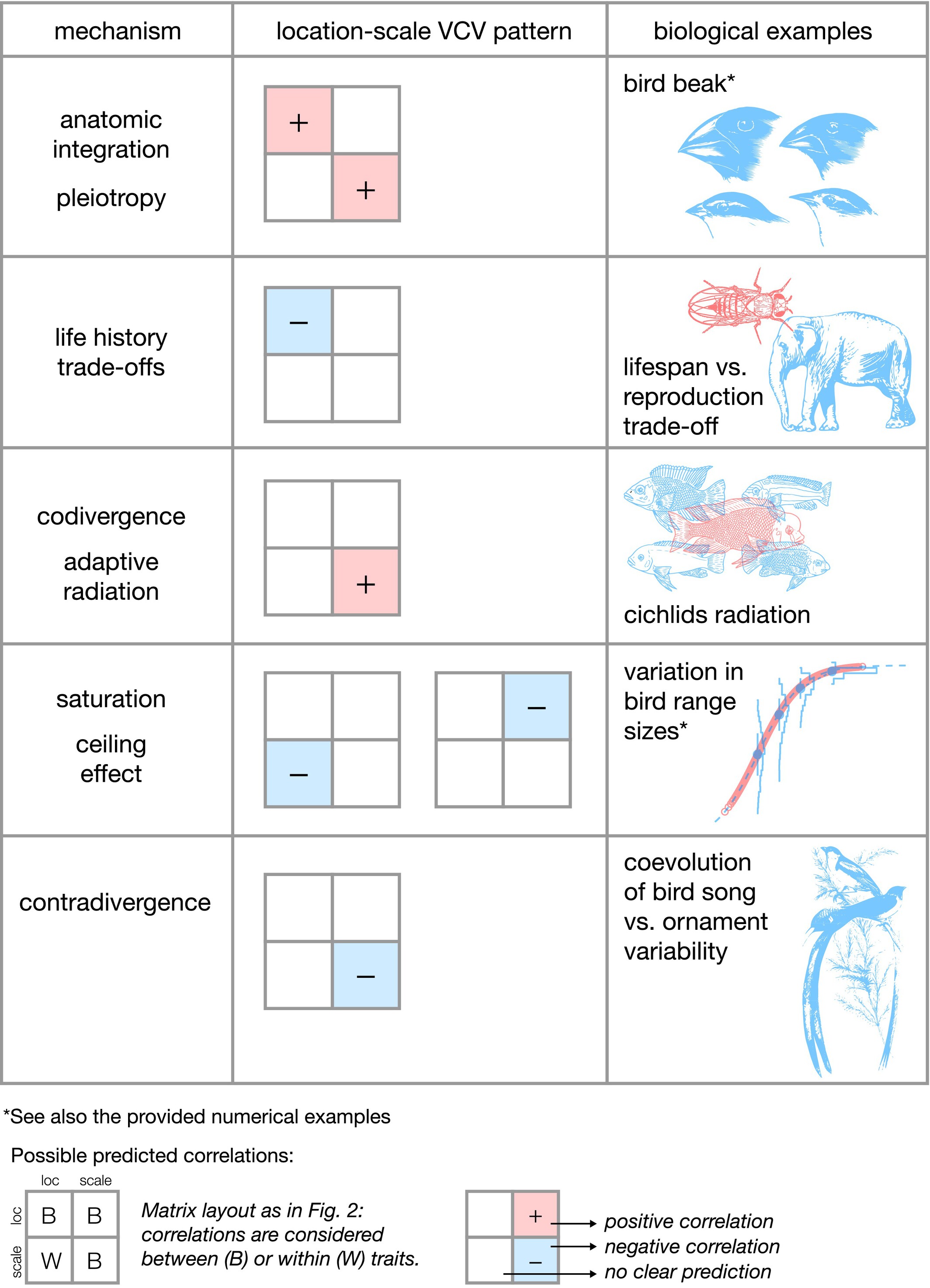
Quantifying macro‐evolutionary patterns of trait mean and variance with phylogenetic location–scale models
Traditional phylogenetic comparative methods primarily focus on modelling mean trait values, often overlooking variability and heteroscedasticity that can provide critical insights into evolutionary dynamics. Here, authors introduce phylogenetic location–scale models, a novel framework that jointly analyses the evolution of trait means and variances. This dual approach captures heteroscedasticity and evolutionary changes in trait variability, allowing for the detection of clades with differing variances and revealing patterns of adaptation, diversification, and evolutionary constraints. This framework provides a powerful tool for exploring macroevolutionary patterns and can be used to reassess previously published comparative data, offering new insights into the mechanisms driving the diversity of life.
Sensors versus surveyors: Comparing passive acoustic monitoring, camera trapping and observer‐based monitoring for terrestrial mammals
While passive acoustic monitoring has shown promising results for birds, its application in mammal biodiversity assessments has received little testing. In this study, authors compared passive acoustic monitoring (combined with BirdNET embeddings) to traditional observer-based monitoring and camera trapping for assessing terrestrial mammal biodiversity over multiple years across an extensive spatial scale in eastern Australia. Authors conclude that a combined approach will likely improve future biodiversity monitoring, offering a more detailed understanding of ecosystems and support effective conservation practices.
Essential tools but overlooked bias: Artificial intelligence and citizen science classification affect camera trap data
Camera trapping generates vast image datasets requiring classification before downstream ecological inference, yet the influence of classification errors on subsequent analyses is often overlooked. Classification performance can vary widely depending on the classification method, species, illumination conditions and other contextual factors. This study aimed to evaluate the variability in classification performance among different methods: a citizen science classification method and two AI classifiers (EfficientNet and DeepFaune) using an expert-labelled hold-out of 51,588 images across seven classes captured day and night. Authors findings underscore the need to enhance classification precision and explicitly incorporate classification uncertainty into ecological models to ensure the reliability of automated camera trap monitoring.

A pluralistic framework for measuring, interpreting and decomposing heterogeneity in meta‐analysis
Measuring heterogeneity, or inconsistency, among effect sizes is a crucial step for interpreting meta-analytic evidence across diverse taxonomic groups and spatiotemporal contexts. However, ecologists and evolutionary biologists often interpret overall mean effects (mean population effects) as consistent across contexts, without properly quantifying and interpreting heterogeneity. Here, authors present a pluralistic approach that aims to quantify heterogeneity by introducing complementary metrics, each of which decomposes heterogeneity into within-study, between-study and between-species (species and phylogenetic) variances. To demonstrate the benefits of the combined use of these measures, authors synthesize heterogeneity estimates from 512 ecological and evolutionary meta-analyses.
Cover Image

The image shows a Red Kangaroo (Osphranter rufus) in eastern Australia curiously watching as we installed autonomous audio recorders. These devices capture the soundscape of an area, allowing us to monitor biodiversity by listening. This method, called Passive acoustic monitoring (PAM), has the potential to save significant time and money for comprehensive fauna surveys, but it has heavily focused on birds. We aimed to test and compare PAM for large-scale, long-term biodiversity assessments of terrestrial mammals. We wanted to know if PAM paired with a deep-learning AI was capable and effective for detecting terrestrial mammals such as this iconic Australian marsupial. Image credit: Sebastian Hoefer.
Read the full article here.
 Methods Blog