Throughout March, we are featuring articles shortlisted for the 2025 Robert May Prize. The Robert May Prize is awarded by the British Ecological Society each year for the best paper in Methods in Ecology and Evolution written by an early career author. Pieter Sanczuk’s article ‘Continuous quantification of forest microclimate temperatures in space and time using fibre-optic technology‘ is one of those shortlisted for the award.
About the paper
What is your shortlisted paper about, and what are you seeking to answer with your research?
Optical fibers are omnipresent in our lives and used for various purposes. Probably the most well-known use-case is for daily internet connection. But did you know that these cables also allow us to measure temperature, or even sound? “Cool, we thought. Let’s try it out in ecological field studies!”
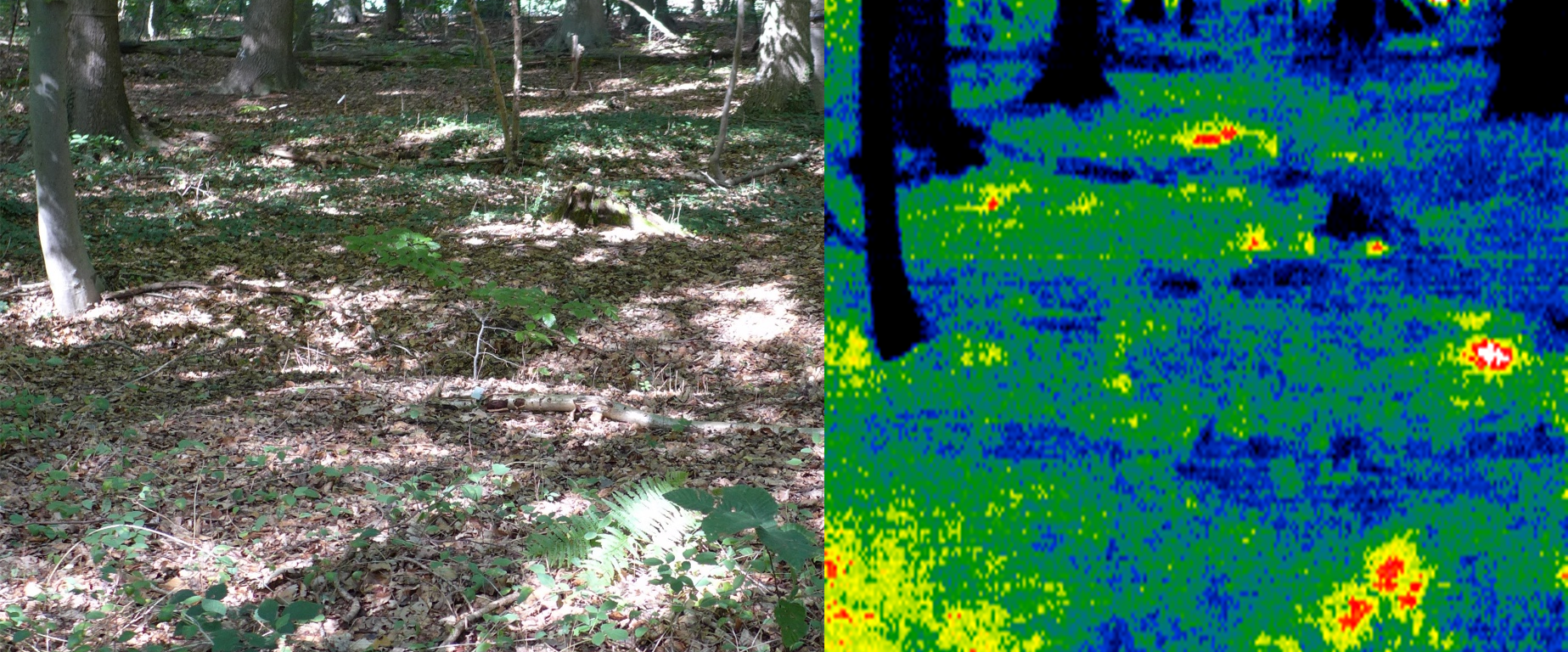
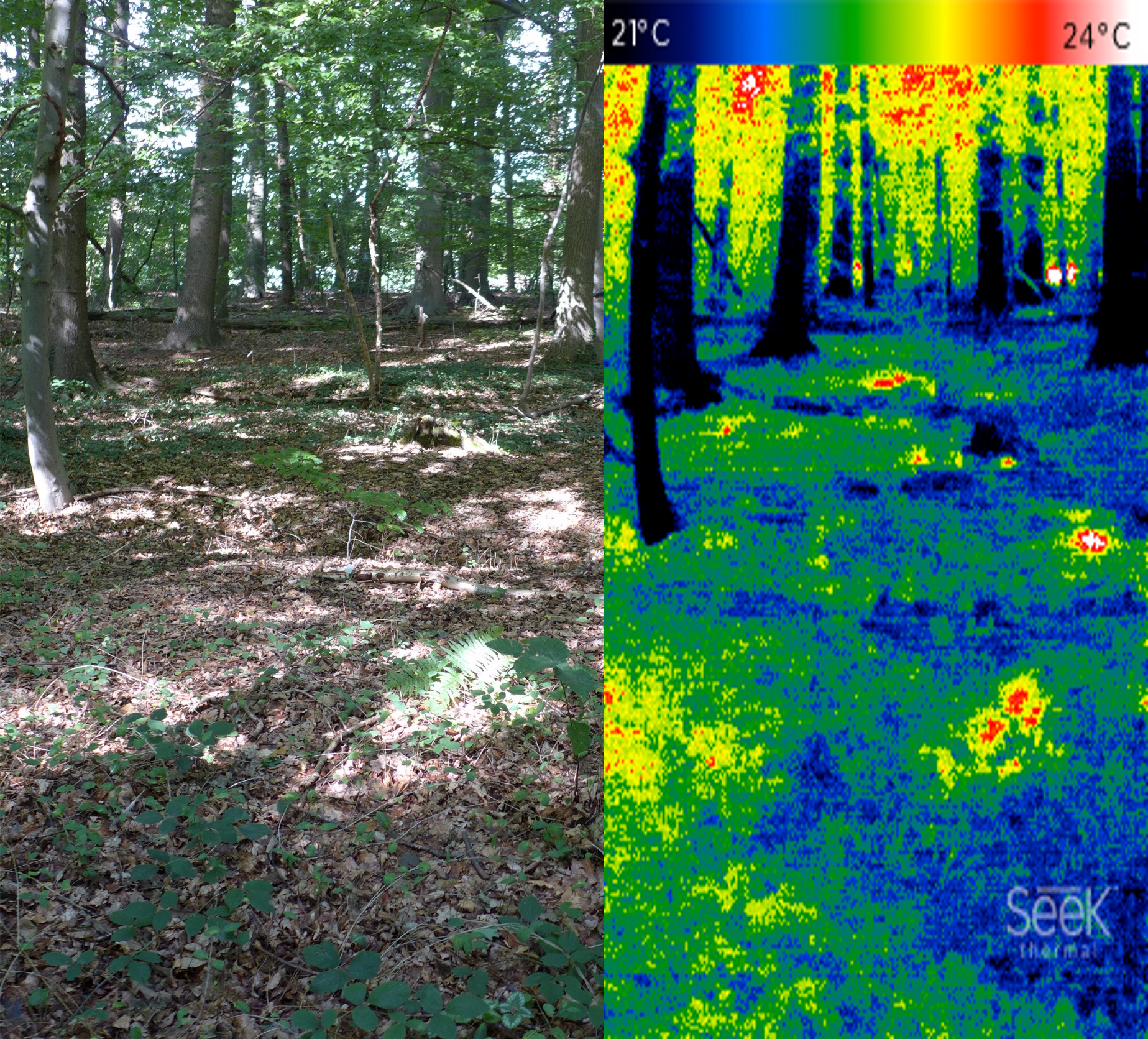
In our new article, we test whether optical fibres can be used to measure microclimate temperatures in the forest, and investigate what we can learn from it. Forest microclimates are convincingly an important part of the environment–determining major ecological processes–but measuring the fine-grained thermal variability at the required spatial resolution remains challenging.
Were you surprised by anything when working on it? Did you have any challenges to overcome?
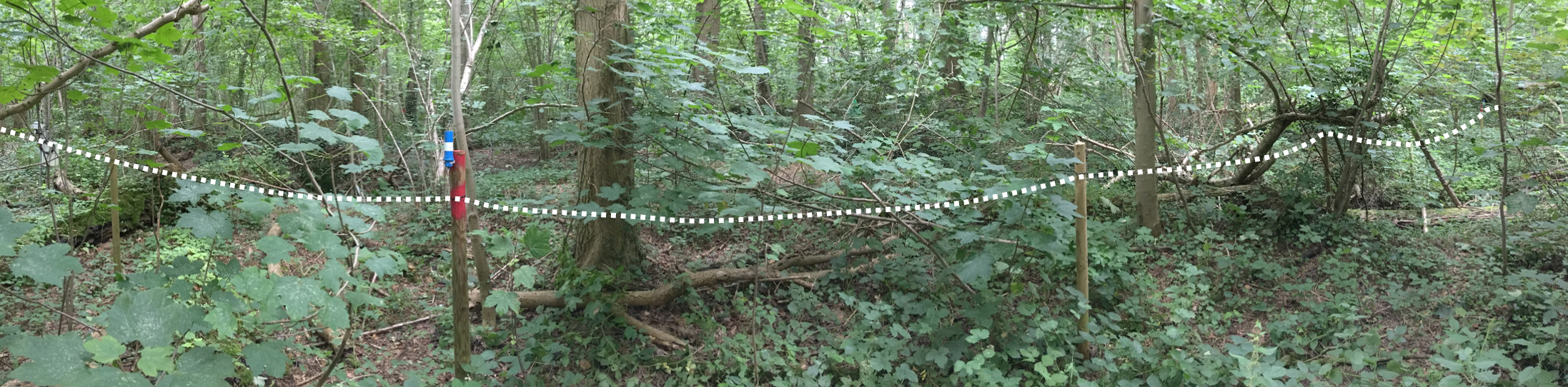
Using optical fibre technology, we succeeded in measuring microclimate temperatures accurately at the ultra-high resolution of 25 centimeter over a distance of 135 meter. This is almost continuously, right? Since these fibres can be very long (up to 30 km) and can easily cross less reachable environments, this novel means of environmental monitoring seems super promising! Just going wild: I could think of measuring the microclimate on cliffs, steep ravines, submerged coral environments or kelp forests.
There are some challenge, though: optical fibres are relatively fragile and prone to damage, especially in instable conditions such as in forests. First try-outs in our experiment failed due to bird and rodents chewing on it. Optimizing the set-up with an ‘armed’ version was ruled out damage from curious animals.
What is the next step in this field going to be?
We are currently adopting the set-up to measure vertical temperature gradients in a continuous manner, from the forest soil up to above the tree canopy. This is nearly impossible with more conventional logger-type temperature sensors. Nonetheless, such data is critically needed for the next generation 3D-microclimate models.
I already written that optical fibre technology also facilitate to measure sounds, which seems a highly promising feature for bioacoustics research. To my knowledge, it has never been tested in ecological studies. If you want to walk this path, please go for it!
About the author
How did you get involved in ecology?
Perhaps my first memory to ecological questions was at an age of seven, in the youth movement for nature and environment. This interest has gradually grew as a biology student–but I was more focused on biodiversity and evolution rather than on forest ecology. While doing my PhD, I specialized in the forest ecology – biogeography research nexus. In my work, I tried to integrate a creative blend of multidisciplinary research approach involving the synthesis of large ecological and geophysical data sets, and spatial modeling.
What is your current position?
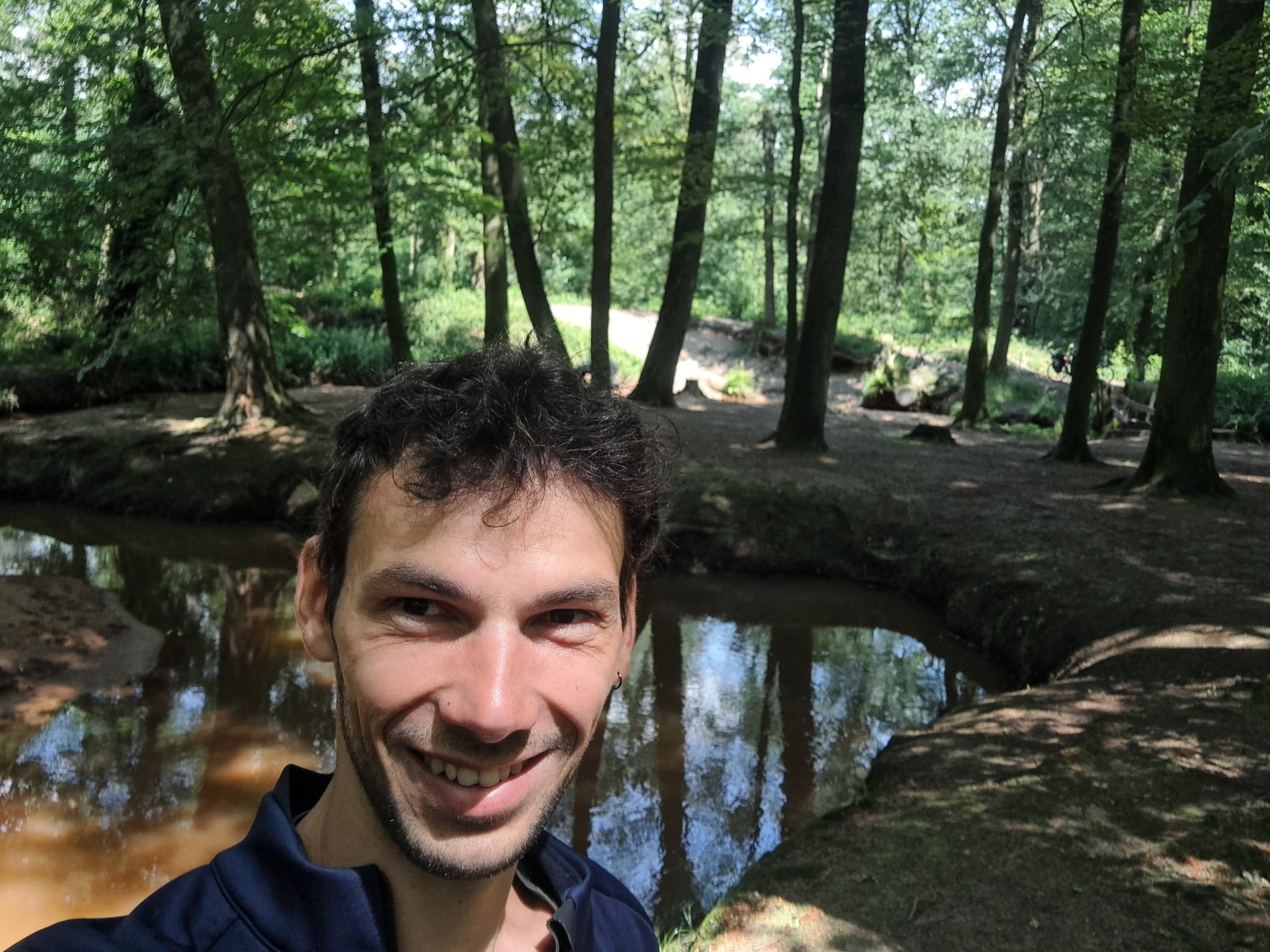
I am currently working as a postdoctoral researcher on the ERC-project CanopyChange (https://canopychange.ugent.be/) at the Forest & Nature Lab hosted by Ghent University, Belgium. In contrast to the local-scale studies presented in the current article, now I am focusing more on the continental- to global-extent biogeography of species. In my most recent works, I analyze synthesis data sets from large ecological networks to better understand the impact of multiple global changes on the 21st century biogeography of species.
Have you continued the research your paper is about?
Yes, additional field data is being collected continuously. However, rather than leading the research, I pass on the experience and try to provide advice to colleagues applying the fibre optic technology in new field studies.
What one piece of advice would you give to someone in your field?
Just be creative in the methods, models and math you apply in your research. It helps to have a look over the wall and learn from other (research) disciplines, really.
 Methods Blog