Throughout March, we are featuring articles shortlisted for the 2025 Robert May Prize. The Robert May Prize is awarded by the British Ecological Society each year for the best paper in Methods in Ecology and Evolution written by an early career author. Maia Austen’s article ‘A computational framework to characterize and compare the tonal repertoires of toothed whales‘ is one of those shortlisted for the award.
About the paper
What is your shortlisted paper about, and what are you seeking to answer with your research?
Our paper presents a computational framework for characterizing and comparing tonal vocal repertoires of toothed whales. Many odontocetes produce complex whistle signals, but methods for systematically comparing repertoires across individuals, populations, and species have been inconsistent. We developed a workflow that combines contour extraction, dynamic time warping, machine learning, and diversity metrics to quantify whistle repertoire structure. The goal is to provide a standardized, reproducible framework that allows researchers to compare tonal signals across datasets and species, helping us better understand how vocal communication evolves in socially complex marine mammals.
Were you surprised by anything when working on it? Did you have any challenges to overcome?
One challenge was figuring out how to compare whistles in a way that reflected the real variation in the signals. Dolphin whistles are continuous and highly variable in shape, duration, and modulation, which makes it difficult to define when two whistles are actually similar. I spent a lot of time testing different approaches before settling on the framework we describe in the paper. One thing that surprised me was how broadly the workflow could be applied. Although it was developed using bottlenose dolphin whistles, the same approach turned out to work well for tonal signals across several toothed whale species.
What is the next step in this field going to be?
The next major step is scaling these methods to larger comparative datasets. With standardized analytical frameworks, we can begin testing evolutionary questions about how communication systems diversify across species. For example, our work contributes to a broader NSF-funded research program led by my Ph.D. advisor, Dr. Laura May-Collado, examining how acoustic repertoire complexity relates to social structure across the toothed whale phylogeny. Applying computational approaches across many species will help reveal how ecology, sociality, and evolutionary history shape communication systems.
What are the broader impacts or implications of your research for policy or practice?
Improving how we characterize animal vocal repertoires has important implications for conservation and monitoring. Passive acoustic monitoring is increasingly used to study marine mammals, particularly in regions where visual surveys are difficult. By providing standardized tools to quantify vocal repertoires and identify acoustic patterns, this framework can help researchers detect species presence, assess population differences, and monitor behavioral changes over time. More broadly, better understanding how marine mammals communicate can inform conservation strategies in increasingly noisy and rapidly changing ocean environments.
About the author

How did you get involved in ecology?
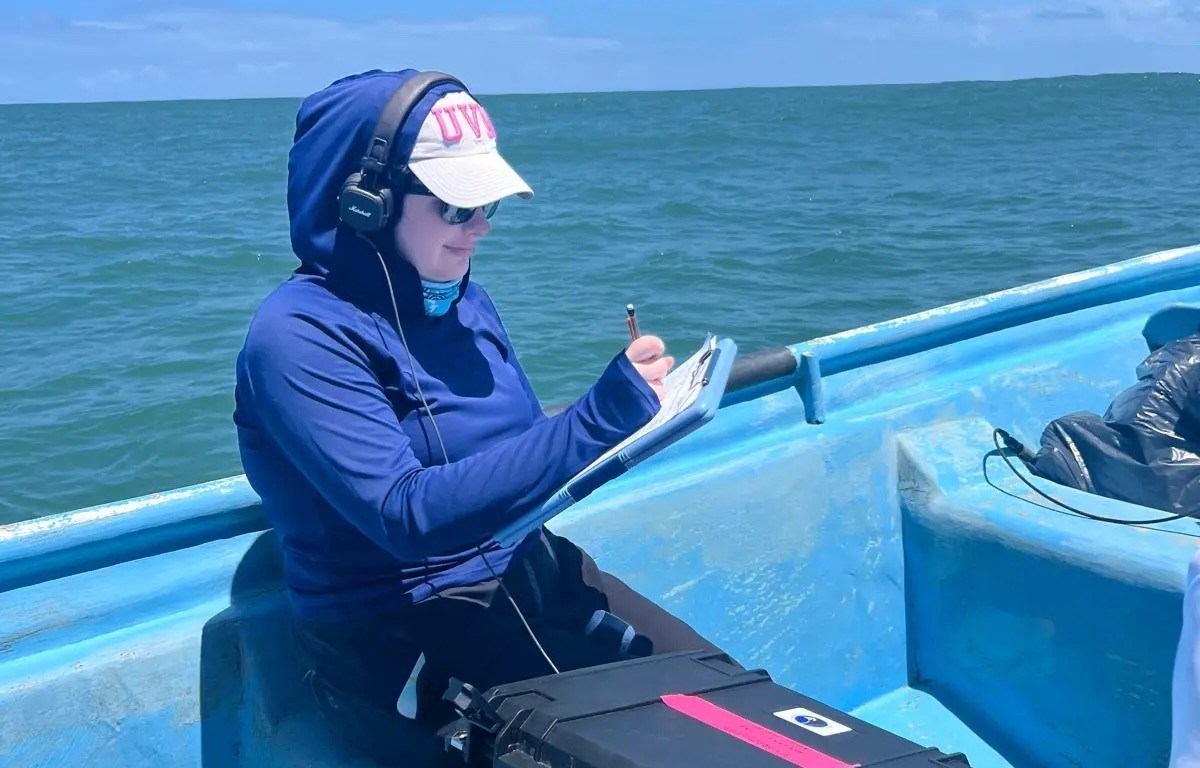
My undergraduate background was in cognitive science, an interdisciplinary field that combines psychology, computer science, linguistics, neuroscience, and philosophy. I was really drawn to the way those disciplines link together to study communication and cognition. During that time I took a class on animal communication, which allowed me to combine my interest in those conceptual questions with my love of ecology and apply them to less-well understood systems. That course ultimately led me toward bioacoustics, where I now study how dolphins and whales use sound to communicate and how those communication systems evolve.
What is your current position?
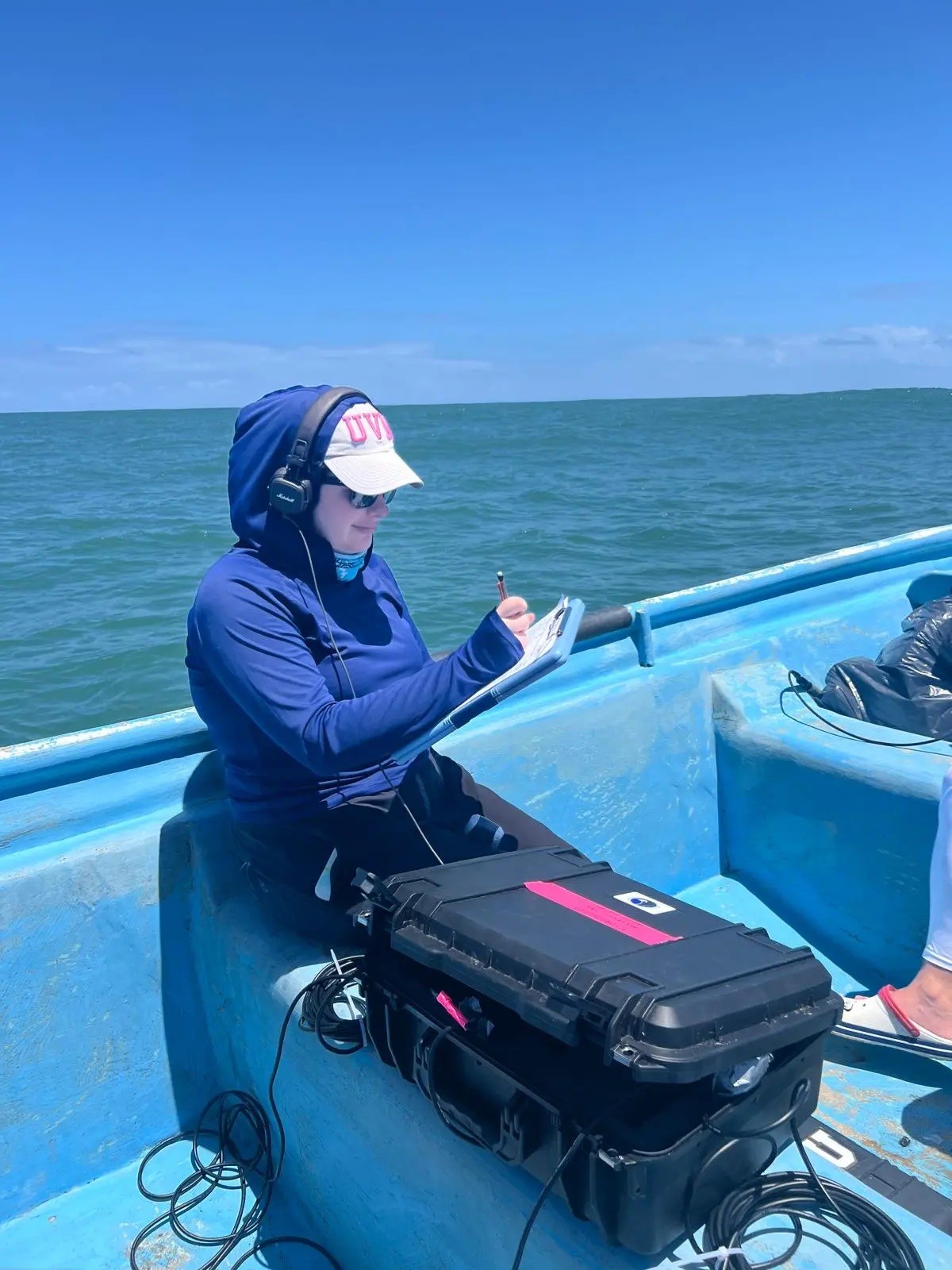
I am currently a postdoctoral researcher with the Wildlife Conservation Society’s Ocean Giants program. My work focuses on passive acoustic monitoring and the analysis of marine mammal vocalizations in the New York/New Jersey Bight. I’m interested in applying computational tools to better understand how whales and dolphins use sound, and how these signals can help us study their ecology, behavior, and conservation.
Have you continued the research your paper is about?
Yes – this framework has become a foundation for several ongoing projects. I’m currently applying these methods to study whistle repertoires in mixed-species dolphin groups, as well as exploring how acoustic repertoires vary with social relationships within a single population. More broadly, the approach is being used within a larger collaborative research program examining how vocal complexity evolves across toothed whales, allowing us to connect communication patterns with social organization and evolutionary history.
What one piece of advice would you give to someone in your field?
Don’t be afraid to combine approaches from different disciplines. Bioacoustics sits at the intersection of ecology, behavior, signal processing, and data science, and some of the most exciting progress in the field comes from integrating these perspectives. Learning computational tools can open up entirely new ways of asking ecological questions, especially as datasets continue to grow in size and complexity.
 Methods Blog