Throughout March, we are featuring articles shortlisted for the 2025 Robert May Prize. The Robert May Prize is awarded by the British Ecological Society each year for the best paper in Methods in Ecology and Evolution written by an early career author. Peter Dietrich’s article ‘Advancing plant biomass measurements: Integrating smartphone-based 3D scanning techniques for enhanced ecosystem monitoring‘ is one of those shortlisted for the award.
About the paper
What is your shortlisted paper about, and what are you seeking to answer with your research?
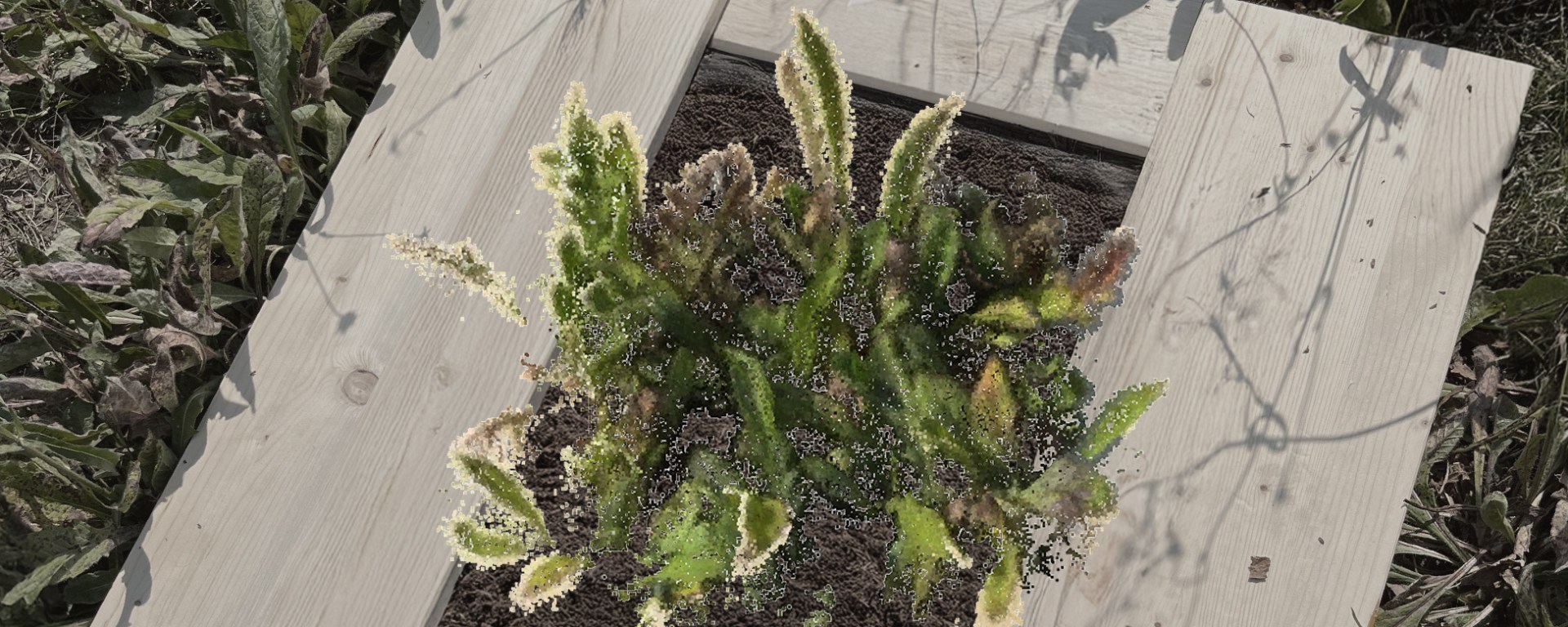
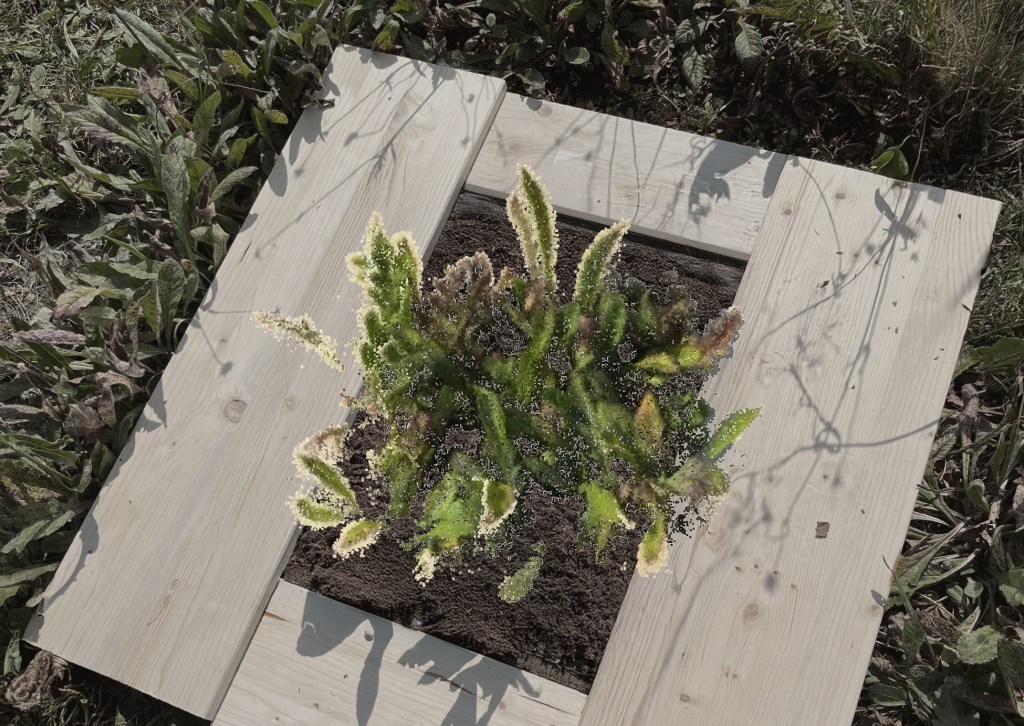
Our paper introduces a fast, non-destructive, and easy-to-use method for three-dimensional (3D) scanning of vegetation using a standard smartphone. The central question of our research was whether smartphone scanning can reliably estimate key vegetation characteristics such as biomass and plant height. Traditional harvesting approaches are constrained by low temporal resolution, while conventional 3D vegetation techniques often depend on costly and highly specialized equipment. We therefore tested whether modern smartphone-based photogrammetry tools can provide accurate and reproducible measurements of grassland vegetation structure. To further facilitate adoption, we provide a streamlined data-processing workflow implemented in a Jupyter notebook, enabling rapid and standardized analysis. Our findings demonstrate that biomass estimates derived from 3D vegetation scanning are comparable to those obtained through the traditional harvest–dry–weigh method.
Were you surprised by anything when working on it? Did you have any challenges to overcome?
My former research group had already attempted to develop such an approach between 2016 and 2018, but at that time they encountered several major technical limitations. Together with Prof. Melanie Elias, I reinitiated the project in 2024 under very different circumstances. Over the past eight years, the rapid advancement of both hardware and software has fundamentally transformed the field. We were able to build upon freely available smartphone apps for scanning, which made it possible to develop an almost cost-free method (assuming that most researchers already own a smartphone). The pace of technological progress in both software and hardware has been remarkable, and we anticipate that in the near future this approach will be capable of generating far more detailed ecological information than biomass alone.
What is the next step in this field going to be?
The next step is to move beyond simple biomass estimation and develop AI-driven approaches for reconstructing and segmenting vegetation structures from 3D scans. This will enable detailed characterization of plant functional groups, individual species, and specific plant components (e.g., leaves and stems), across both horizontal and vertical dimensions and through time. By integrating these methods with accessible technologies such as smartphone-based 3D scanning, we aim to establish scalable tools for monitoring vegetation structure and ecosystem dynamics in fundamentally new ways.
What are the broader impacts or implications of your research for policy or practice?
By making vegetation structure assessment accessible and scalable, our approach has the potential to democratize 3D ecological monitoring worldwide. With a projected 5.14 billion smartphone users by 2028, this method offers a globally applicable and cost-efficient monitoring solution. It lowers financial barriers for researchers with limited resources and, importantly, opens up practical applications beyond academia, including large-scale citizen science initiatives that could substantially expand ecological data collection across regions and ecosystems.
About the author
How did you get involved in ecology?
During my Master’s studies at the Friedrich Schiller University Jena (Germany), I was introduced to the Jena Experiment, one of the largest and longest-running biodiversity experiments worldwide. I was immediately fascinated by its scale and scientific ambition. Over the course of more than eight years, I deepened my expertise in ecology and biodiversity research through continuous involvement in this project. I completed my Master’s thesis, my doctoral research, and parts of my first postdoctoral work within the framework of the Jena Experiment.
What is your current position?
I am currently in a habilitation-track position (comparable to an Assistant Professor) at Martin Luther University Halle-Wittenberg (Germany). My research explores how global change and biodiversity shape plants, microorganisms and their interactions. What particularly excites me is the opportunity to combine ecological questions with innovative and high-potential technologies. Alongside the 3D scanning project, I explore plant–microbiome interactions using the newest generation of DNA sequencing technologies, known as third-generation or long-read sequencing. I am also interested in linking these interactions to plant chemistry by analysing secondary metabolites through near-infrared spectroscopy. Bringing together ecological questions and emerging technologies is a central motivation in my work.
Have you continued the research your paper is about?
Together with Prof. Melanie Elias and other colleagues, we have submitted a funding proposal to further advance this research and develop an enhanced analysis pipeline with expanded features.
 Methods Blog