Post provided by Ela Iwaszkiewicz-Eggebrecht
The journey from scepticism to abundance estimates
When I moved to Sweden in 2019 to start a postdoc, I entered a completely new research field.
My background was in evolutionary biology, but I knew very little about DNA metabarcoding (identifying many species at once by sequencing barcode DNA from mixed samples). I was joining a project that was developing methods for large-scale insect surveys and monitoring, the Insect Biome Atlas1.
Coming from other areas of molecular biology, I was used to technical biases being measured, modelled, and corrected. So when I learned that metabarcoding was considered largely unsuitable for quantitative estimates of abundance, I wondered whether the problem was truly impossible, or simply one that had not yet been solved. The potential gains were enormous. If we could recover abundance information from bulk insect samples, the implications for biodiversity monitoring would be huge.
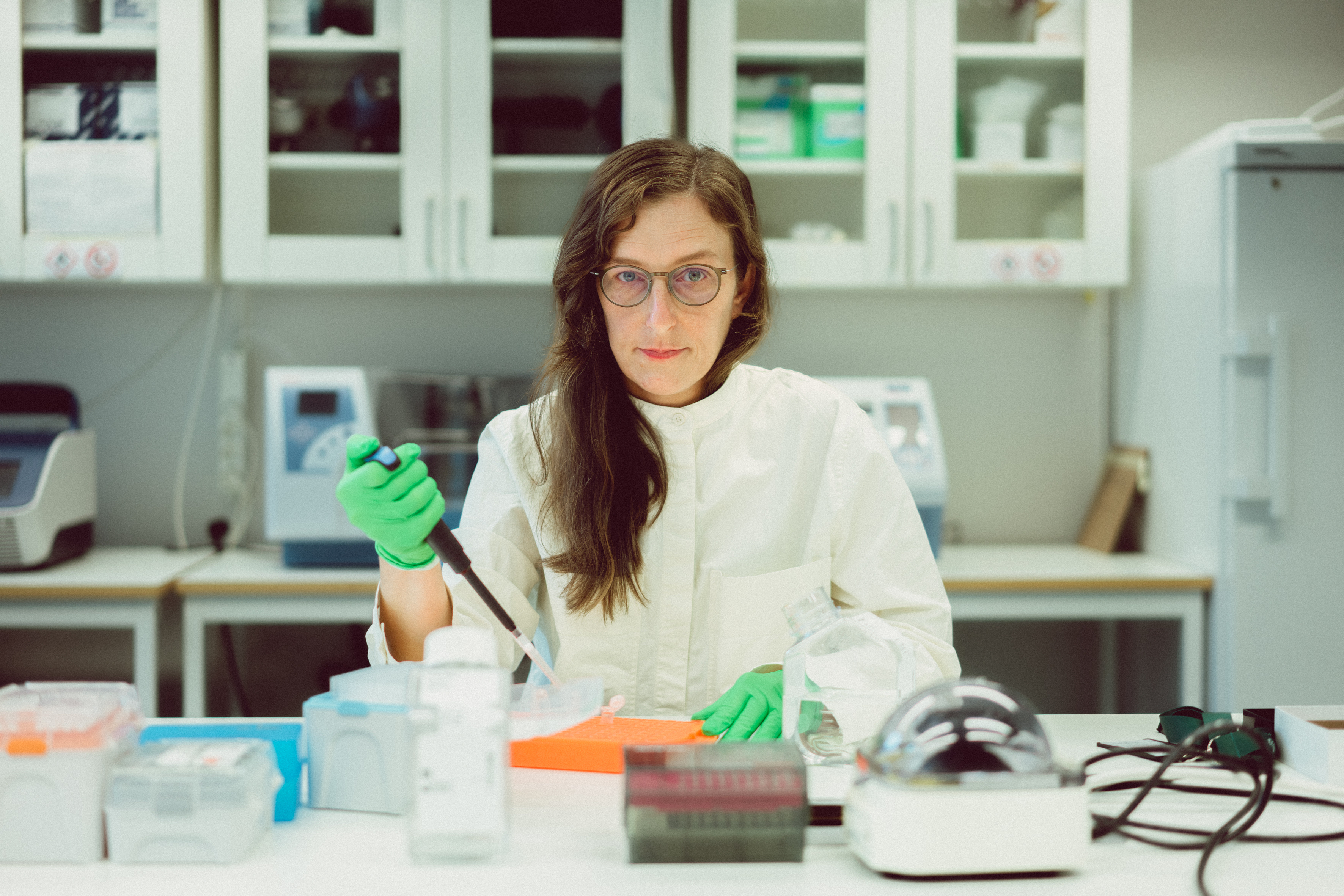
Looking back, perhaps I had the perfect combination of optimism and can-do attitude that often accompanies a new research direction. I understoood the limitations but was not ready to accept that they were insurmountable. And perhaps I just hadn’t yet learned which questions I wasn’t supposed to ask. I decided to pursue a simple question: could metabarcoding count insects?
Internal standards are the key
Very early on, we decided that if quantitative metabarcoding was ever going to work, we would need internal standards, otherwise known as spike-ins: defined quantities of DNA added to every sample to help correct for technical biases.
We tested two approaches. The first was biological spike-ins using exotic insects that could never accidentally occur in Sweden. Finding enough individuals became an adventure in itself, involving pet shops, collaborators, and laboratory cultures.
The second approach used completely artificial DNA sequences that I designed from scratch and had synthesised. We produced them in E. coli and then faced the surprisingly daunting task of dilution. To end up with “only” five million copies per sample required so many rounds of serial dilution that it occasionally felt more like homeopathy than molecular biology.
A simple idea that was anything but simple
My original plan seemed straightforward: if we wanted to know how accurate metabarcoding really was, we needed to test it on a dataset where we know the true composition of samples.
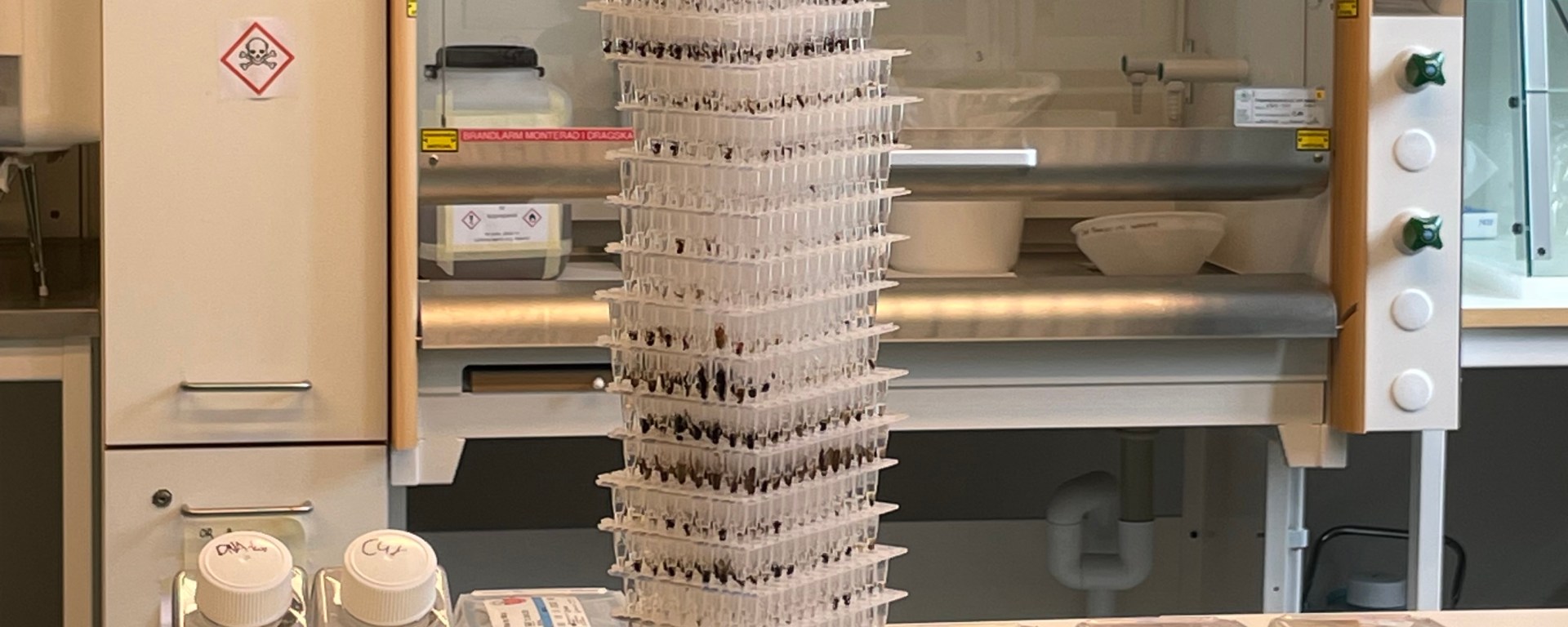
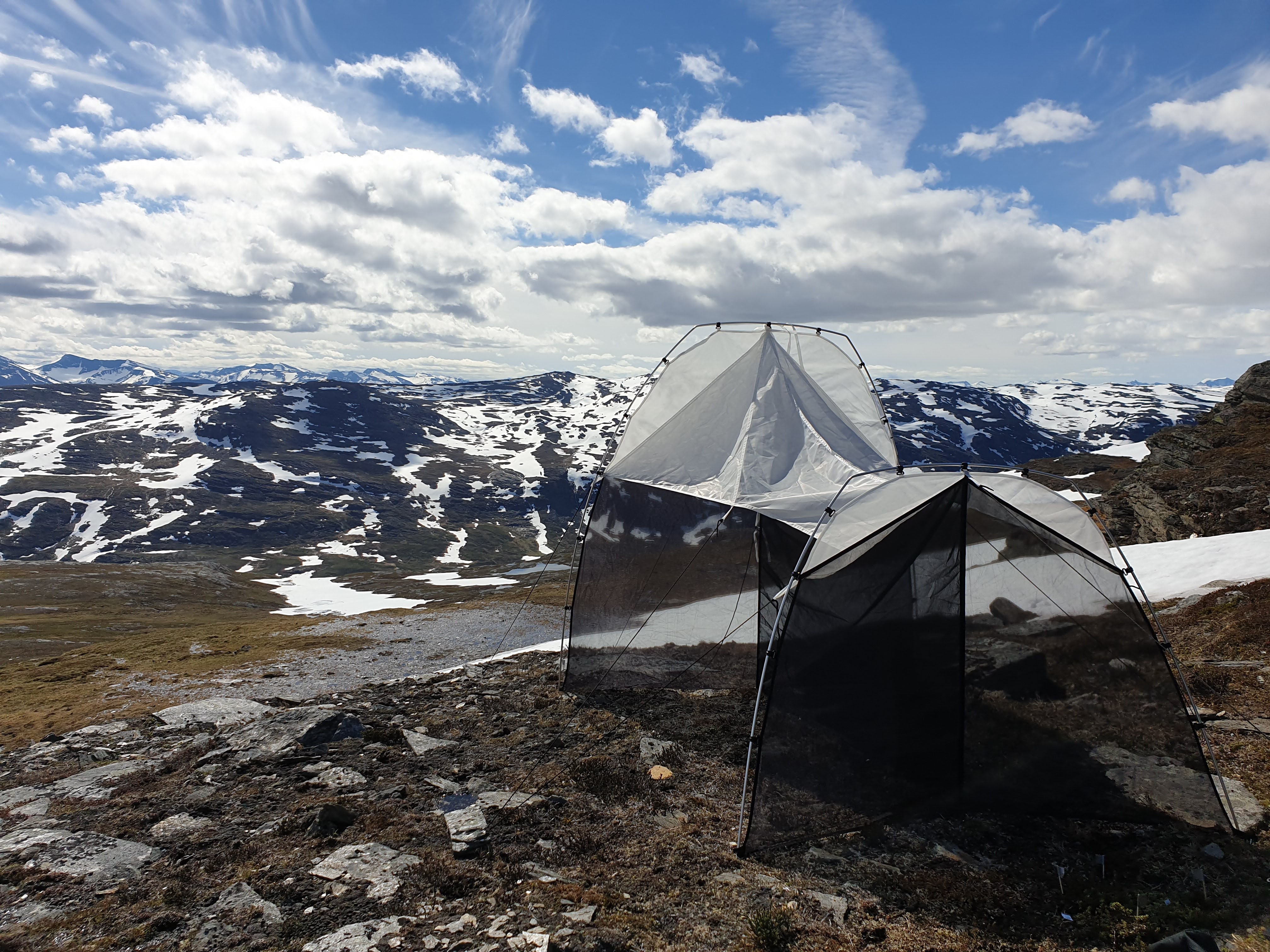
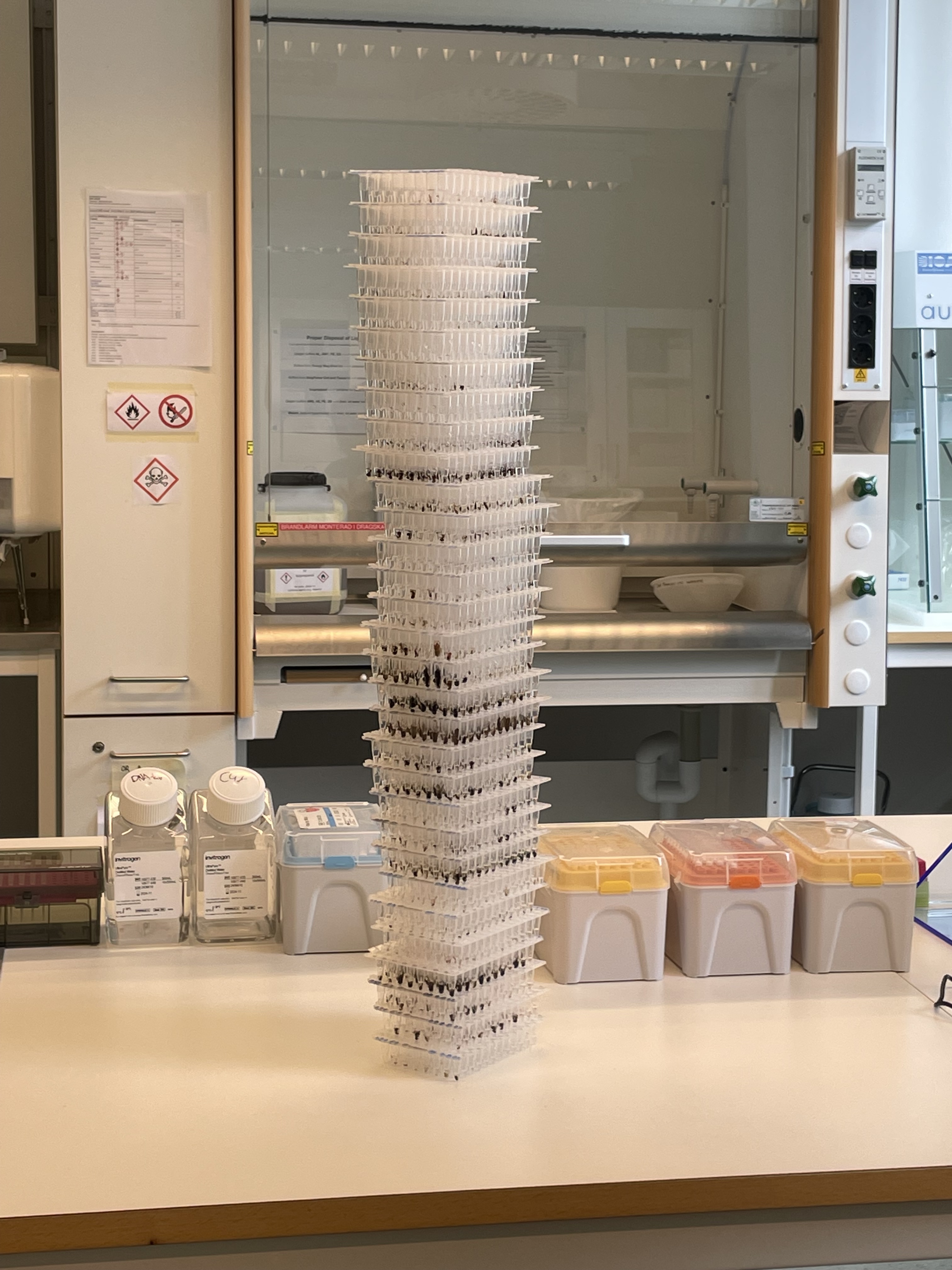
The idea was to take samples from Malaise traps, tent-like traps that collect flying insects, and identify every single specimen individually. We could then compare those results with metabarcoding data and finally quantify what the method was getting right, and what it was getting wrong.
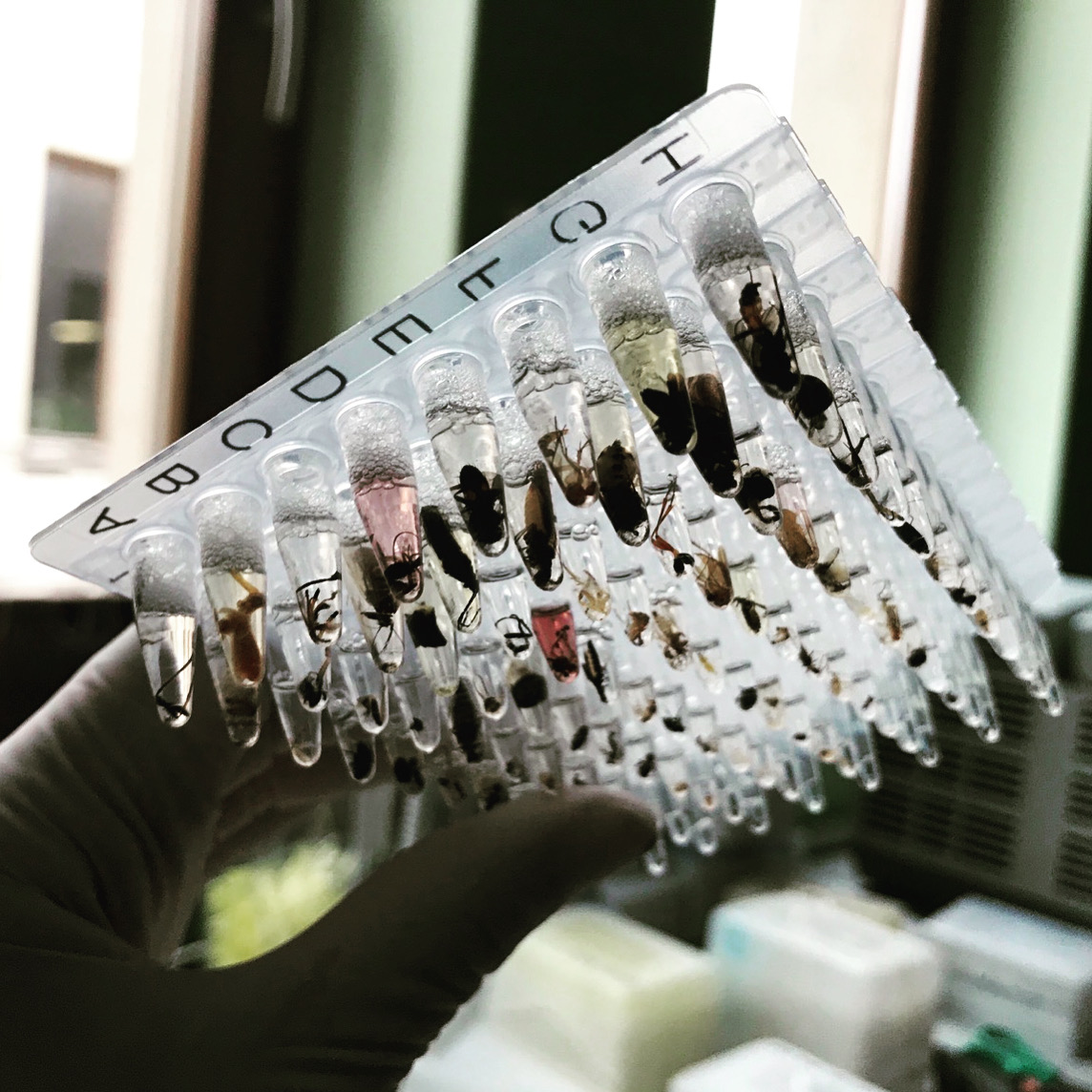
There was just one problem: a single sample can contain thousands of insects, many of which cannot be identified morphologically. The solutuion was to use genetic identification and use DNA barcoding for every individual insect instead.
Today, this approach may seem obvious, but in 2019, large-scale individual insect barcoding was still in its infancy. With the help of some collaborators, I was lucky enough to connect with Rudolf Meier’s group in Singapore, which was pioneering these methods, and within a few months we had a plan that felt both ambitious and achievable.
The project was ready to take off. Until …
When reality intervenes
First came the COVID-19 pandemic. Then a maternity break. Meanwhile, we were wrapping up the Insect Biome Atlas, the large project that had brought me to Sweden in the first place.
Progress was much slower than I had imagined.
Meanwhile, the field was catching up. As we learned that another group was developing a study with a remarkably similar study design, it became clear that this question had moved into the scientific mainstream. It was reassuring – we were on an interesting track – but it also created a real sense of urgency. After years of delays, we pushed hard to bring everything together and, fortunately, our study was the first to be published.
From insects to equations
After collecting thousands of insects and hundreds of millions of DNA reads, the next challenge was turning all that messy biology into mathematics.
This would not have been possible without Fredrik Ronquist and Emma Granqvist. Fredrik’s rare combination of expertise in biology and Bayesian statistics, together with Emma’s talent for translating complex biological processes into mathematical models, made it possible for us to build a framework that captured what happens to DNA during extraction, PCR, and sequencing – and how those processes shape the number of DNA reads we eventually observe.
Developing these models forced us to formalise assumptions that molecular biologists often take for granted. Those discussions taught me as much about statistics as they did about biology.
What did we learn?
Our results showed that DNA metabarcoding provides an accurate picture of which insect species are present in a community, but that the details of the laboratory protocol still matter.
We also found that biological spike-ins consistently outperformed synthetic DNA fragments for calibrating read counts.
Most importantly, we showed that quantitative metabarcoding is not an impossible goal. With appropriate calibration, our abundance estimates were accurate to within a single individual for nearly three-quarters of species occurrences.
Looking back, I am still not sure whether this project was driven by scientific courage or a slightly dangerous amount of postdoc optimism and stubbornness. Either way, asking whether a problem that many considered impossible could actually be solved turned out to be a worthwhile question.
Read our accompanying paper: Accuracy of occurrence and abundance estimates from insect metabarcoding by Iwaszkiewicz-Eggebrecht et al. (2026)

