Active remote sensing- Behind the research

Active sources of remote sensing data, in particular Light Detection and Ranging (LiDAR) and Radio Detection and Ranging (RADAR), majorly differ from passive sources by offering data of three-dimensional (3D) character, which help representing the earth terrain, surface and the related structural attributes. This cross-journal special feature hosts a series of innovative publications from multiple disciplines, but with a common focus on the state-of-the-art science … Continue reading Active remote sensing- Behind the research

Our July Issue is out now!

Our July issue is now online now! This issue contains 19 articles about the latest methods in ecology and evolution, including a special feature on active remote sensing, seed morphology, drones and much more! Read to find out about this month’s featured articles and the article behind our cover Special feature Active sources of remote sensing data, in particular Light Detection and Ranging (LiDAR) and Radio … Continue reading Our July Issue is out now!

Seeds ‘exposed’! A method to automatically reveal seed morphological traits from images.

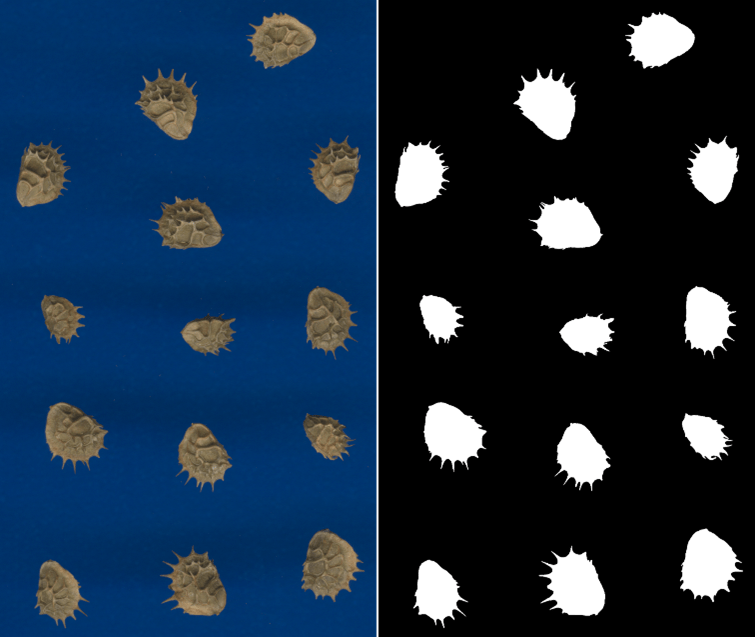
Post provided by Roberta L. C. Dayrell The knowledge of seed morphology is an essential resource for practitioners and scientists across diverse disciplines such as botany, agriculture, restoration, conservation, and archaeology. Morphological attributes can inform studies on topics such as seed dispersal, predation, longevity, and germination. This knowledge also has practical applications, including seed identification and assessments of quality and ripeness. But extracting meaningful information … Continue reading Seeds ‘exposed’! A method to automatically reveal seed morphological traits from images.

Heat waves reconstructed!

Post provided by Loke von Schmalensee For many decades, humans have tried to understand how to process continuous signals for our convenience. As a result, numerous innovative methods have been developed for recording, compressing, restoring, and transforming (and more) continuous signals. Consider, for instance, the relationship between signal processing and music: it comes into play directly through the recording of sound waves, and indirectly via … Continue reading Heat waves reconstructed!

Our June Issue is out now!

Our June issue is now online now! This issue contains 17 articles about the latest methods in ecology and evolution, including citizen science data, drones and multi authored papers and much more! Read to find out about this month’s featured articles and the article behind our cover. Featured Articles Researchers in ecology and evolutionary biology are increasingly dependent on computational code to conduct research. Hence, the … Continue reading Our June Issue is out now!

Welcoming our new Methods in Ecology and Evolution Associate Editors

Methods in Ecology and Evolution is delighted to announce 13 new Associate Editors who have joined the Editorial Board following our latest open call across all seven BES journals Dr Timo AdamUniversity of Copenhagen, Denmark My research focuses on the development, implementation, and application of innovative statistical methods for stochastic processes, particularly hidden Markov models and their flexible extensions. I am particularly interested in statistical … Continue reading Welcoming our new Methods in Ecology and Evolution Associate Editors

Unraveling the identity of fish sounds to support marine conservation

Post provided by Xavier Mouy Fish sounds and marine conservation Many fish species produce sounds to attract mates, scare away predators or defend their territory. These sounds are very useful to us, scientists! Just by listening to the ocean, we can detect the presence of different fish species, infer their behaviour and potentially find out how many fish there are in an environment. This has … Continue reading Unraveling the identity of fish sounds to support marine conservation

Our May issue is out now!

Our May issue is now online now! This issue contains 18 articles about the latest methods in ecology and evolution, including species distribution models, temperature measurements and much more! Read to find out about this month’s featured articles and the article behind our cover. Featured articles The insurance effect of biodiversity—that diversity stabilises aggregate ecosystem properties—is mechanistically underlain by inter- and intraspecific trait variation in organismal … Continue reading Our May issue is out now!

Robert May Prize 2022: Winner announced for early career researcher award 

We’re excited to announce Tanya Strydom as the winner of the 2022 Robert May Prize , celebrating the best article in the journal by an author at the start of their career.  Winner: Tanya Strydom Research: Food web reconstruction through phylogenetic transfer of low-rank network representation About the Research Despite their importance in many ecological processes, collecting data and information on ecological interactions is an … Continue reading Robert May Prize 2022: Winner announced for early career researcher award 

Wind-robust sound event detection and denoising for bioacoustics

Post provided by Julius Juodakis Common solutions to wind noise don’t work with bioacoustics Bioacoustics has great potential to help us understand animal communities. We already have strikingly futuristic hardware for capturing natural sounds, such as the autonomous Audiomoth or the 5-gram μMoth recorders, and projects making use of it, such as the live-observation WhaleMap, SAFE Project in Borneo, or the Australian Acoustic Observatory, the … Continue reading Wind-robust sound event detection and denoising for bioacoustics