Issue 8.3

Issue 8.3 is now online!

The March issue of Methods is now online!

This issue contains two Applications articles and one Open Access article. These three papers are freely available to everyone, no subscription required.

 Solo: Solo audio recorders are inexpensive, easy to construct and record audible sound continuously for around 40 days. The paper also has a video tutorial explaining how to assemble the required hardware and comes with a companion website with more information.

 The third dimension: A novel design to obtain three-dimensional data on the movements of aquatic organisms at depths of up to 140m. The set-up consists of two synchronised high-speed cameras fixed to two articulated arms and can be used for any underwater applications that require synchronized video recordings of medium- to large-sized animals.

Continue reading “Issue 8.3”

A Homage to EC Pielou: One of the 20th Century’s Most Accomplished Scientists

Post provided by Daniel Simberloff, Nathan Sanders and Pedro Peres-Neto

Evelyn Chrystalla ‘E.C.’ Pielou. © Sharon Niscak

Evelyn Chrystalla ‘E.C.’ Pielou (February 20, 1924 – July 16, 2016) – a towering figure in ecology – was a key pioneer in the incorporation of statistical rigor into biogeography and ecology. She devised many important statistical hypotheses tests for spatial arrangements and patterns ranging in scale from individual plants in a field through to elevational zonation of vegetation to ranges of groups of species distributed over regional through to continental-scale ranges. Her research has provided the impetus for biogeographical analyses for generations.

She published ten books, including several long after her formal retirement in 1988. Her book Biogeography (1979) is a masterpiece. It covers historical biogeography (including inferences from cladograms, which were just beginning to be a hot topic at that time) and ecological biogeography with keen insight and treats topics like long-distance dispersal (that had largely been the subject of just-so stories) with her characteristic statistical rigor. Her books on mathematical ecology have a strong emphasis on models of spatial pattern and ways to estimate biodiversity, and her methods – including the famous Pielou‘s evenness index – are still widely used. Continue reading “A Homage to EC Pielou: One of the 20th Century’s Most Accomplished Scientists”

Movement Ecology: Stepping into the Mainstream

Post provided by Theoni Photopoulou

“Movement is the glue that ties ecological processes together”
from Francesca Cagnacci et al. 2010

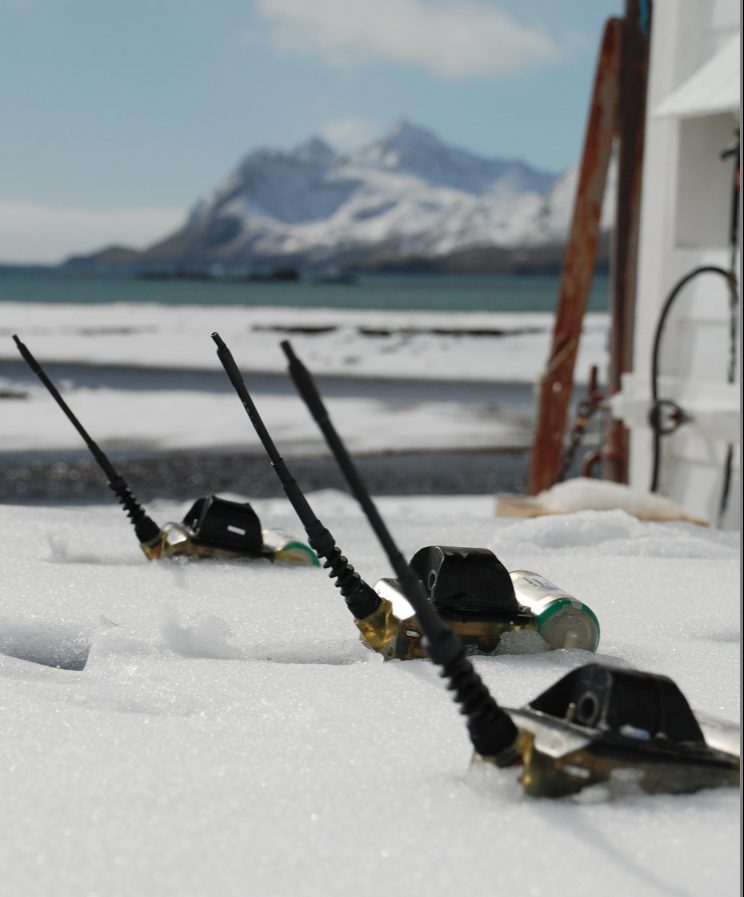
CTD-SRDL telemetry tags being primed for deployment. ©Theoni Photopoulou

Movement ecology is a cross-disciplinary field. Its main aim is to quantitatively describe and understand how movement relates to individual and population-level processes for resource acquisition and, ultimately, survival. Today the study of movement ecology hinges on two 21st century advances:

  1. Animal-borne devices/tags (biologging science, Hooker et al., 2007) and/or remote sensing technology to quantify movement and collect data from remote or otherwise challenging environments
  2. Computational power sufficient to manipulate, process and analyse substantial volumes of data

Although datasets often involve small numbers of individuals, each individual can have thousands – sometimes even millions – of data points associated with it. Study species have tended to be large birds and mammals, due to the ease of tag attachment. However, the trend for miniaturisation of tags and the development of remote detection technologies (such as radar, e.g. Capaldi et al., 2000), have allowed researchers to track and study ever smaller animals. Continue reading “Movement Ecology: Stepping into the Mainstream”

We Shall Overcome, Someday! Tips for Breaking Academia’s Glass Ceiling

Post provided by Nibedita Mukherjee

Breaking academia’s glass ceiling

Women in academia are special. This isn’t because of their abundance and diversity (or lack of it in some circles) but rather because of the challenges faced by women. As an early career woman researcher, I have had the privilege of knowing and learning from some incredibly inspirational women scientists. In this post – peppered with the lyrics of Joan Baez – we will meet three of these exceptional scientists working in three different realms (terrestrial, estuarine and marine). I hope that their strengths will be as inspirational to others – as they have been to me – and that in the years to come, we, as women, shall overcome the glass cliffs and glass ceilings of academia.

We’ll Walk Hand in Hand, Some Day #Equality

In the terrestrial realm of tropical forests, researchers often have to work with government officials (for instance, the forest department). Challenges of gender equality can be particularly stark in these workplaces. A key challenge for women in such a setting is not being considered a professional. Female researchers are far too often underestimated: lecturers assumed to be trainees, post-doctoral researchers mistaken for students. Continue reading “We Shall Overcome, Someday! Tips for Breaking Academia’s Glass Ceiling”

Carson’s Call: An Inspiration for Ecologists Working in a Post-Truth World

Post provided by Will Pearse

Rachel Carson (1940) Fish & Wildlife Service employee photo.

I can’t think of a more inspirational and influential ecologist than Rachel Carson. Nearly fifty years ago she released a book called Silent Spring, which argued that pesticides such as DDT were cascading up through food chains causing the death or sterilisation of birds and other animals. The publication of her book provoked public debate, likely in part because it was serialised in The New Yorker, and led to a paradigm shift in US and (arguably) global pest control policy.

With the full support of the scientific community to verify her facts and arguments, she was able to defeat the chemical industry’s backlash and galvanise public opinion in her favour. The 2005 Stockholm Convention, in which DDT was banned from agricultural use, would likely have never happened if it were not for her work.

“In a post-truth world where trust in the scientific process is being eroded almost daily, Rachel Carson is a perfect example of how we can speak out and be heard while still being scientists.”

Continue reading “Carson’s Call: An Inspiration for Ecologists Working in a Post-Truth World”

Influential Women in Ecological Network Research

Post provided by Katherine Baldock and Luísa G. Carvalheiro

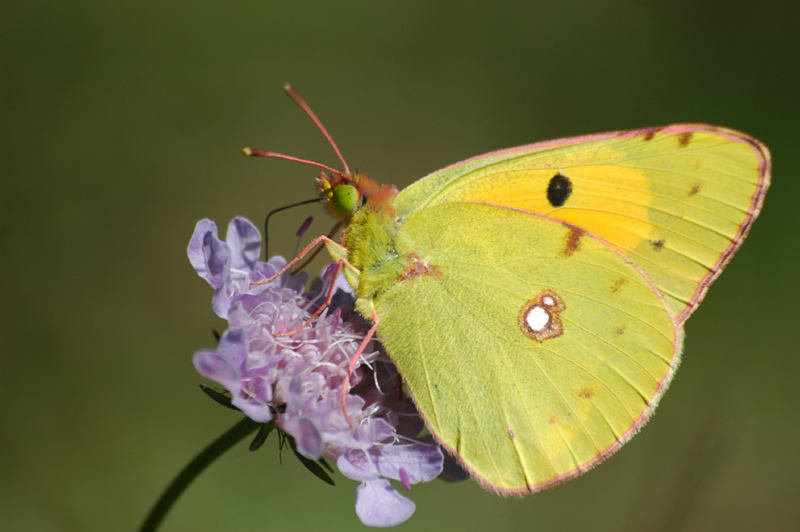
luisa-carvalheiro-butterfly
©Luísa G. Carvalheiro

Ecological networks represent interactions between different biotic units in an ecosystem and are becoming an increasingly popular tool for describing and illustrating a range of different types of ecological interactions. Food webs – which provide a way to track and quantify the flow of energy and resources in ecosystems – are among the most studied type of ecological networks. These networks usually represent species (nodes) which are connected by pairwise interactions (links) and they play a central role in improving our understanding of ecological and evolutionary dynamics.

Historically, food webs described antagonistic relationships (e.g. plant-herbivore or host-parasitoid networks) but the approach has been developed in recent years to include mutualistic networks (e.g. plant-pollinator networks, phorophyte-epiphyte networks). The development of network ecology, including ever more sophisticated methods to analyse ecological communities, has been driven forward by an enthusiastic community of ecologists, theoreticians and modellers working together to enhance our understanding of how communities interact.

In this blog post, we’ll describe the important role played by female scientists in the development of network ecology, focusing on the contributions by two ground-breaking ecologists and also highlighting contributions from a range of other scientists working in this field. Continue reading “Influential Women in Ecological Network Research”

Soaring with Eagles, Swimming with Sharks: Measuring Animal Behaviour with Hidden Markov Models

Post provided by THEONI PHOTOPOULOU, MEGAN MURGATROYD, VIANEY LEOS-BARAJAS Around the world there are concerns over the impacts of land use change and the developments (such as wind farms). These concerns have led to the implementation of tracking studies to better understand movement patterns of animals. Such studies have provided a wealth of high-resolution data and opportunities to explore sophisticated statistical methods for analysis of animal behaviour. We use … Continue reading Soaring with Eagles, Swimming with Sharks: Measuring Animal Behaviour with Hidden Markov Models

Issue 8.2

Issue 8.2 is now online!

The February issue of Methods is now online!

This issue contains four(!) Applications articles and two Open Access articles. These six papers are freely available to everyone – no subscription required.

 Earth Mover’s Distance: The Earth Mover’s Distance (or EMD) is a method commonly used in image retrieval applications. The authors of this paper propose its use to calculate similarity in space use in the framework of movement ecology. This will be helpful for many questions regarding behavioural ecology, wildlife management and conservation.

 warbleR: The R package warbleR is a new package for the analysis of animal acoustic signal structure. It offers functions for downloading avian vocalisations from the open-access online repository Xeno-Canto, displaying the geographic extent of the recordings, manipulating sound files, detecting acoustic signals or importing detected signals from other software, and much more.

– meteR: The open-source R package, meteR directly calculates all of Maximum entropy theory of ecology’s (METE’s) predictions from a variety of data formats; automatically handles approximations and other technical details; and provides high-level plotting and model comparison functions to explore and interrogate models.

– Noise Egg: The Noise Egg is a device that can produce a low-frequency sound, which can be used as an experimental source of noise both in aquaria and in the field. It was developed to study the effects of noise on communication and behaviour in small aquatic animals; however, it could be used for other purposes, such as testing the propagation of certain frequencies in shallow-water habitats.

Continue reading “Issue 8.2”
Biomonitoring Pollution in Wetlands: A New Method for More Reliable Interpretation of Chemical Data

Post provided by Mark Gillingham and Fabrizio Borghesi

Wetlands tend to accumulate considerable anthropogenic pollution.

All living organisms are dependent on trace elements (TEs), including metals, that are acquired in very small quantities through their environment or diet. Most TEs are essential for growth, development and physiology of the organism, but excessive intake can be detrimental for animals and plants.  Some TEs – especially heavy metals such as mercury, cadmium, lead and others – are generally toxic though. This toxicity occurs because species’ natural mechanisms fail to excrete excess TEs quickly enough for their metabolism to cope. TEs are present in the environment at different concentrations, either through natural processes or anthropogenic processes (i.e. pollution).

Since the industrial revolution, pollution from human activities has dramatically increased the concentrations of TEs in the natural environment. TEs from pollution tend to persist for a long time on the top layer of soils and sediments, because they do not undergo microbial degradation. As a consequence they tend to enter the food web quicker than the same elements of natural origin.

Some natural environments are more vulnerable to toxic effects of TEs. For instance, wetlands are geochemical endpoints of large river systems that often flow near or through cities, roads, factories, industries, cultivated lands, and/or mines, so they tend to accumulate considerable anthropogenic pollution. Vulnerable habitats like wetlands need to be closely monitored in order to assess the environmental health of these ecosystems. For this kind of monitoring we need reliable methods to measure TEs exposure, intake and bioaccumulation. Continue reading “Biomonitoring Pollution in Wetlands: A New Method for More Reliable Interpretation of Chemical Data”

Sounding Them Out: A Unique Conservation Tool for Monitoring Bush-Crickets

Below is a press release about the Methods paper ‘Potential for coupling the monitoring of bush-crickets with established large-scale acoustic monitoring of bats‘ taken from the British Trust for Ornithology.

Speckled Bush-cricket © Tom Housley
Speckled bush-cricket © Tom Housley

New research led by British Trust for Ornithology (BTO) and published today in the international journal Methods in Ecology and Evolution, shows how existing bat monitoring could improve our understanding of bush-crickets.

Bush-crickets are a little-known group of insects that inhabit our marshes, grasslands, woods, parks and gardens. Some may be seen in the summer when they are attracted to artificial lights, but as most produce noises that are on the edge of human hearing, we know little about their status. There are suggestions that some bush-crickets may be benefiting from climate change, while others may be affected by habitat changes. But how to survey something that is difficult to see and almost impossible to hear? Continue reading “Sounding Them Out: A Unique Conservation Tool for Monitoring Bush-Crickets”